


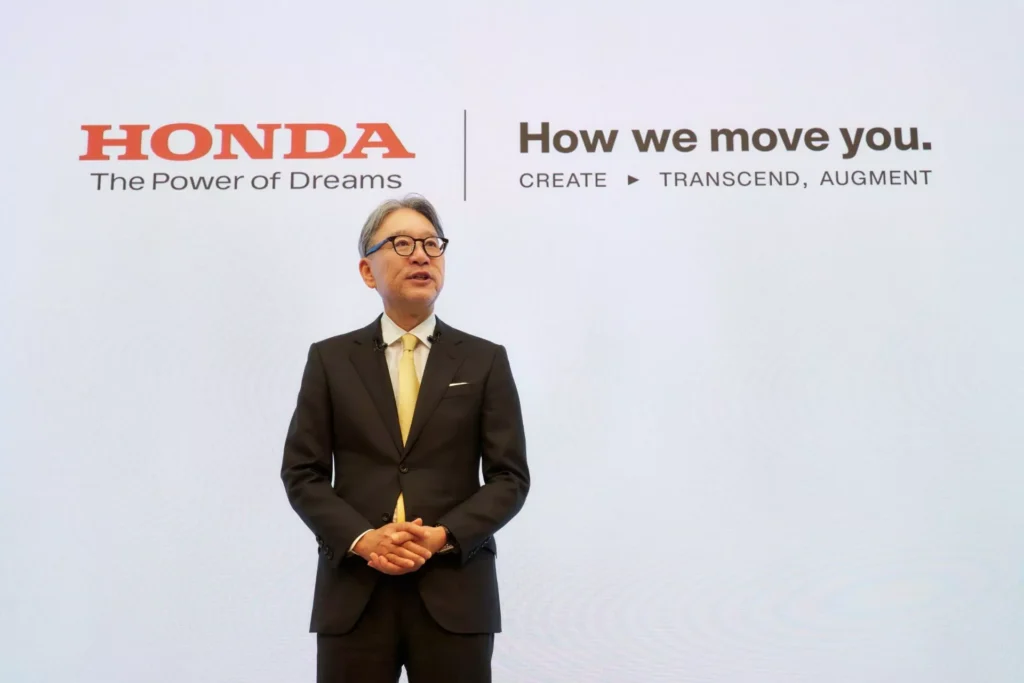
Honda’s management has found itself at the center of an internal conflict due to failures in electrification. Former top executives of the Japanese automaker accuse current CEO Toshihiro Mibe of strategic miscalculations that led to significant financial losses.
Allegations against the CEO
Just weeks after Honda announced the cancellation of three electric vehicles planned for North America and wrote off approximately $15.7 billion due to excessive EV commitments, Toshihiro Mibe received a demand to resign. He refused.
According to a new report, starting in late 2025, several former Honda executives began holding meetings to discuss the company’s ongoing problems. Over several months, they placed blame on Mibe, particularly criticizing him for neglecting the Chinese market and costly mistakes in EV strategy.
As Reuters reports, citing two participants in these meetings, former executives even claimed that Mibe was more focused on Honda’s golf sponsorships than on business. In April, 90-year-old former Honda CEO Nobuhiko Kawamoto visited the company’s headquarters and personally asked Mibe to step down. He replied that it would not happen.
What role did Mibe play?
Toshihiro Mibe has served as Honda’s CEO since 2021. He recently agreed to a 30% salary cut for three months in response to the company’s first annual loss in 70 years. According to those who tried to force him out, Mibe does not pay enough attention to “genba” — the “real place” where important work is done, such as factory floors and car dealerships.
“The CEO does not see the situation on the ground, does not listen to customers, and does not visit genba. Top management, including the CEO, does not visit genba. Example: China.”
Although former executives wanted to remove Mibe, he had the support of the board’s nomination committee. This committee was created with more independent directors as part of a broader trend in Japan to improve corporate governance and reduce the influence of former executives.
New strategy after failure
After canceling the EVs, Honda quickly changed its plans. In May, it became known that the automaker is developing a new generation of EV platforms that will also support hybrid powertrains. The company acknowledges that the U.S. EV market could radically change after the end of Trump’s second term in January 2029. The results of the November midterm elections could also significantly impact the market.
As part of the new strategy, Honda plans to launch 15 new hybrid models by 2029. Two of them were recently unveiled: one known as the Honda hybrid sedan prototype, and the other — a stylish SUV under the Acura brand.
Honda Hybrid Sedan and Acura Hybrid SUV prototypes
This situation demonstrates the complexity of traditional automakers’ transition to electrification. The conflict between generations of executives and the sharp adjustment of strategy indicate that even giants like Honda are forced to seek a balance between ambitious goals and real market conditions. The shift away from purely electric models in favor of hybrids may be a temporary but necessary step to stabilize the company’s financial position, although it raises questions about its long-term competitiveness in the era of green transportation.