


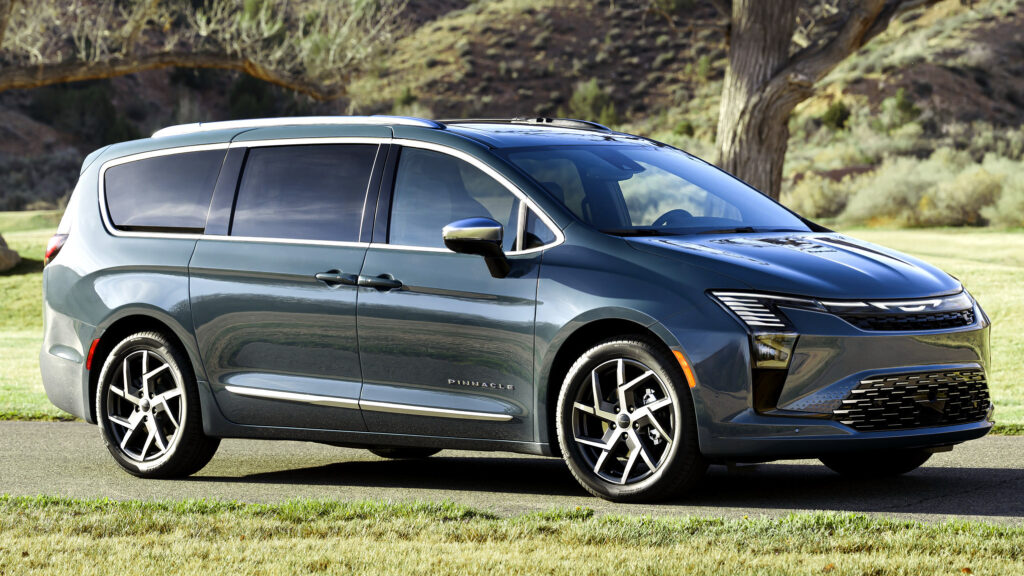
After nearly a decade on the market, Chrysler has introduced the updated Pacifica minivan for the 2027 model year. The changes are quite modest, even considering that competing models have advanced significantly during this time.
Minor Changes After a Long Wait
Nine years is an eternity in the automotive industry. During this time, competitors have fully transitioned to hybrid powertrains, equipped their models with huge screens and advanced driver-assistance systems, and some have even managed to introduce new generations of vehicles. In response to the aging Pacifica, Chrysler offers only a light refresh.
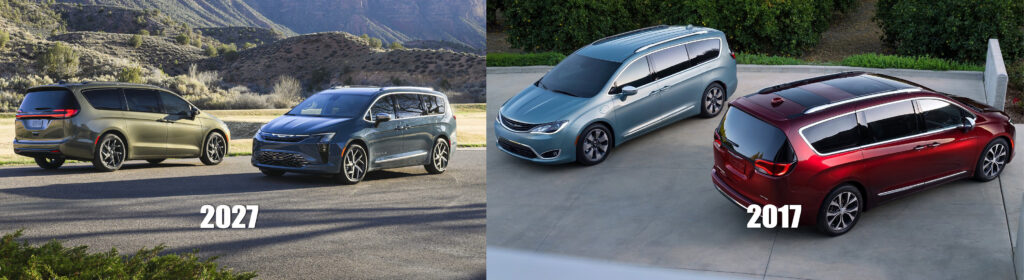
The company positions the updated 2027 Pacifica as the future face of the brand, which raises some concern. This “reworking” barely changes the minivan that first appeared back in 2017 and was last seriously updated in 2021.
New Front End and Dual Strategy
Yes, there is a new front end, but it is only available for the Select, Limited, and Pinnacle trims. The base LX version, previously known as the Voyager, retains the old design entirely. Thus, Chrysler will be selling two visually different Pacificas simultaneously.
The updated front lighting features vertical LED headlights, a lit Chrysler emblem, and an illuminated grille with so-called “piano key” lighting. The Limited and Pinnacle models even have a small animation upon the driver’s approach. This feature is nice, but similar solutions have been used by other manufacturers for almost a decade.

The Interior Remained Almost Untouched
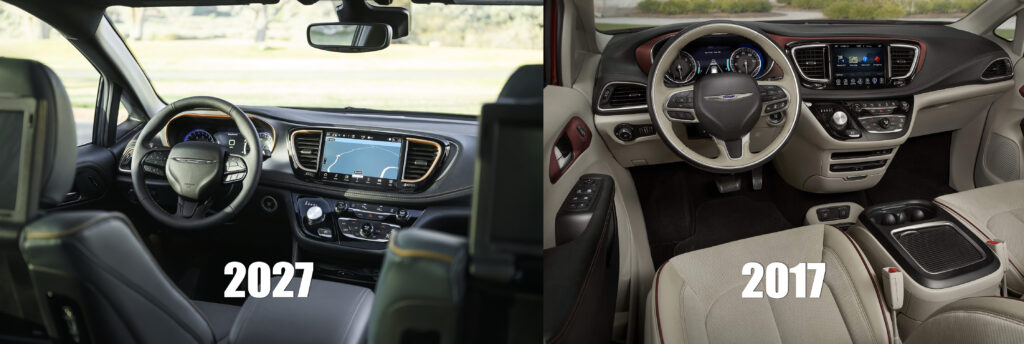
Beyond the new “face,” there are practically no changes. The Pacifica’s profile remained virtually identical, the rear received only a slightly updated light bar, and the cabin looks almost untouched. Chrysler boasts a new steering wheel emblem, fresh trim materials, and an exclusive Blue Ague interior for the top Pinnacle trim. However, the dashboard, center console, switches, and overall layout have essentially carried over from the 2021 refresh. Simply put, inside it still looks and feels like a 2017 minivan.

Retained Advantages and Lagging Behind Competitors
To be fair, the Pacifica still has some genuine advantages. It remains the only minivan that combines second-row seats with the Stow ‘n Go system and optional all-wheel drive – a combination that continues to be truly useful. The 3.6-liter V6 still delivers a solid 287 hp and 262 lb-ft of torque. Chrysler also added several thoughtful features, including a power liftgate with height adjustment, a blind-spot monitoring camera, and a more flexible rear-seat entertainment package.
But here’s the problem: these advantages are no longer enough for the Pacifica to feel like a leader in its class.
The Toyota Sienna offers a standard hybrid powertrain and significantly better fuel economy. The Kia Carnival looks and feels much more modern both inside and out, while the updated Honda Odyssey at least looks fresher and has one of the best interiors in the segment.
Summary and Brand Prospects
Chrysler deserves credit for preserving the best ideas of the Pacifica. The Stow ‘n Go system remains ingenious, the Pinnacle trim still impresses with its luxury, and the updates made are enough to keep the van competitive for a few more years. But if this is truly meant to be a preview of Chrysler’s future, it creates the impression that the brand is not leading, but simply sleepwalking through another product cycle.
All of this would be partially understandable for a brand with a broad model lineup and active processes, perhaps during a large-scale transition to electric vehicles. Unfortunately, that is not what is happening at Chrysler right now. This is a brand that, let’s count together, has exactly one car on the market. It’s a bit disappointing to see that after ten years of production, numerous concept cars, and promises to introduce something else soon, this is the result.
The Pacifica situation well illustrates the general state of affairs at many traditional American automakers trying to hold market share in key segments without investing in full-fledged updates. Minivans remain an important family segment, especially in North America, but competition here has never been so fierce. The success of models like the Sienna shows that buyers increasingly value efficiency and modern technology. Preserving proven solutions certainly has value for loyal customers, but attracting new ones requires a bolder approach. The future of the Chrysler brand itself, once a symbol of innovation, is now in question, and the 2027 Pacifica hardly provides clear answers.