


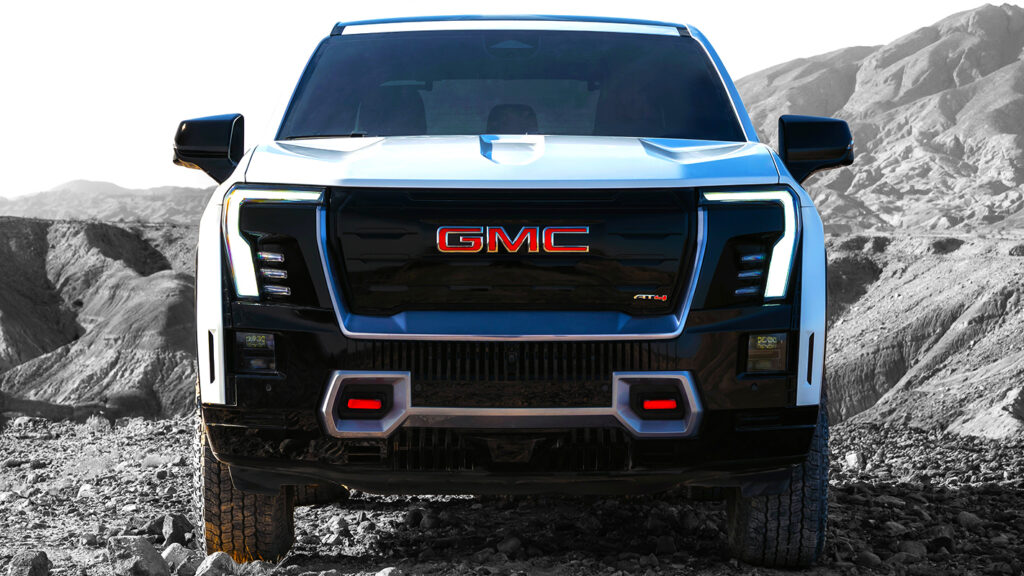
The electric pickup truck market in the USA is experiencing serious turmoil. Currently, only three manufacturers — General Motors, Tesla, and Rivian — continue to sell them. GM even has three different models, which may seem excessive against the backdrop of a general decline.
The End of the Ford F-150 Lightning Era
Ford has officially ceased production of the F-150 Lightning, which was the most popular electric pickup in the country. While this decision may seem unexpected, it logically follows from the numbers: only 23,034 such vehicles were sold in the first nine months of the year, accounting for less than 4% of total F-series sales. Even a 39.7% sales jump in the third quarter, linked to favorable tax conditions, did not save the situation.
That’s less than 4% of sales, and Ford decided such low numbers could not be justified.
Ram Also Abandons Its Fully Electric Model
Ford is not the only one revising its plans. Back in September, Ram announced the termination of development for the fully electric 1500 REV pickup, citing a slowdown in demand for large-battery electric trucks in North America. Instead, the company will focus on the hybrid Ramcharger model, which received the REV name.
General Motors’ Position in Question
This raises the question: should GM follow its competitors’ lead? The sales statistics for GM’s electric pickups are also unimpressive. In the first three quarters, Chevrolet sold 9,379 Silverado EVs, and GMC sold 6,147 Sierra EVs, totaling 15,526 units. This is even less than Ford’s figure. However, the Hummer EV pickup and SUV performed better — with 13,233 vehicles sold.
Should GM Trim Its Lineup?
Completely ceasing production of electric pickups would be a radical step for GM, but rationalizing the model range seems logical. The weakest link is the GMC Sierra EV, which, despite its attractive design and quality interior, shows low sales and competes for buyer attention with the Hummer at the same dealerships.
There have been rumors that GM is considering optimizing its electric truck lineup.
A GM representative commented on these rumors, stating that there are currently no plans to change the product lineup, and the company is working on reducing production costs. However, GM’s actions suggest otherwise: plans to convert the Orion Assembly plant into an electric pickup production hub were first postponed and then completely canceled in favor of producing conventional full-size pickups and SUVs with internal combustion engines from 2027.
This points to a deeper problem: if there is no stable demand, producing electric pickups loses economic sense. The question for GM is not whether to abandon electric pickups altogether, but whether it will be enough to trim the lineup by removing the least successful models to focus resources on those with potential.
Today’s electric pickup market resembles a period of early formation, where excessive optimism collides with the reality of consumer preferences and economic feasibility. The shift by Ford and Ram towards hybrid technologies could be indicative for the entire industry. The success of the Hummer EV, on the other hand, indicates that the niche of expensive, image-oriented electric SUVs may be viable even during a general downturn. GM’s future in this segment will likely depend on its ability to find a balance between ambition, market demand, and financial stability, possibly by focusing on one or two key models instead of three.