 by
by Lexus IS Student Project Impresses with Its Unusual Aesthetics
The Tokyo Auto Salon is traditionally known for showcasing not only polished production models but also bold, sometimes even quirky, concepts. Amidst the neon and carbon fiber, not only major automakers but also students from automotive colleges present their work, bringing to life ideas born in classrooms and workshops.
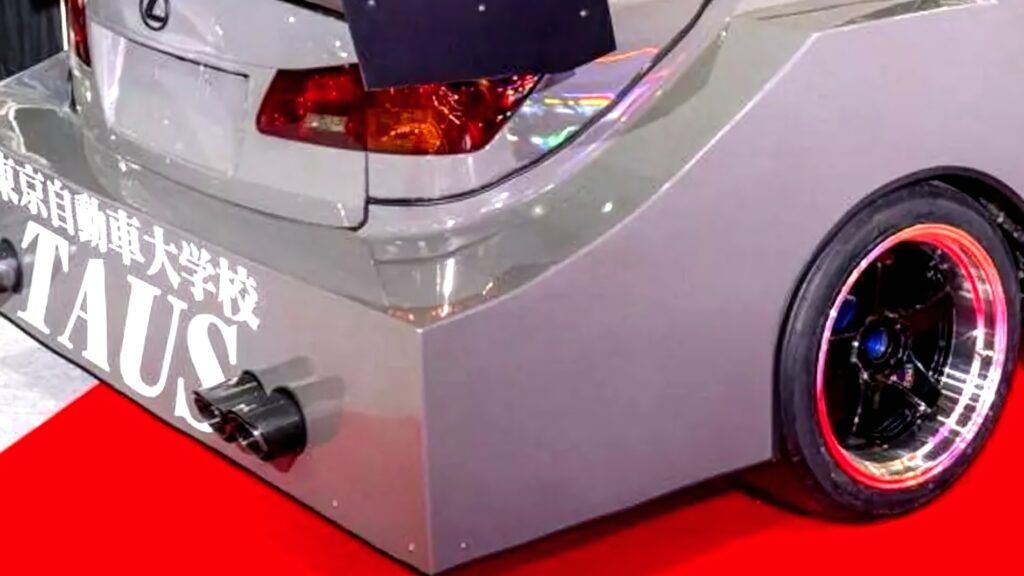
One such project is the Lexus TAUS-HFRS — a modified second-generation IS sedan that looks as if it was created in the world-famous pixelated game, assembled block by block. This car is the work of students from Kokura Gakuen Gunma Automobile College.
The Philosophy Embedded in the Design
The project’s idea was to unite three eras of Japanese car culture. They took a car from the Heisei period (1989–2019) as a base, gave it an exterior inspired by the Showa era (1926–1989) style, and adorned the interior with elements of the modern Reiwa era (2019–present). Thus, the TAUS-HFRS was meant to become a bridge between the past, present, and future.
Visually, the implementation of this idea turned out to be very bold and evokes an ambiguous reaction. The smooth lines of the original Lexus IS have completely disappeared under an angular, blocky body kit painted in Destroyer Gray. The massive front bumper with one huge air intake makes even the famous, often criticized, Lexus spindle grille look like a model of elegance.
Exterior and Interior Details
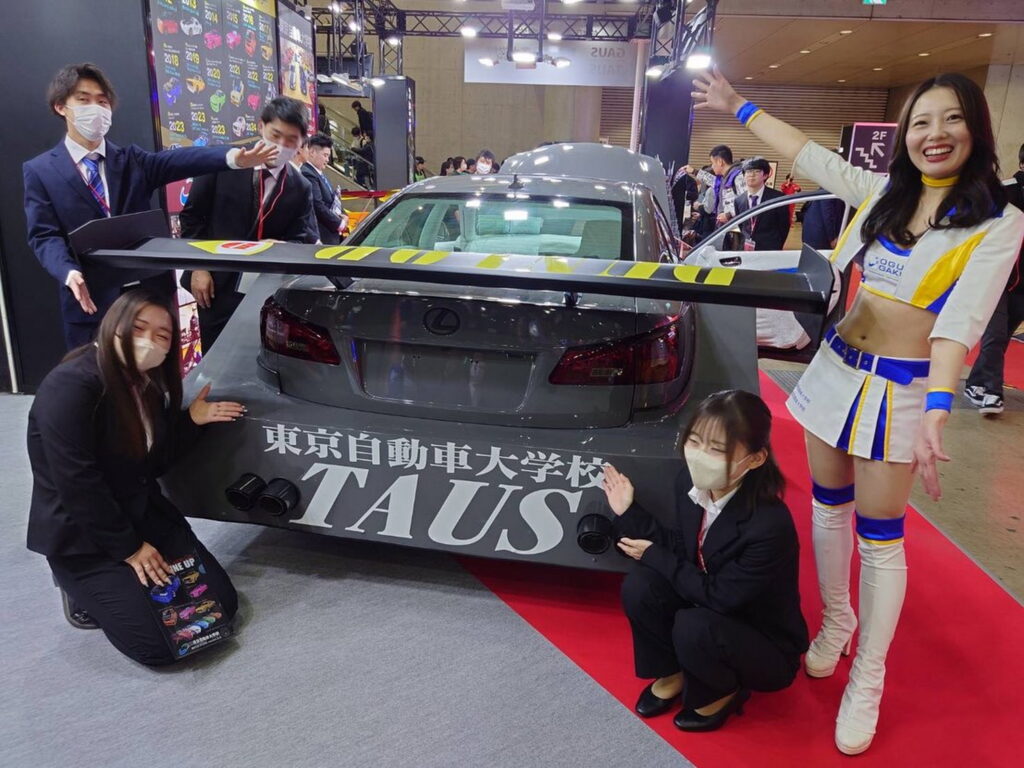
Wide over-fenders sharply change the car’s silhouette, partially covering the non-standard 18-inch wheels and making the rear doors almost decorative. The rear looks even more radical, resembling a sedan partially frozen in concrete. An electronically adjustable spoiler is mounted above it, and four exhaust pipes, resembling cartoon rocket nozzles, protrude from the bumper.
The interior, compared to the exterior, looks less chaotic but is also filled with student ideas. It features white Bride seats, a sports steering wheel with a TRD logo, and the infotainment system is mounted vertically, like in Tesla cars.
The Technical Part Remained Almost Unchanged
Under the hood remains the standard naturally aspirated 2.5-liter V6 producing 272 hp. The braking system also remained factory-standard. The only technical changes were the installation of slick tires and cut springs to lower the ride height. Thus, the main focus was on design, not on upgrading the technical components.
Thank you for visiting the Tokyo Auto Salon 2026 and watching the TikTok LIVE‼️ Creating the exhibit vehicle with our own hands and explaining it to visitors was a valuable experience for the students. Thank you for your warm support. We look forward to your continued support for Tokyo Automobile College. #TokyoAutoSalon
The Value of Such Experience for Future Specialists
It’s easy to criticize something so visually unconventional. However, the meaning of projects like the TAUS-HFRS lies not in perfect execution, but in the learning process itself. It is a launchpad for future designers, engineers, and constructors, where they gain invaluable experience through trials, errors, and practical work.
Judging by the original sketches, which resembled a race car more than a pixel art project, the concept was bolder than the final result. Yet, there is something appealing in this work — its unfiltered ambition and honesty. The unevenness of execution might be the most truthful part of the entire project, reminding us that the path to mastery begins with the first, bold steps.
Similar exhibition pieces often become a starting point for a career in the automotive industry, where not only technical knowledge is important but also the ability to think outside the box and translate ideas into metal and plastic. That is why even the most experimental student work deserves attention, as it reflects the search for new forms and the boldness of the young generation of engineers.