


Resistance to Change
In a market dominated by rapid model update cycles and constant innovation, some vehicles prove surprisingly resistant to change. The Japanese Toyota HiAce is just such an exception to the rule. While most of the world moved to a new generation back in 2019, the domestic Japanese version of this long-lived van has remained in service since 2004.
Despite its age, the cab-over light commercial vehicle remains popular enough in Japan to justify its continued presence. And for 2026, it is receiving its most comprehensive update in over a decade.
Toyota Still Sells A $12K Wagon Like It’s 2002 And No One Seems To Mind
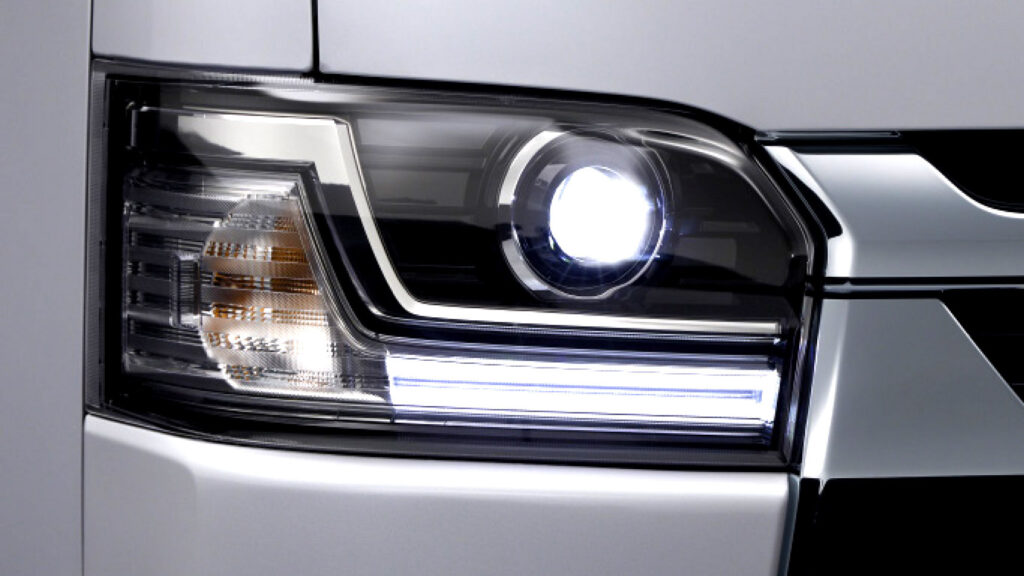
Entering the twelfth year of its model revisions, the HiAce is getting the most significant package of changes since 2013, when it received an updated bumper, grille, and headlights. For 2026, Toyota has made the changes very cautious, limiting exterior updates to only new graphics for the bi-beam LED headlights. The rest of the familiar cab-over silhouette and van body remains untouched.
What’s New Inside?
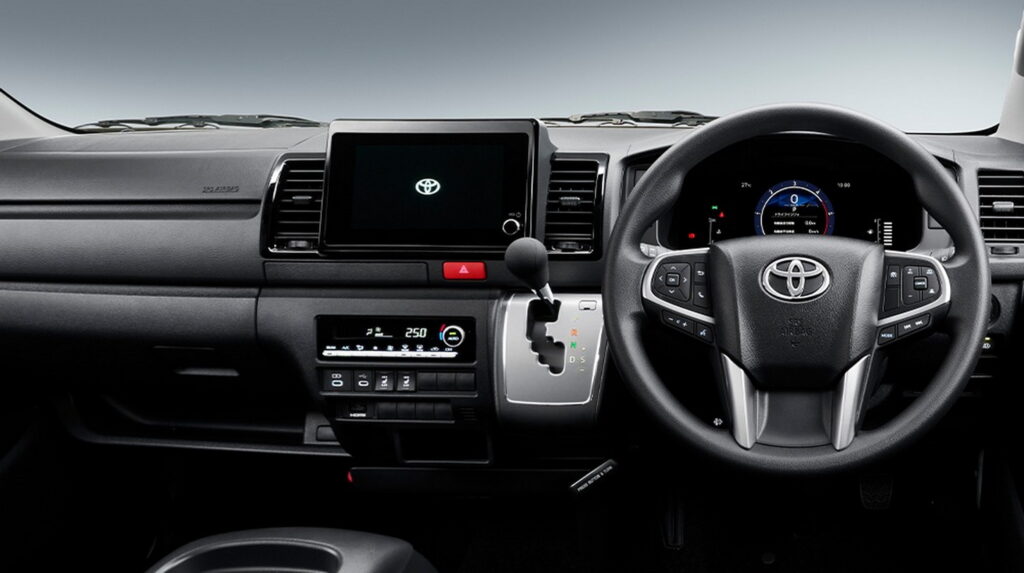

Inside, the HiAce finally gets a more modern touch. All variants now feature a standard 8-inch touchscreen integrated into the center console, handling navigation and supporting a panoramic monitor. It is complemented by a 7-inch digital instrument cluster, also standard.
The more expensive trims received a bit more attention. The Super GL variant now includes heated front seats as standard, while the base model gets a new rear door lock function.
Safety Updates
Perhaps the most important changes concern safety. The updated HiAce benefits from the latest Toyota Safety Sense suite, which now includes more advanced driver assistance features.
Key new additions include radar cruise control with curve speed control, lane change assist, road sign recognition assist, and an improved pre-collision system with expanded detection capabilities.
The Vanace Turns The Toyota HiAce Into A Retro VW T3 Lookalike
Familiar Mechanicals
Under the hood, everything remains unchanged. The HiAce continues to use a ladder frame chassis paired with a cab-over layout and a mid-engine placement.
The powertrain options are also carried over unchanged: a 2.0-liter gasoline engine producing 158 hp and 182 Nm of torque, and a 2.8-liter diesel producing 149 hp and 300 Nm of torque. Both engines are paired with a six-speed automatic transmission and are offered in rear-wheel and all-wheel-drive configurations.
HiAce Customization
Toyota HiAce Receives A Sporty Makeover With A Land Cruiser Face Transplant
Buyers looking to personalize their HiAce have plenty of options. Toyota continues to offer a wide range of upgrade packages and accessories, including exterior styling kits and interior enhancements from Modellista and GR Parts. A range of genuine Toyota accessories is also available, covering both commercial and recreational use.
The manufacturer has highlighted some of the options with a series of “costume styles”: Overland – for active outdoor recreation, Active Cruiser – for surfing and water sports, Urban City – for everyday use, Cool Luxury – for highway trips, and Craft Man – for builders.


Pricing and Availability
The updated HiAce will appear in Japan on February 2nd and will continue to be offered in van, wagon, and commuter configurations. Prices start from 2,860,000 yen (approximately $18,000) for the base DX model with a gasoline engine and go up to 4,683,800 yen (approximately $29,500) for the top Super GL Dark Prime II trim with a diesel.
While the current generation HiAce will continue its life, Toyota has already shown a glimpse of the model’s future with a fully electric concept. This light commercial vehicle was showcased at the Japan Mobility Show 2025, though there is still no information on when a production version might appear.
The resilience of the Toyota HiAce in the market is a vivid example of how a successful, time-tested platform can remain relevant for decades through strategic updates. Instead of a complete replacement, the company focuses on improving the interior and, most importantly, safety systems, meeting modern demands while preserving the core advantages of the design. This approach is not only economically beneficial but also maintains customer loyalty, who value reliability and ease of maintenance. The model’s future likely lies in electrification, but for now, the classic formula continues to work, especially in the domestic market where practicality often outweighs fashionable trends.