 by
by Power Rivaling Ferrari
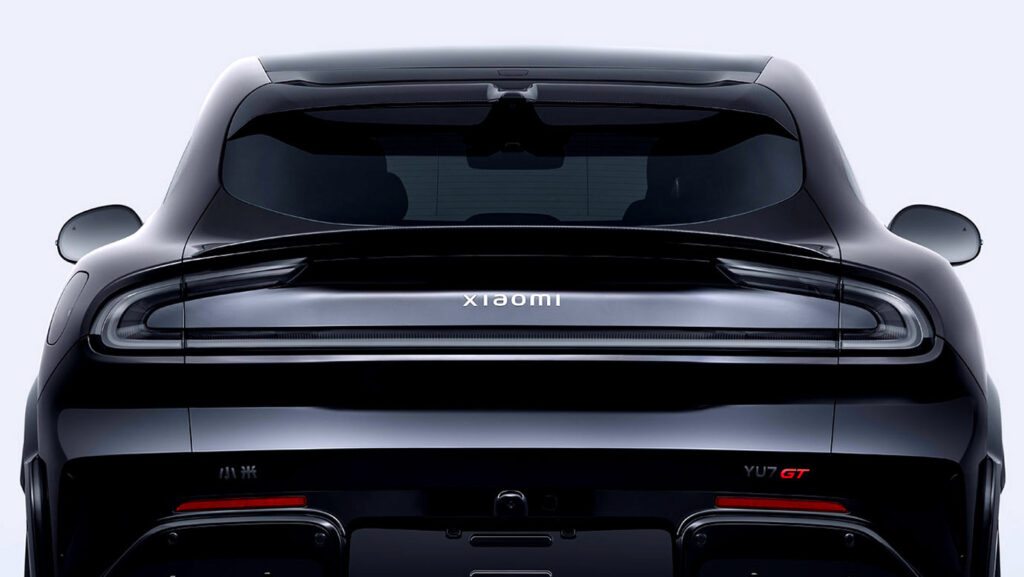
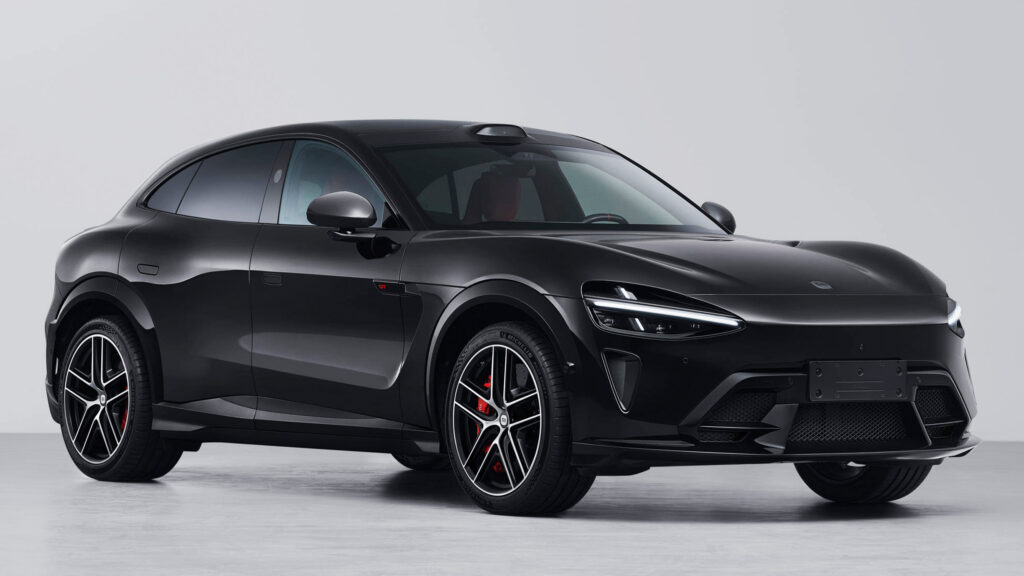
The Chinese tech giant Xiaomi is not stopping at creating just a good crossover. Official documents in China confirmed the appearance of a high-performance YU7 GT version, whose specifications might even make Ferrari Purosangue V12 owners start to worry. The regular YU7 already impresses with a combination of elegant design and serious electric thrust, but the GT version takes everything to a completely new level.
The GT version received a powertrain with two electric motors with a combined power of 738 kW, which is approximately equal to 990 horsepower. For comparison, its gasoline visual “twin” from Ferrari has 715 hp.
This figure, of course, is not as impressive as the 1526 hp in the top version of the SU7 Ultra sedan from the same manufacturer, but hardly any future YU7 GT owners will complain about a lack of power.
Technical Specifications and Design
Documents submitted to China’s Ministry of Industry and Information Technology indicate a top speed of 300 km/h, and there is every reason to believe this figure is artificially limited. The car uses a lithium-ion battery from CATL, however, data on the range on a single charge has not yet been disclosed.
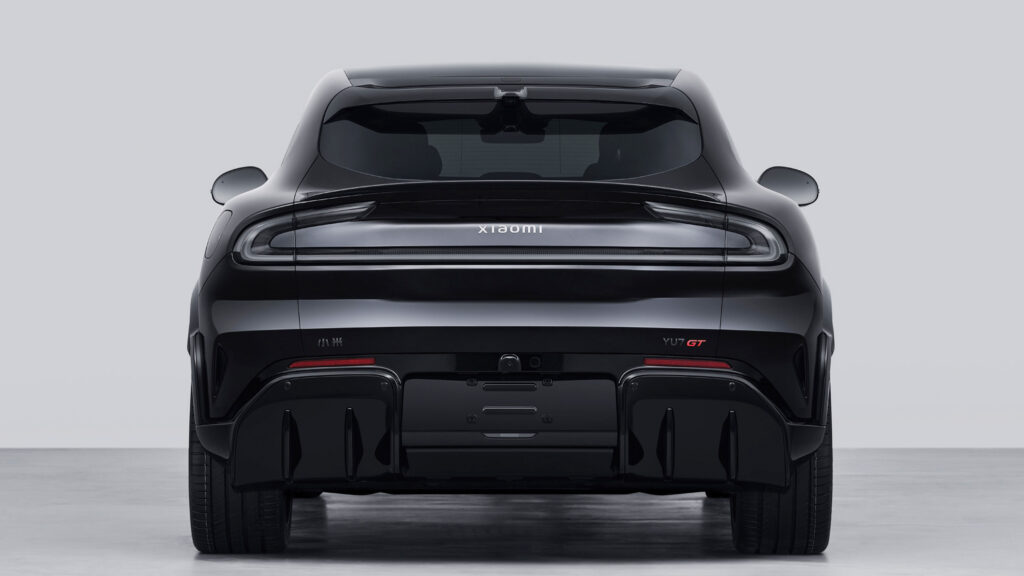
Externally, the GT version stands out with a more aggressive design: more massive bumpers with more powerful air intakes and a large rear diffuser. Behind the 21-inch wheel discs, red brake calipers are visible, and on the rear and doors, corresponding red “GT” emblems are placed, which will not allow this version to be confused with the regular family model.
The standard YU7 lineup already offers a wide choice: from rear-wheel-drive models with a single motor of about 315 hp to all-wheel-drive versions with two motors and up to 681 hp. It is these cars that helped Xiaomi achieve high sales in China and even surpass the Tesla Model Y in the domestic market.
Competitive Pricing Policy
The YU7 GT occupies a higher position both in performance and, most likely, in price. The first rumors from China point to a range of 450,000 to 500,000 yuan, which is approximately 60,000 – 70,000 US dollars. The new Porsche Cayenne Turbo Electric, despite significantly more power at 1139 hp, starts in the US at a price of 163,000 dollars, and in China, it is expected to cost at least twice as much as the Xiaomi. This explains certain difficulties Porsche faces in this market.
The emergence of a product like the YU7 GT, which offers supercar power for relatively accessible money, clearly demonstrates the dynamics of the development of the Chinese auto industry. Manufacturers like Xiaomi are using their technological capabilities to rapidly advance in the field of electric vehicles, challenging the traditional price-to-performance ratio. This forces European and American competitors not only to accelerate development but also to reconsider their pricing strategies, especially in key markets like China. The success of the YU7 in the domestic market is already indicative, and entering the international arena could cause even greater shifts.