 by
by Arizona Bill Proposes Eliminating Daytime Speed Limits on Rural Roads
Speed limits are not created for the best drivers in the fastest cars on perfect roads. On the contrary, engineers often acknowledge that limits must account for less experienced road users. Such drivers might want to avoid Arizona’s rural highways if a proposal by State Representative Nick Kupperman is implemented.
He proposes that on certain open sections of rural interstate highways, there should be no maximum speed limit during daylight hours. In other words, something very fast might appear in the rearview mirror.
A Controlled Approach to Unlimited Speed
The bill, titled the “Reasonable and Prudent Interstate Driving Act” (RAPID Act, HB 2059), would grant the Arizona Department of Transportation the authority to designate limited sections of rural highways as “speed limit-free zones.”
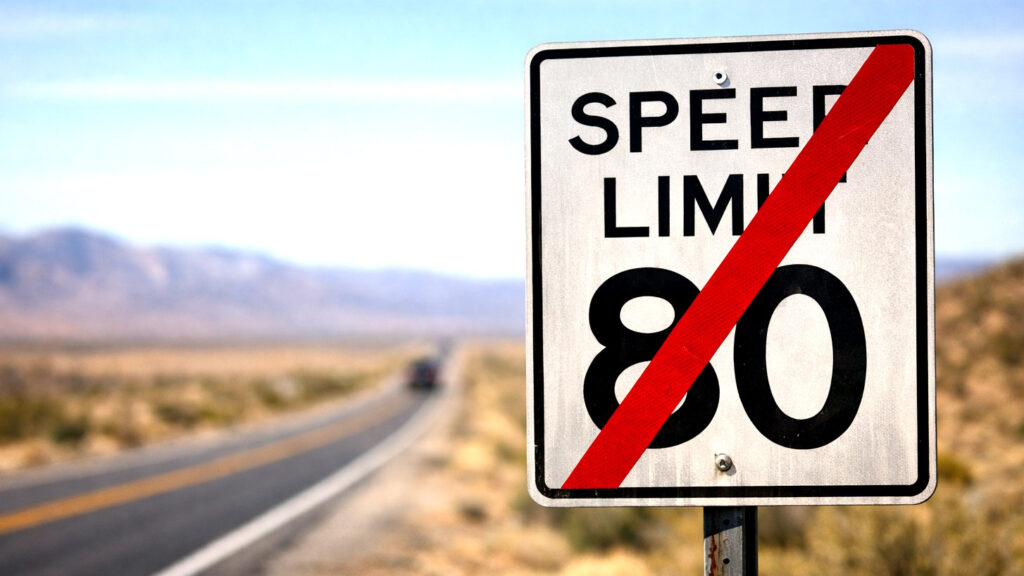
These zones would only operate outside urban areas with populations over 50,000 and only during daylight hours. At night, a strict limit of 80 miles per hour (approximately 129 km/h) would remain.
According to the proposal, the department cannot simply change the rules. Any potential highway section must undergo engineering and traffic studies, meet design standards for high-speed roads, and demonstrate a crash rate lower than the state average over the past five years.
There is also a crucial exclusion: commercial vehicles, including trucks, would still be required to adhere to the standard 80 mph limit or lower, regardless of the time of day or location.
Montana as a Model to Follow
Kupperman points to Montana as proof that this concept can work.
Montana has shown that it is possible to modernize speed laws without sacrificing safety. When rules are clear and focused on driver behavior, states can allow safe highways to function as they were designed.
According to data, a legislative audit in Montana found that while average travel speeds increased after daytime limits were removed, crash and fatality rates per mile traveled continued to decline and remained on par with neighboring states.
The key finding of the study concerned not the numbers on signs, but habits behind the wheel. Seatbelt usage and overall driver behavior had a greater impact on outcomes than the posted speed.
Most drivers can distinguish between a congested urban route and expansive rural highways. The RAPID Act accounts for this difference.
Following the start of the 2026 legislative session, bill HB 2059 will be officially considered.

The initiative in Arizona reflects a broader debate about the effectiveness of rigid speed limits on modern, well-designed roads. The experience of states like Montana suggests that traffic safety may depend more on driving culture, infrastructure quality, and targeted enforcement than on a universal number on a sign. The question is whether clear, behavior-oriented rules can be safer than traditional limits in conditions where vehicle and road technologies have far surpassed the standards of the past. The success or failure of this pilot project could become an important precedent for transportation policy in other regions.