


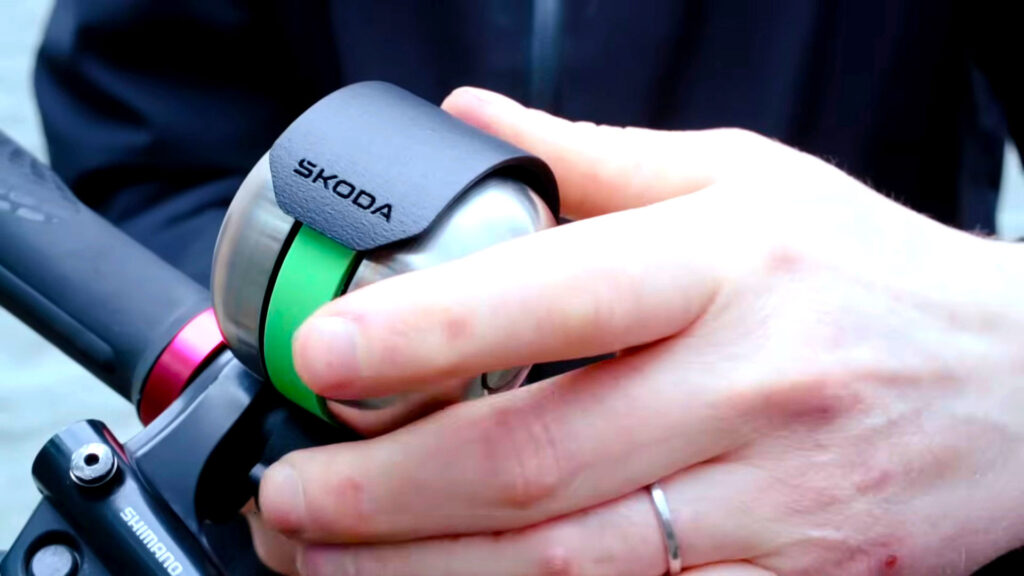
Developing a Bell That Defeats Noise Cancellation
Cycling where pedestrians move in the modern world can be somewhat risky. It’s hard to find a place without people walking, running, or jogging, happily enjoying headphones with active noise cancellation. Imagine trying to warn such a pedestrian of your presence, but they hear nothing. The automaker Skoda claims to have solved this problem with a development called DuoBell.
Collaboration with Scientists and Unexpected Research Results
The Czech automaker developed a bell prototype in collaboration with researchers and audiologists from the University of Salford, studying the impact of modern ANC headphones on pedestrians’ ability to hear cyclists. Their findings were impressive.
Research shows how widespread this problem has become. In London, approximately half of pedestrians wear headphones with active noise cancellation. According to Transport for London, the number of collisions between cyclists and inattentive pedestrians increased by 24 percent in 2024 alone.
How the Innovative Bell Works
Instead of simply making the bell louder, the team approached the issue creatively. Researchers discovered a narrow “safety gap” in ANC systems between 750 and 780 Hz. DuoBell emits sound in this range and then adds a second resonator and a hammer that strikes in an irregular pattern.
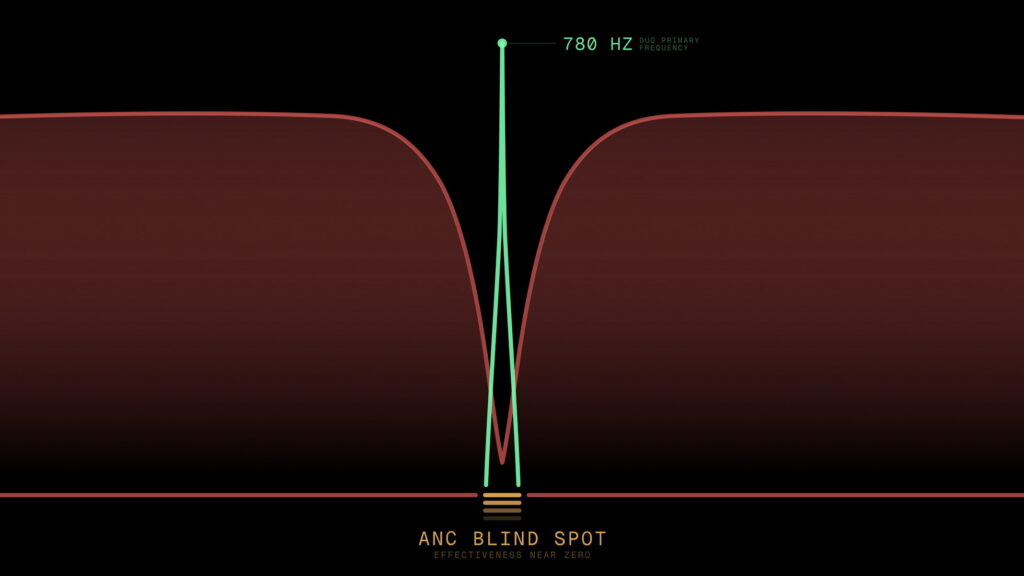

The result is a sound that ANC algorithms find difficult to recognize and suppress quickly enough. In other words, it effectively slips past the digital “gates” inside the headphones. The system is entirely mechanical, relying on acoustic design rather than electronics to bypass ANC processing.
Testing Results and Design
During testing, pedestrians wearing ANC headphones gained up to 22 meters (72 feet) of additional reaction distance when the DuoBell was used instead of a regular bell. This is a huge difference when a cyclist is approaching at city traffic speeds. Deliveroo couriers who tested the prototype in London reported liking it so much they wanted to keep the bells for themselves. It’s easy to see why.
This extra time and space are key, but the design itself is also appealing. It is executed in the Skoda Modern Solid aesthetic with colors, finishes, and materials that directly echo the current car lineup. Unfortunately, all this work will not be available to the general public… at least not in the prototype form we see here.
The Future of the Development and Its Significance
The good news is that Skoda is providing the data to other manufacturers so they can create similar bells. From a cyclist’s perspective, this cannot happen fast enough. This development points to a broader trend where safety technologies must adapt to new consumer gadgets that, unfortunately, sometimes create unforeseen risks. The prototype’s success among couriers who work daily in urban chaos is the best testament to its practical value. The question now is how quickly the industry can implement such solutions into mass production to make cities safer for all road users.