 by
by New Company Aims to Make Fast Charging Stations More Accessible
One of the biggest obstacles to the mass adoption of electric vehicles is the underdeveloped infrastructure for fast charging. Although the situation is improving, with about 17,000 DC fast charging stations already in the USA, there are vast areas where access to them is limited or non-existent.
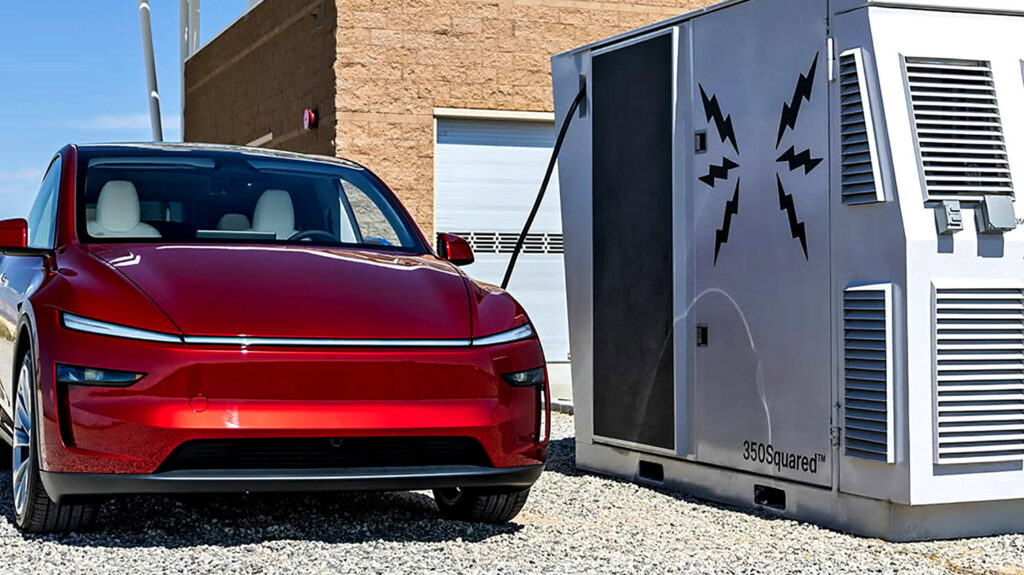
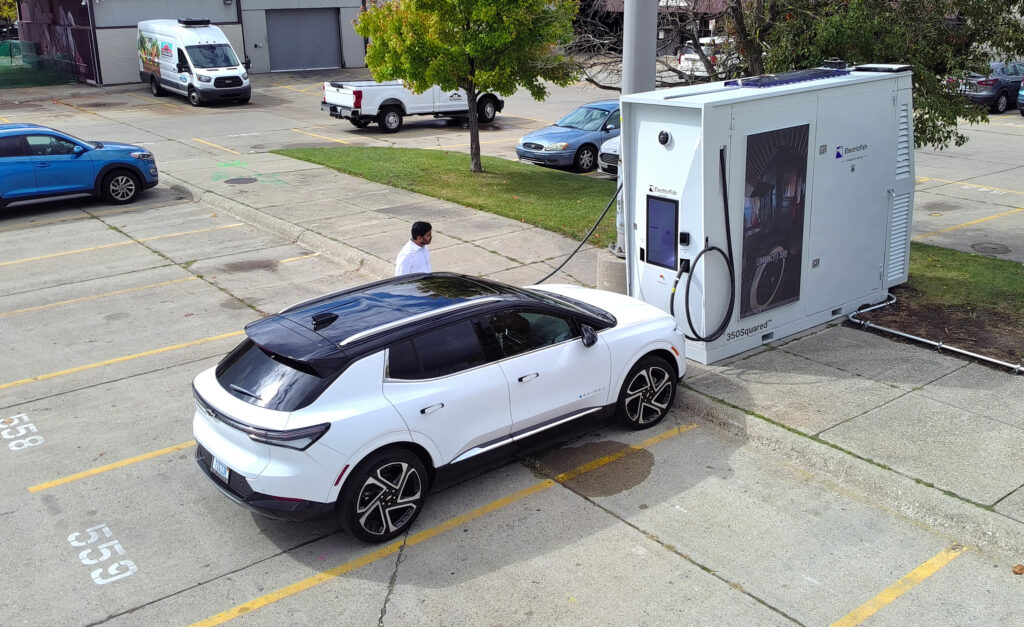
The startup ElectricFish, presented at CES, offers a solution that could change the situation. Their Turbo Charge system is designed for easy deployment at more than 150,000 gas stations across the country, eliminating the high costs and complexity of installing traditional fast chargers.
A typical installation of fast charging stations requires expensive grid upgrades, the cost of which can exceed $150,000 per port, and the process takes from 12 to 18 months.
How the Innovative Charger Works
The key feature of the development is a built-in 400 kWh battery pack that does the main work when charging a car. The station itself connects to a standard power grid and slowly replenishes the energy reserve in its battery, consuming only 1/10 to 1/3 of the power compared to a conventional fast charger.
This allows such units to be installed in just 4–6 weeks. Furthermore, the battery system enables energy storage when rates are low and feeding it back into the grid during peak load hours.
Charging Speed and Business Model
The charger is designed for use at gas stations, meaning for short sessions lasting 8–10 minutes. During this time, up to 180 miles (about 290 km) of range can be restored, although the exact figure depends on the car model.
The company offers a revenue-sharing model to make the technology accessible to gas station owners. The owner provides the location and standard electrical connection, and ElectricFish is responsible for the equipment and installation. Then, the revenue from charging is shared between them. This scheme is intended to remove the financial barrier that previously prevented private gas stations from entering the EV charging market.
Prospects and Support
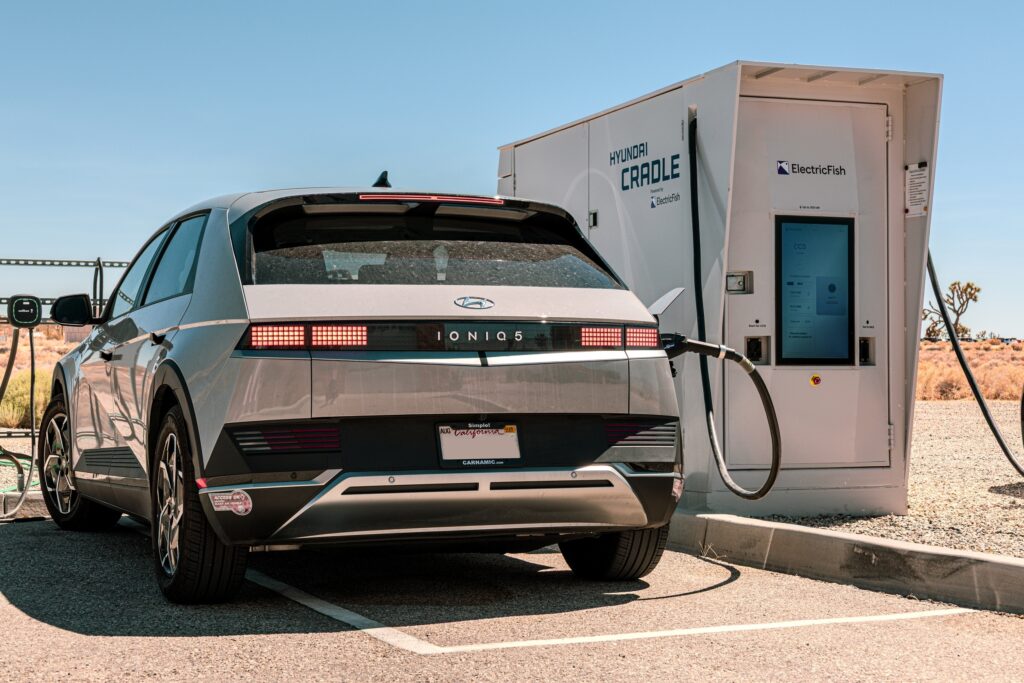
It’s still hard to say how successful this initiative will be, but the startup already has support from Hyundai through its ZER01NE Ventures unit. One of the charging devices was installed at Hyundai’s proving ground in California, where, according to the company, it successfully operated under conditions of continuous extreme heat for several summer months.
Similar technological solutions that lower the entry barrier for businesses and accelerate infrastructure deployment are critically important for overcoming “charging deserts” in many regions. The success of ElectricFish could become a catalyst for thousands of independent gas stations, turning them into key nodes of the new energy network, especially in rural areas and on highways where range anxiety is most acute. This also demonstrates how integrating energy storage can make the power grid more resilient and efficient.