 by
by Record Fuel Price Increase in the USA
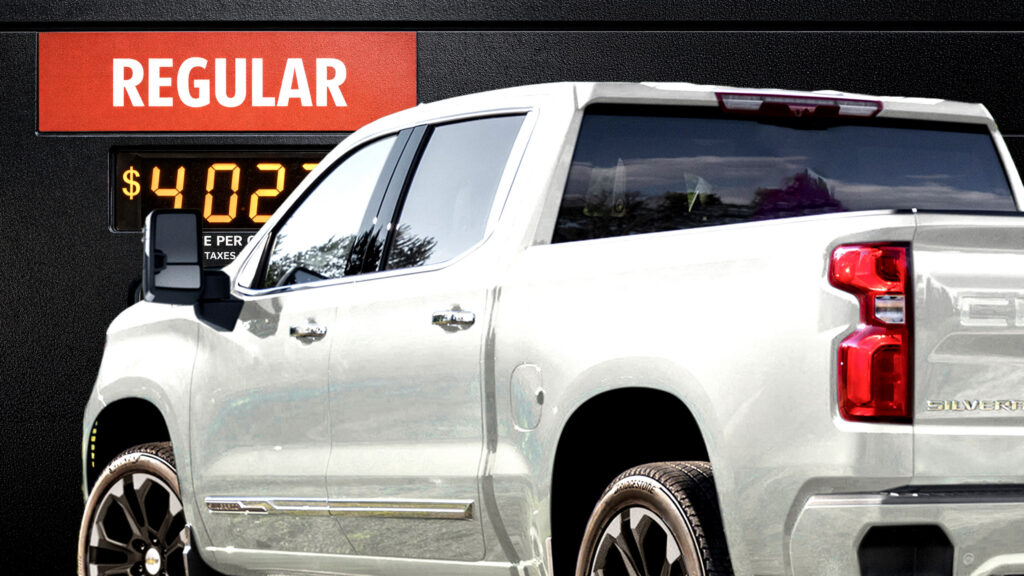
The national average price per gallon of gasoline in the United States has not only approached the $4 mark but has crossed it for the first time since 2022. Americans are currently paying an average of $4.018 per gallon, which is significantly higher than the $2.982 a month ago.
Critical Situation with Diesel Fuel
Even more alarming is the situation with diesel fuel, the prices of which have skyrocketed and are approaching an absolute record. Although they have not yet reached the record $5.816, the national average price is already $5.454, which is $1.696 higher than a month ago. This is particularly dangerous because diesel is the primary fuel for freight transport, meaning that the price increase will affect all goods transported by trucks, ships, and trains.
Detailed Fuel Price Statistics
Below is current statistics on average prices for various types of fuel in the USA as of March 31, 2026, according to AAA.
Average Fuel Prices in the USA
| Period | Regular | Mid-Grade | Premium | Diesel | E85 |
| Current Average | $4.018 | $4.541 | $4.904 | $5.454 | $3.149 |
| Yesterday’s Average | $3.990 | $4.503 | $4.872 | $5.416 | $3.137 |
| A Week Ago | $3.977 | $4.485 | $4.853 | $5.345 | $3.150 |
| A Month Ago | $2.982 | $3.489 | $3.857 | $3.758 | $2.324 |
| A Year Ago | $3.168 | $3.631 | $3.991 | $3.598 | $2.602 |
Regional Differences in the Country
The highest gasoline prices are recorded on the West Coast: California leads with an average price of $5.887 per gallon, followed by Hawaii ($5.452) and Washington ($5.346).
In contrast, fuel is significantly cheaper in the central states. The lowest average price is in Oklahoma – $3.272 per gallon. Almost equally low prices are in Iowa ($3.282) and Kansas ($3.288). Gasoline also costs below $3.70 per gallon in Alabama, Louisiana, Georgia, and Texas.

Political Context and Worsening Situation
Increased tensions surrounding the Iranian conflict provide no grounds to expect a rapid price decrease. Reports from the White House remain contradictory: President Donald Trump claims a deal is close while simultaneously threatening escalation. He stated that the US is conducting “serious negotiations with a new, more reasonable regime” to end the war.
However, he said that if the Strait of Hormuz is not opened immediately, the United States will blow up and completely destroy all of Iran’s power plants and oil wells.
The President also threatened to seize the island of Kharg and hinted at the possibility of destroying the country’s water desalination plants. The latter would likely provoke a humanitarian crisis and further turn the public against America.
Future Prospects
For now, it is difficult to predict how the situation will develop. Even if the military conflict ends soon, fuel prices are likely to remain high in the foreseeable future. Stress on global energy markets caused by geopolitical instability and threats to critical infrastructure creates a foundation for a prolonged period of high costs for both consumers and the entire economy. This increase affects not only car owners’ budgets but also triggers a wave of price increases for virtually all goods through supply chains dependent on transport. Therefore, the current figures are only a direct reflection of a deeper problem in the energy supply system and international relations.