 by
by Chinese Battery Manufacturer CATL Claims Revolutionary Durability
New electric vehicles often come with a long battery warranty, but for used car buyers purchasing a vehicle several years later, such insurance no longer exists. One of the main concerns is that the previous owner might have actively used fast charging, which is believed to wear out the battery faster. However, according to a major Chinese battery supplier, this problem may soon disappear.
CATL claims that its new 5C lithium-ion battery can retain 80% of its initial capacity after 3000 full fast-charging cycles under ideal conditions at 20°C. If calculated, this corresponds to approximately 1.8 million kilometers of range. Such a lifespan is more suitable for taxis or delivery services than for ordinary daily trips.
Extreme Temperatures Are No Obstacle
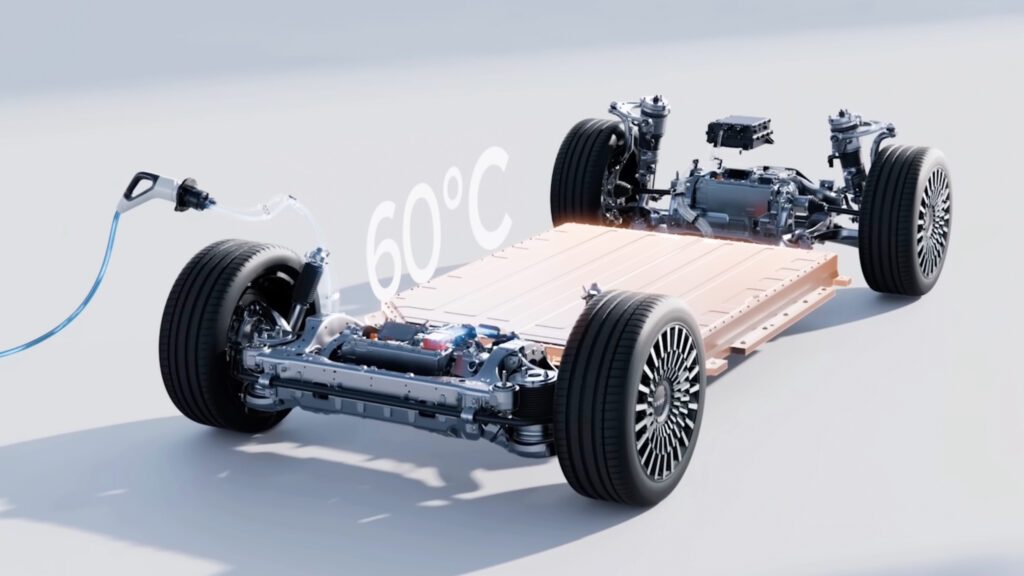
Even under extreme heat conditions, the figures remain impressive. CATL claims that at 60°C, comparable to a Dubai summer, the battery still retains 80% capacity after 1400 cycles. This is equivalent to approximately 840,000 kilometers of range, which still exceeds the lifespan of many internal combustion engine cars.
Fast Charging in 12 Minutes
The 5C designation indicates charging speed. Simply put, this battery can theoretically be fully charged in about 12 minutes. Typically, such ultra-fast charging catastrophically affects battery longevity, but CATL asserts that through smart chemistry and a thermal control system, degradation has been brought under control.
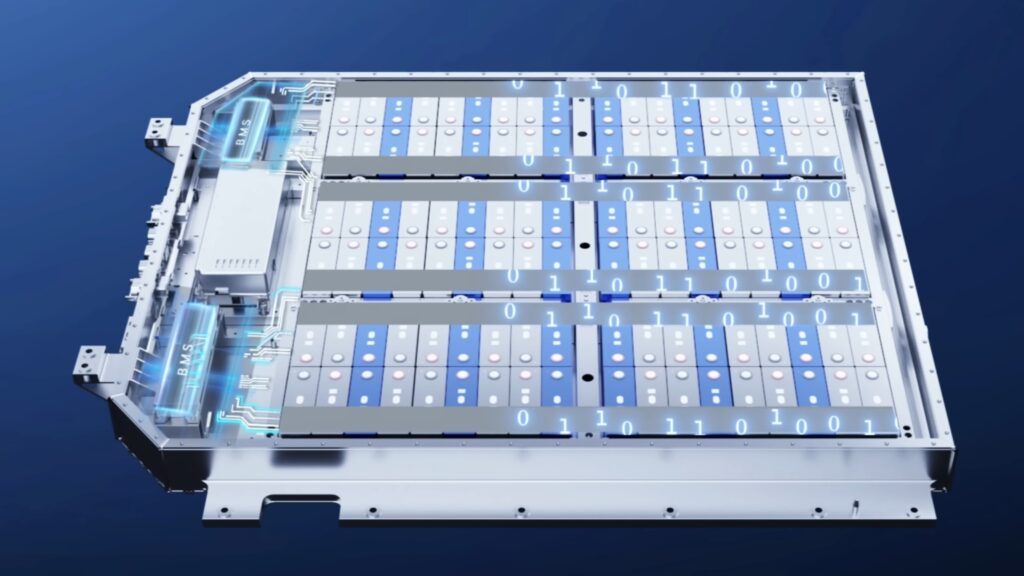
According to the company, the secret to success lies in several key technologies: a more uniform cathode coating to reduce structural damage, a special additive in the electrolyte that helps repair micro-cracks, and a temperature-sensitive layer on the separator that slows ion movement during overheating. The battery management system can also direct cooling to specific hot spots inside the pack.
Fast Charging Will Become Routine
All this work is aimed at making fast charging a common practice, not something owners try to avoid. This could be revolutionary for high-mileage users such as taxi drivers, car-sharing drivers, and delivery services, where every minute of downtime costs money.
Of course, for now, all this data is theoretical and obtained in laboratory conditions. CATL has not announced when mass production will begin or which cars will be the first to receive these long-lasting batteries. Real-world results often look less impressive than laboratory figures.
If even half of these claims prove true, the idea that an electric vehicle battery could outlive the car itself suddenly begins to sound not like science fiction, but like a real prospect for the next good used car purchase.
The potential of such technologies could radically change the used electric vehicle market, removing one of the main barriers to their purchase—the fear of an expensive battery replacement. Durability that competes with the lifespan of several cars could make electric cars even more economically attractive in the long term, especially for commercial transport. CATL’s success could also become a powerful incentive for other manufacturers to accelerate the development of their own similar solutions, leading to an acceleration of technological progress in the industry as a whole.