


In Washington, bipartisanship is rare, but there is one issue where Democrats and Republicans seem able to agree. It concerns the threat of cheap Chinese cars slowly spreading across the world.
Democrats’ Letter to Trump
The Biden and Trump administrations have established a series of barriers, including huge tariffs and a ban on connected vehicles, but some in Congress want even more action. As a result, dozens of Democrats in the House of Representatives sent a letter to President Trump, expressing “significant concern” over his remarks “regarding granting Chinese automakers access to the United States market.”
The letter was a response to Trump’s speech at the Detroit Economic Club in January, where he said that if Chinese automakers “want to come and build a plant and hire you and your friends and neighbors, that’s great, I like that.”
Although those remarks were made months earlier, the letter was apparently sent now because Trump is scheduled to meet with Chinese President Xi Jinping next month. Democrats apparently fear the president may give Chinese automakers a green light in exchange for a potential trade deal or agreement.
Demands to the President
Returning to the letter, it called on Trump to “take any and all decisive actions necessary” to prevent Chinese automakers from accessing the United States. The signatories further stated that “any attempt to lower barriers for Chinese cars or otherwise facilitate their entry into the US market would pose a direct threat to American manufacturing, workers, and national security.”
The letter also claimed that the American automotive industry supports approximately 10 million jobs and accounts for five percent of the gross domestic product. It further stated that “the Chinese automotive industry does not compete on a level playing field,” as it “is driven by a state strategy to dominate global markets through government subsidies, below-market financing, and non-market behavior across the supply chain.”
The letter also suggested that the entry of Chinese vehicles into Canada and Mexico could create “a backdoor into the United States under the US-Mexico-Canada Agreement.” The letter added: “Chinese or Chinese-controlled vehicles, regardless of where they are assembled, should not be allowed into our market through USMCA or any other mechanism.”

Unexpected Consequences and Reaction
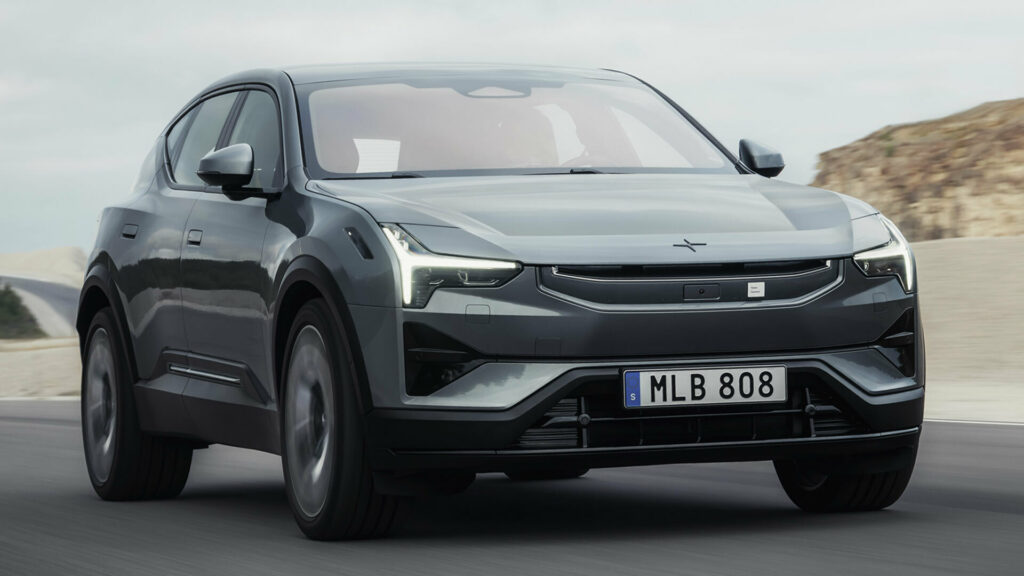
This is somewhat awkward for Polestar and Volvo, but the message called on Trump “to maintain and strengthen existing tariffs and trade enforcement measures against Chinese automakers and cars,” as well as not to allow them to create manufacturing capacity in America. Democrats also demanded that vehicles produced by Chinese or Chinese-controlled entities in Canada or Mexico be explicitly prohibited from receiving USMCA benefits or entering the United States. Furthermore, they want the government “to accelerate and expand restrictions on Chinese connected vehicle technologies.”
Reuters contacted the White House and received a response: “While the administration always works to attract greater investment for America’s industrial resurgence, any notion that we would ever compromise our national security is baseless and false.”

For its part, the Chinese embassy urged officials “to stop expanding the concept of national security, stop discriminatory and exclusionary measures, and ensure a fair, transparent, and non-discriminatory business environment.”
However, this seems unlikely, as the fear of Chinese automakers is something almost all politicians can support.
This situation demonstrates how deep the concern of American politicians is regarding the expansion of the Chinese auto industry. Despite usual political differences, the issue of protecting the domestic market and national security unites both parties. At the same time, China’s position remains unchanged: they insist on fair competition and reject accusations of non-market practices. Further developments will depend on negotiations between the leaders of the two countries, but it is already clear that Chinese cars are becoming one of the key points in the global trade confrontation.