


Luxury Cars Losing a Key Market
The global market for the most luxurious cars has sharply slowed down. Due to the conflict in the Middle East and a sharp spike in fuel prices worldwide, premium car manufacturers are watching as one of their most profitable regions falters at the worst possible moment.
Key consequences of the situation:
The Dried-Up Gold Mine
For many years, the Gulf countries were a veritable gold mine for brands thriving on excess. We’re talking about unique Rolls-Royces and Ferraris with prices silently doubling or tripling, or custom Lamborghinis. Here, it’s not about sales volume, but about margin, and a very high one at that.
Dealerships temporarily closed their doors when hostilities began, and even after reopening, the flow of customers has not recovered. One dealer from Dubai reported that business has fallen by approximately 30%, although the highest-spending buyers have not completely disappeared.
Evacuating Million-Dollar Toys
Some clients are still spending insane amounts, even paying tens of thousands of dollars just for the air evacuation of million-dollar hypercars from the region. After all, if you buy a seven-figure toy, shipping costs are a trifle.
As noted by Bentley CEO Frank-Steffen Walliser, people in the region “now have other thoughts than looking for a new Bentley.”
The timing couldn’t be worse. China’s appetite for luxury cars has sharply cooled, Europe is not thriving, and demand in the US is clouded by tariff uncertainty. The Middle East was supposed to be a reliable bright spot.
No Backup Plan
Instead, the region is turning into another major headache that no one really expected. Lamborghini CEO Stephan Winkelmann acknowledged that there is no new, fresh market that could compensate for the losses. Meanwhile, Ferrari and Maserati have already suspended deliveries, even if temporarily.
Particularly painful is the loss of custom-order business. This is where automakers make serious money, selling limited models with luxurious materials and incredibly high markups. Currently, this stream is not flowing at all.
A Symbolic Debut at an Inopportune Time
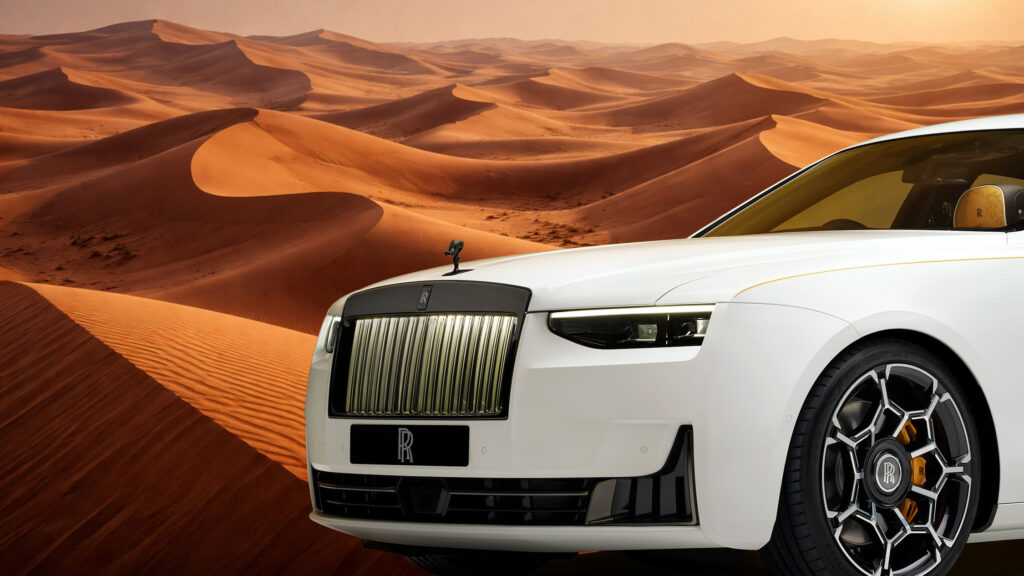
Just last month, a few weeks before the attacks, Rolls-Royce unveiled the Phantom Arabesque. This car, ordered through the brand’s Dubai hub, features laser engraving of a traditional mashrabiya pattern on the hood. However, its debut likely did not trigger the wave of similar orders the manufacturer hoped for. This vividly illustrates how a geopolitical crisis affects even the most exclusive spheres of business, where stability once reigned. The problem is not only a temporary drop in sales, but a deeper uncertainty that is forcing even the super-rich to reconsider priorities. Long-term consequences may include a reorientation of luxury car manufacturers to other regions, further intensifying competition in already saturated markets like North America or East Asia.