


Results of the New Tire Study
Well-known tire brands topped the ranking of the latest J.D. Power study on customer satisfaction with original equipment tires. However, the overall level of satisfaction with tires that come equipped on new cars has slightly decreased compared to last year.
The annual study evaluates tire satisfaction across four parameters: ride comfort, tread life, traction/handling, and appearance. It is divided into segments: luxury cars, passenger cars, sports cars, and SUVs/crossovers. This year’s results are based on responses from 38,244 owners of 2023-2025 model year vehicles across the United States.
The average satisfaction among owners of internal combustion engine vehicles was 789 points out of 1000, slightly higher than 775 for fully electric vehicles and 772 for plug-in hybrids.
Interestingly, the gap between these three categories narrowed to 14 points from 47 last year, indicating an improvement in the quality of tires used on new electric vehicles and hybrids.

Brand Loyalty
Overall loyalty to a car’s original tires increased by three percentage points, to 54%. However, if a car owner needs to replace two or more tires, brand loyalty drops to 42%, with many citing tread wear issues as the reason for trying another brand.
Industry Leaders
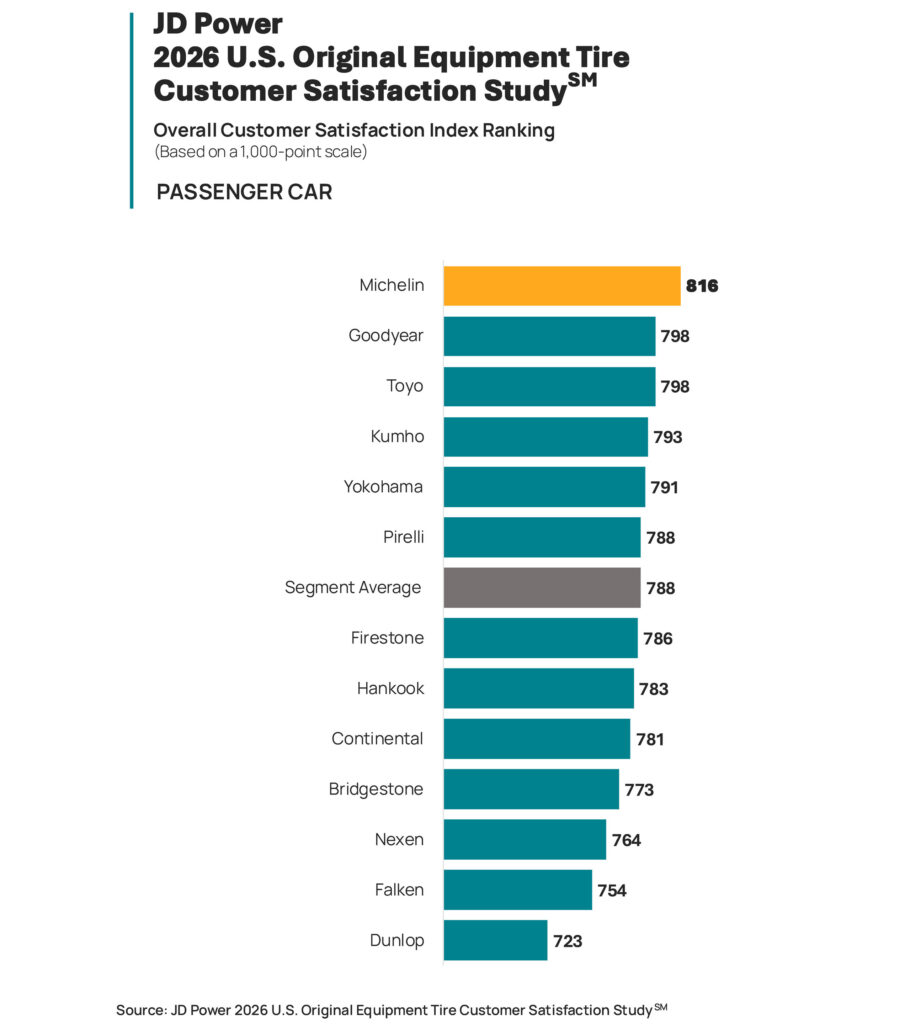
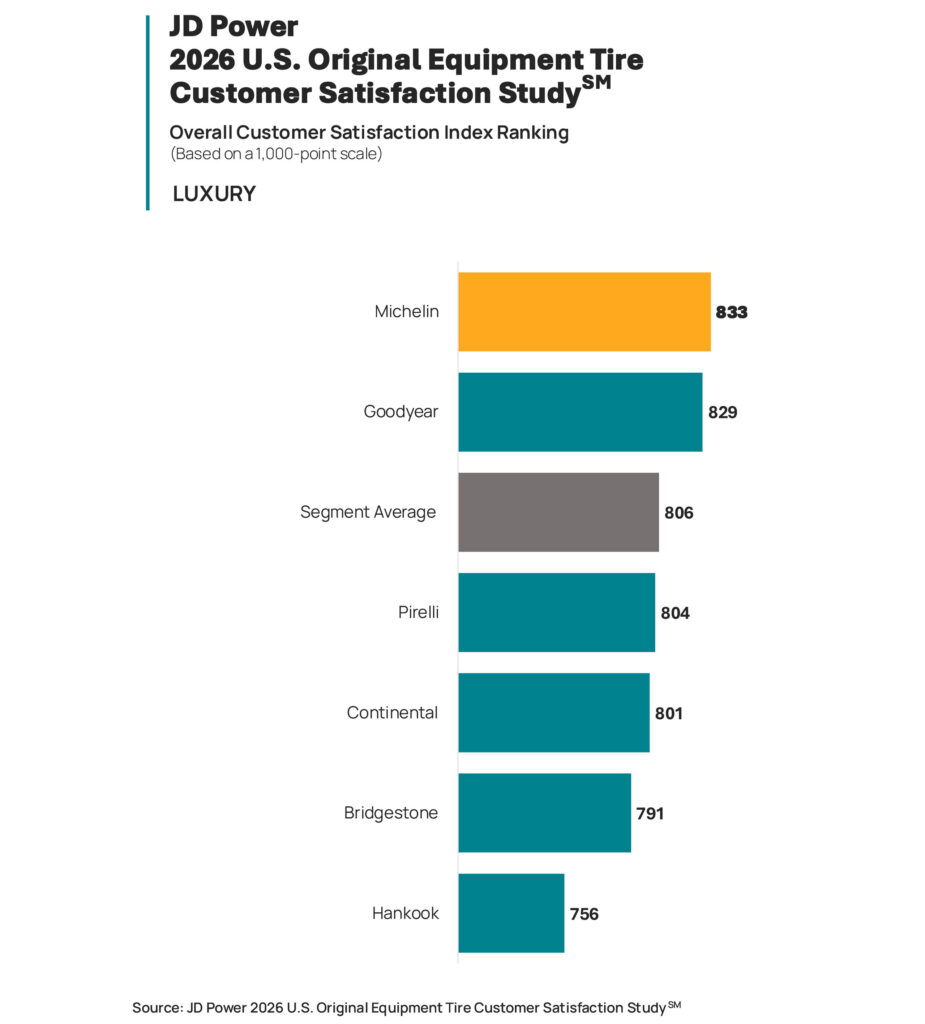
Michelin emerged as the top performer. It ranked first in the luxury car segment with a score of 833 out of 1000, ahead of Goodyear, which was second with 829 points, and significantly ahead of the segment average of 806 points. Michelin also won in the passenger car segment with a score of 816, well above Goodyear and Toyo, which tied for second place with 798 points.
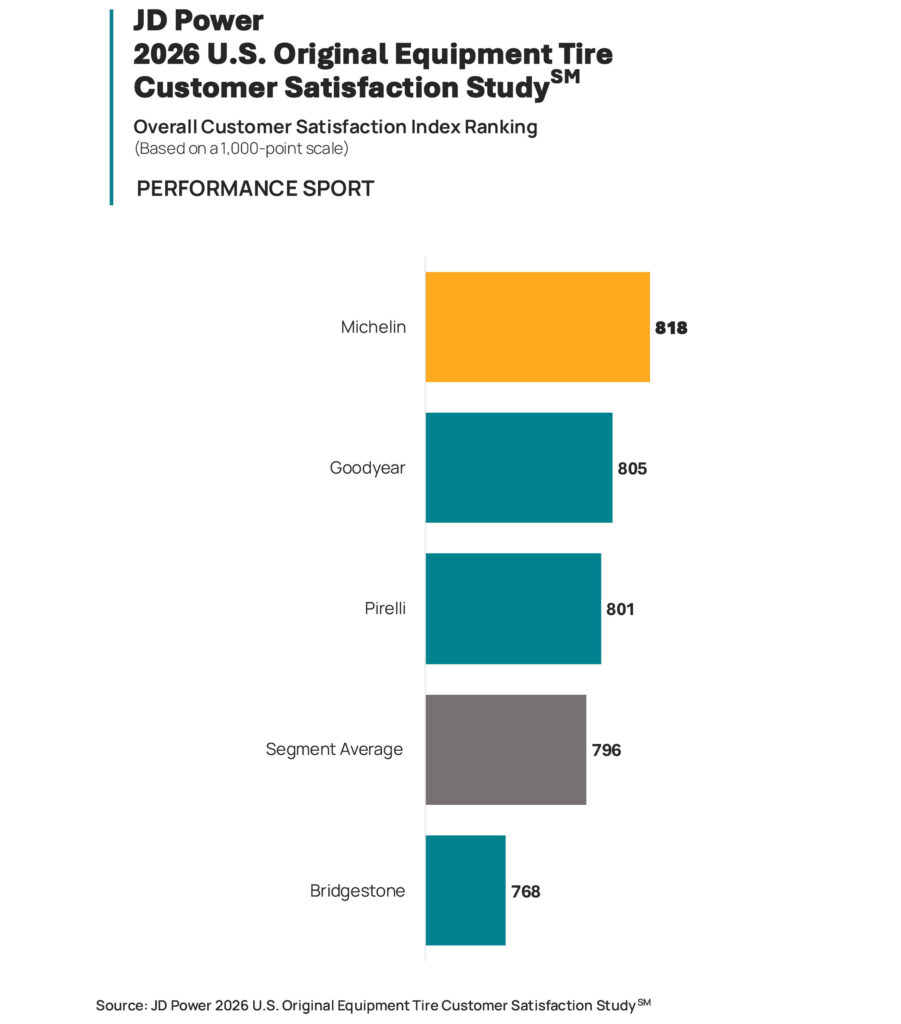

The French brand also led the sports car segment with a rating of 818, ahead of Goodyear (805) and Pirelli (801). As for the SUV and crossover segment, Pirelli won with a score of 801, while BFGoodrich took second place with 790 points, and Michelin came third with 788 points.
Among other brands featured in the study were Bridgestone, Continental, Cooper, Dunlop, Falken, Firestone, Giti, Hankook, Kumho, Nexen, Nitto, Vogue, and Yokohama.
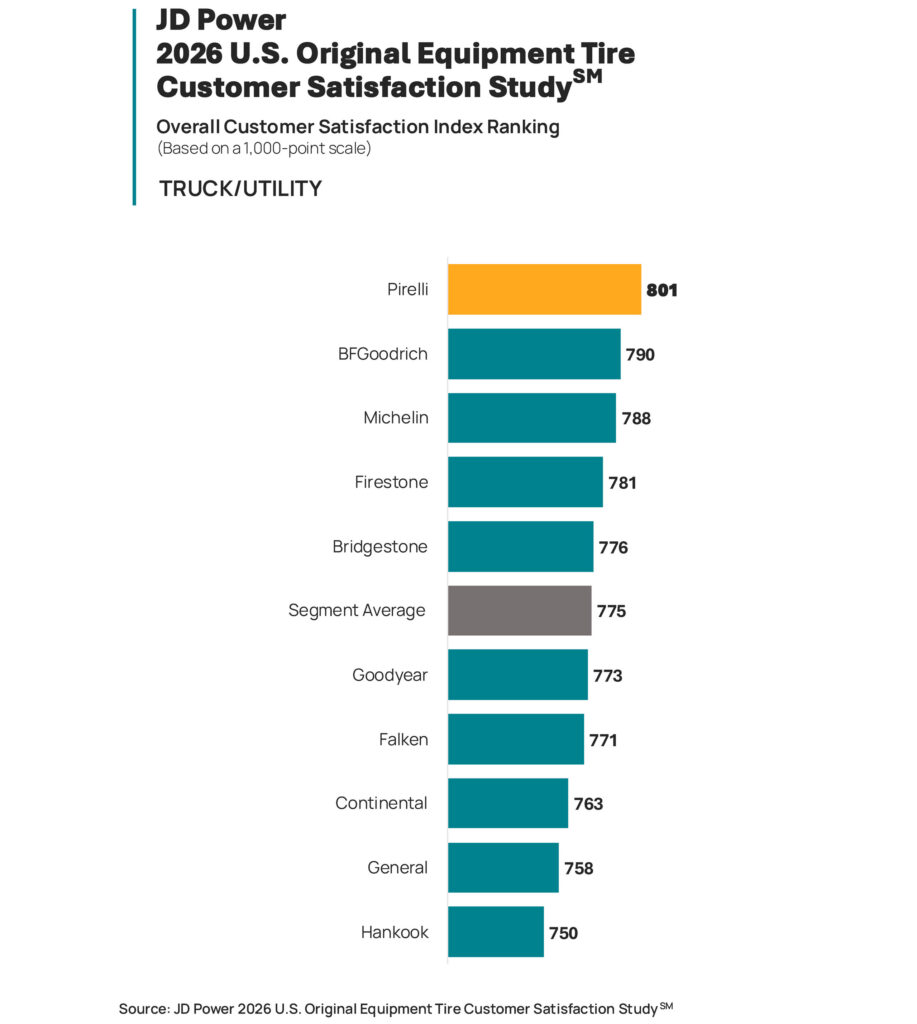


The convergence of tire satisfaction indicators across different powertrain types is an important signal for manufacturers. It may indicate that the industry is successfully adapting to the specific demands of electric vehicles, such as greater weight and instant torque, which previously could lead to accelerated wear. Michelin’s success in several categories underscores the importance of investment in research and development, while Pirelli’s victory in the SUV segment demonstrates the competitive nature of the market, where even traditional leaders can concede positions in specific niches.