


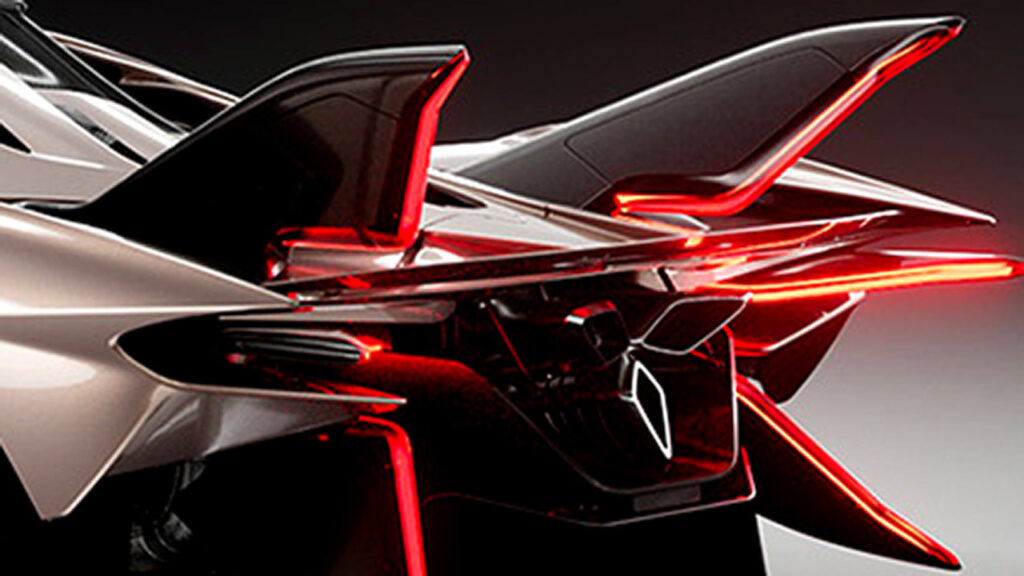
Appearance of the Production Version
After more than three years since the prototype was shown, the Apollo Evo has finally debuted in its production form. This car, created exclusively for the track and limited to a run of 10 units worldwide, continues the work of the Intensa Emozione model. The first example is already in the assembly stage.
German hypercar manufacturer returns with a V12 hammer
Design and Aerodynamics
The car is based on a carbon monocoque, the weight of which, according to Apollo, is only 165 kg. This is 10% lighter than the previous IE model, while stiffness is increased by 15%.
The absence of the need to comply with safety standards for road cars allowed engineers to create a machine against which even the most extravagant Pagani and Koenigsegg look restrained. The exterior is adorned with sharp LED lights, a massive roof air intake, an aggressive rear diffuser, and a retractable rear wing.
The Heart of the Machine
The true heart of the Evo is a 6.3-liter naturally aspirated V12 that revs to 8,500 rpm and delivers 800 horsepower and 765 Nm of torque. This engine, related to Ferrari units such as the one in the F12 Berlinetta, is paired with a six-speed sequential gearbox that drives the rear wheels. The car is shod with Michelin Pilot Sport Cup 2 R tires on 20-inch front and 21-inch rear alloy wheels.
Speed and Exclusivity
Thanks to its lightweight construction, the total weight of the Evo is only 1,300 kg. This allows it to accelerate from 0 to 100 km/h in 2.7 seconds and reach a top speed of 335 km/h. Each of the ten planned examples will be unique, as owners will be able to choose materials and finishes to their taste. The starting price begins at 3 million euros, and the first deliveries to customers are expected in the first half of this year.
The appearance of the Apollo Evo confirms a trend in the supercar world, where extreme performance is increasingly being separated from the concept of road usability. The creation of such track weapons, limited to micro-runs, is becoming a separate niche where engineers can realize the boldest ideas without compromise. This is not just a car, but rather a demonstration of peak capabilities in the fields of materials, aerodynamics, and mechanics, which may later find their way into more mass-produced models.