 by
by The average price of a new car is approaching the $50,000 mark, and a new Consumer Reports study offers clear advice for buyers looking to get the best car for their money: think twice before favoring Detroit brands.
American Brands in the Rankings
Only one established American brand made it into the top 10 of CR’s 2026 Car Brand Report Card. Technically, another American brand is on the list, but it doesn’t belong to the “legacy” manufacturers. The rankings reflect the overall quality of each brand’s cars, based on the average scores of their new models. These scores combine CR’s road test results, safety ratings, as well as data on reliability and owner satisfaction.
Among the major domestic Detroit manufacturers, only Lincoln can celebrate success, taking seventh place after a sharp jump of 17 positions thanks to significantly improved reliability. This means Ford’s premium division is doing something right, even if its mass-market models continue to collect criticism.
Lincoln climbs 17 spots as Detroit brands struggle in CR data.
The Big Picture for Detroit
However, beyond Lincoln’s unexpected success, the picture becomes grim when considering road tests, predicted reliability ratings, and satisfaction ratings from 380,000 vehicles that form the overall brand score. Cadillac sits in 17th place, Chevrolet slides to 24th, and both GMC and Jeep find themselves at the very bottom. Jeep fares the worst, occupying last place for the third year in a row, separated from GMC in the final ranking by the consistently unreliable Land Rover.
Dodge is right there, and proving it’s not just old American brands struggling, Rivian also remains near the bottom, positioned just one spot above Alfa Romeo.
Tesla’s Success and Asian Brand Dominance
Meanwhile, Tesla, bucking the overall trend, rose from 18th to 10th place, its highest position ever. This means it surpassed Mini, Kia, Nissan, Mazda, Genesis, and Audi in that order.
Tesla reaches its highest CR position, landing in the top ten.
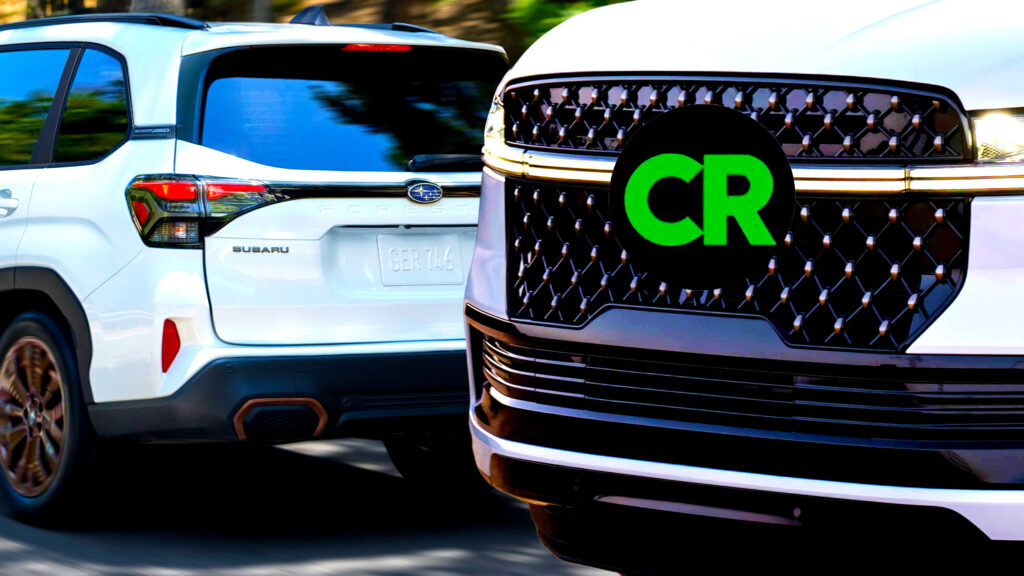
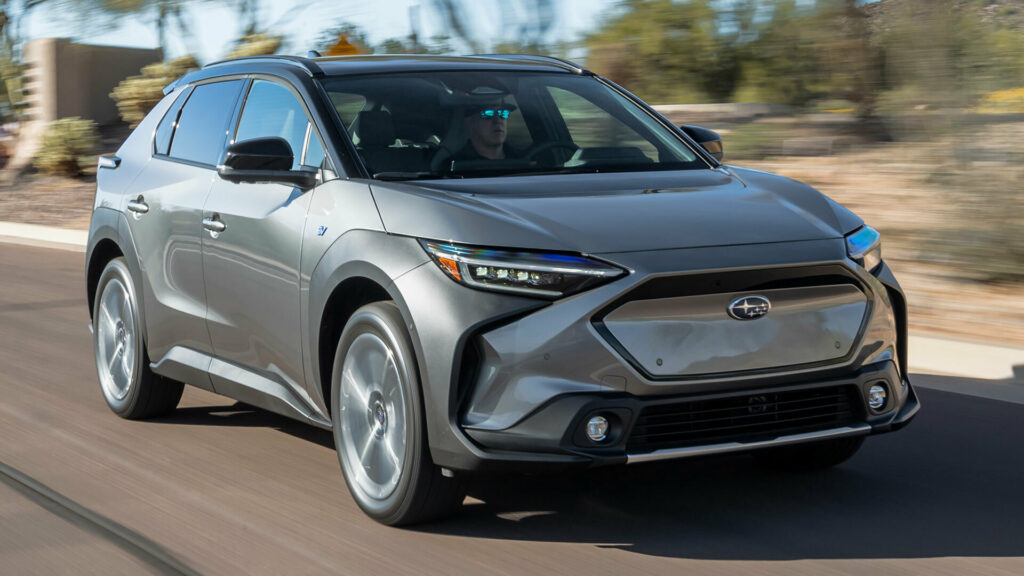
At the same time, the top of the list resembles a group photo from a Tokyo tech company’s parking lot, with a few notable exceptions. Subaru takes the overall crown for the second year in a row, followed by BMW, Porsche, Honda, Toyota, Lexus, Hyundai, and Acura.
Asian automakers again dominate overall brand rankings table.
Reliability Separately
CR also provides a separate ranking based solely on predicted brand reliability, which is based on survey data from hundreds of thousands of members reporting problems they’ve encountered with their vehicles. And here, the leaderboard shifts.
While Subaru wins the overall report, Toyota receives the highest marks for reliability, followed by Subaru, Lexus, and Honda. BMW and Buick also make the top 10 for reliability, despite being less commonly associated with longevity in public perception. Lincoln, which made the overall top 10, is much lower here – in 20th place.
Additionally, Nissan and Acura make the top 10 for predicted reliability, even if their overall scores are lower. Kia is also in this group. Tesla, on the other hand, ranks ninth for reliability but still beats several traditional brands in the overall standings.
At the bottom of the table are Ram, Rivian, Jeep, and GMC, with Rivian taking last place, a sign that growing pains remain very real for new players in the EV market.
Hybrids, EVs, and Reliability

CR also highlights the growing reliability gap between different types of electrified powertrains. Hybrids, like the Toyota RAV4, remain the gold standard, reporting 15 percent fewer problems than ICE vehicles, while electric vehicles and plug-ins report 80 percent more problems.
According to Jake Fisher, senior director of auto testing at Consumer Reports: “With the influx of many new EVs and plug-ins, and the relative newness of the technology, these growing pains were inevitable. However, we see evidence in our survey that some EVs are improving with age, and there are some reliable models.”
However, reliability is not uniform for all EVs, even within a single brand. Some manufacturers have both successful and unsuccessful models. For example, Hyundai overall performs well with its hybrid and electric offerings, but the Sonata Hybrid proves below average. Toyota and Lexus remain outstanding, but several newer plug-ins from other manufacturers continue to lag.
Essentially, simpler systems tend to cause fewer headaches. Hybrids avoid the added complexity of external charging and rely on more proven components, which likely explains their higher reliability scores.
These rankings clearly show that the car market is undergoing significant transformation. The success of Asian manufacturers and progressive brands like Tesla contrasts with the difficulties faced by traditional American companies, especially within the Stellantis group. The reliability gap between different powertrain types also indicates that the technological transition to electrification is accompanied by quality challenges that manufacturers have yet to systematically solve. For the consumer, this means that choosing a car is becoming increasingly complex and requires attention not only to the brand but also to the specific model and its technical features.