 by
by Dealers’ Lawsuit Against Colorado’s Decision
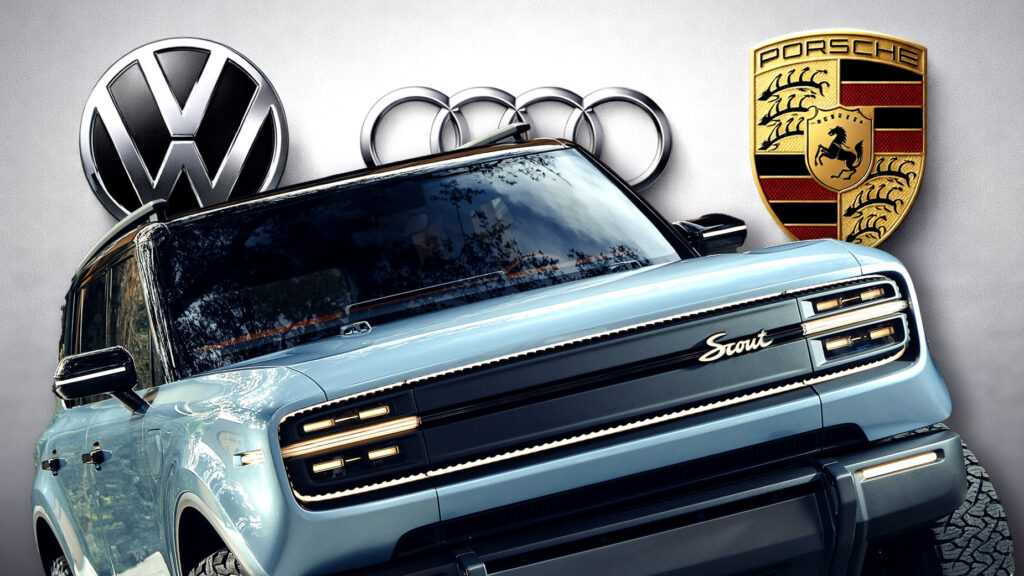
A group of Volkswagen, Audi, and Porsche dealers in the state of Colorado has filed a lawsuit challenging regulators’ decision to grant Scout Motors a license for direct-to-consumer vehicle sales. The dealers argue that state authorities misinterpreted the law and applied the definition of a manufacturer specializing exclusively in electric vehicles too broadly.
The Essence of the Legal Dispute
The lawsuit, filed on January 20 in the Denver District Court, seeks judicial review of the Colorado Motor Vehicle Dealer Board’s vote on December 16. It was then that Scout’s application to operate directly with customers was approved. Ten dealerships are acting as plaintiffs, and it is likely that others will join the case.
The key issue is whether Scout Motors truly qualifies for exemptions from local law that allow certain manufacturers to bypass the traditional franchised model. These exemptions are intended for brands that produce exclusively electric vehicles and do not have franchised dealers for the same line in the state. State regulators determined that Scout meets these requirements, but dealers categorically disagree.
Questions Regarding Technology and Classification
The center of the controversy has become Scout’s planned extended-range electric vehicle system. It will be offered alongside fully electric versions of the Traveler SUV and the Terra pickup. The company describes this setup as an extended-range electric vehicle, where a gasoline engine acts solely as a generator to power the electric motors. In other words, there is no direct mechanical connection between the internal combustion engine and the wheels.
However, dealers argue that such a distinction does not comply with Colorado law. In their view, the system functions more like a plug-in hybrid, which would deprive Scout of the right to exemptions intended for companies like Rivian or Lucid, which sell exclusively battery-electric vehicles.

Connections to Volkswagen Group
The lawsuit also notes that Scout plans to source gasoline engines for its extended-range system from Volkswagen Group production facilities in Mexico. This, according to the plaintiffs, further contradicts claims of the brand’s independence and undermines its right to a special license.

Strategy and Context of the Battle
Interestingly, the lawsuit is not directly aimed at Scout Motors or Volkswagen. Instead, it challenges the state agency’s interpretation of the law and asks the court to declare the dealer license unlawful and block its enforcement.
Such a reaction is not unexpected. Dealer networks in other states are also actively trying to eliminate Scout as a competitor, unless they themselves become intermediaries in sales. So far, dealers have not achieved significant victories in this fight, but the war is far from over.
This case could have far-reaching consequences, extending beyond one state. The court’s decision in Colorado could set an important precedent for how direct sales of electric vehicles are regulated across the country. The question of the technical classification of hybrid systems, especially those where the ICE serves only as a generator, is becoming increasingly relevant in light of the rapid evolution of automotive technology. The success or failure of this lawsuit will indicate whether traditional dealer networks can effectively use legislative nuances to protect their business model from new players, or whether regulators and courts will be more flexible in defining the future of the market.