


Why customers are leaving dealers
For many years, dealerships relied on service departments as reliable sources of profit, not to mention a way to get drivers to check out new models. Now, more and more drivers are taking their cars elsewhere, and humble oil change networks are among the main winners.
New research from Ducker Carlisle suggests that dealer service departments are losing customers to quick oil change operators, tire chains, and independent repair shops. The biggest reason seems quite simple to anyone who has seen a repair bill recently: price.
More details: $120 for an oil change? No thanks, I’ll do it myself for $6,000
According to the report, service prices at dealers rose faster than in competing sectors. This makes quick oil change points increasingly attractive, especially for routine jobs where customers value convenience and cost rather than fancy coffee machines in the waiting lounge.

“Quick oil changes are what everyone should be afraid of,” Ducker Carlisle’s Nate Chenenko told AutoNews.
He added that dealers earned less in 2025 than in 2024, while quick oil change businesses improved their results.
The market share picture confirms this. From January 2025 to January 2026, independent repairers, tire chains, and quick oil change stores gained ground, largely at the expense of dealers. Transaction volumes declined across the industry, but dealers experienced a larger drop than several competitors, and this is concerning. Selling a new car may yield a thin margin, but regular maintenance, warranty work, and repeat visits help keep the business afloat.
Free services don’t work

Perhaps the most unexpected detail concerns newer cars. Many automakers include free maintenance for the initial ownership period, which should be a built-in reason for customers to return to the dealer.
“Almost every car aged 0 to 2 years has free maintenance paid for by the manufacturer,” Chenenko said.
Even then, he said, dealers struggle to retain these owners. That’s not a very good sign.
Future of the market
For dealers, the pricing lesson may be unpleasant but obvious. However, oil change station owners shouldn’t celebrate too much. In 10 or 15 years, when electric vehicles become much more common and fewer drivers need oil changes, they may find themselves in a tight spot trying to retain customers, while tire shops and official dealerships will feel better off.
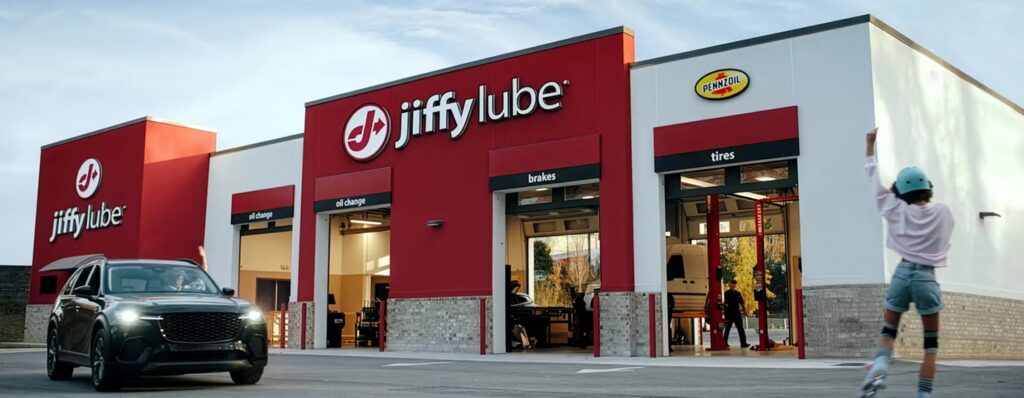

Jiffy Lube
This trend shows that even free manufacturer maintenance does not guarantee customer loyalty to dealers if prices for additional services rise too quickly. At the same time, the quick oil change market, while currently winning, faces a long-term threat from vehicle electrification. Therefore, players on both sides should consider adapting their business models to future changes, as what works today may become irrelevant in just a few years.