


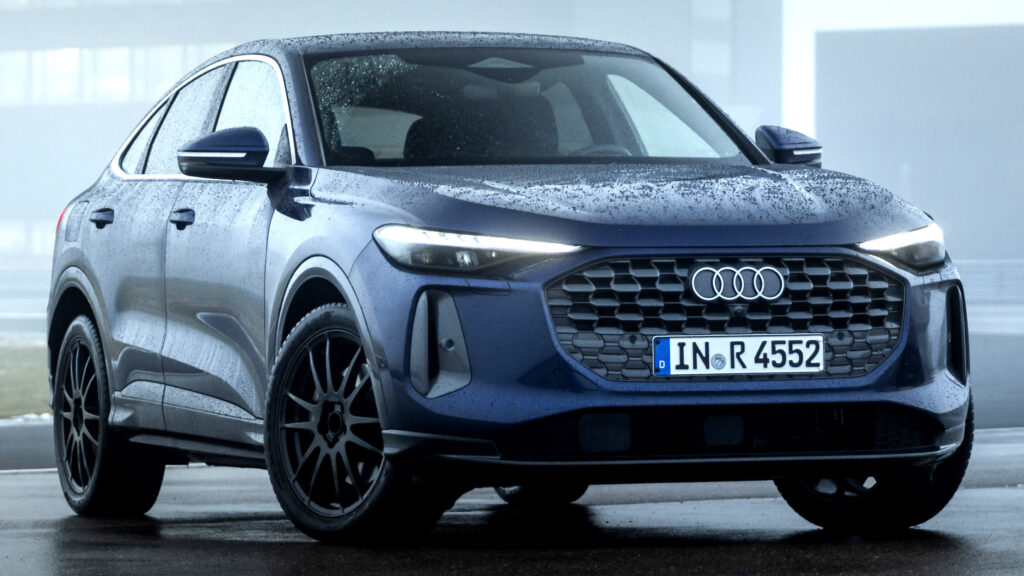
The Return of Diesel from Audi
Despite the fact that the Volkswagen diesel engine scandal a decade ago accelerated the automotive industry’s transition to electrification, Audi has decided to update diesel technology for the European market. The company has introduced a new hybrid V6 powertrain for the Q5 and A6 models, the main feature of which is the practical absence of turbo lag.
The New EA897evo4 Engine
The new engine, known as the EA897evo4, is a descendant of the EA897 unit that was involved in the diesel scandal. However, this version has been thoroughly redesigned. The 3.0-liter turbocharged V6 now develops 295 hp and 428 lb-ft of torque. Audi also promises a significant improvement in emissions figures.
Its defining feature? An intelligent hybrid system that practically eliminates turbo lag.
Key Innovation: Electric Compressor
As in many modern turbocharged models, the engine for the Q5 and A6 includes an electrically controlled compressor in the intake tract, after the conventional turbocharger and intercooler. This compressor operates from a 48-volt system. When power demand increases, air first passes through the hybrid compressor and is then additionally compressed by the turbocharger before entering the combustion chamber.
The electrically controlled compressor eliminates turbo lag, providing high torque at low engine speeds, and also improves fuel economy.
According to Audi, the compressor can provide pressure of 3.6 bar, accelerating to 90,000 rpm in just 250 milliseconds. In addition, the hybrid assist system also provides an additional 24 hp and 170 lb-ft of torque. During braking, up to 25 kW of energy is recovered and stored in the battery.
Improved Dynamics and Efficiency
Although Audi does not provide exact performance figures, the company states that “the response during initial acceleration has been significantly improved.” In the first 2.5 seconds of acceleration, cars with this new diesel engine travel approximately one full car length further than before.
As with all diesel engines, efficiency remains a key topic. The Q5 equipped with this diesel V6 consumes an average of 5.8 to 6.8 l/100 km in the European cycle, while the A6 shows a result of 5.3 to 6.1 l/100 km.
Environmental Step: HVO Fuel
Another important improvement of the EA897evo4 engine is its ability to run on hydrotreated vegetable oil (HVO), produced from used cooking oil or agricultural by-products. All new cars leaving Audi’s factories in Ingolstadt and Neckarsulm are supplied with HVO fuel in their tanks.
This step demonstrates that the development of internal combustion engines is not standing still, even in a world oriented towards electricity. The integration of hybrid technologies, such as the electric compressor, not only improves dynamics but also makes traditional diesels more environmentally acceptable and economical. The ability to use second-generation fuel, like HVO, opens the way to reducing the carbon footprint without radically changing infrastructure, which could be a key argument for many European buyers who are not ready to fully switch to electric vehicles.