


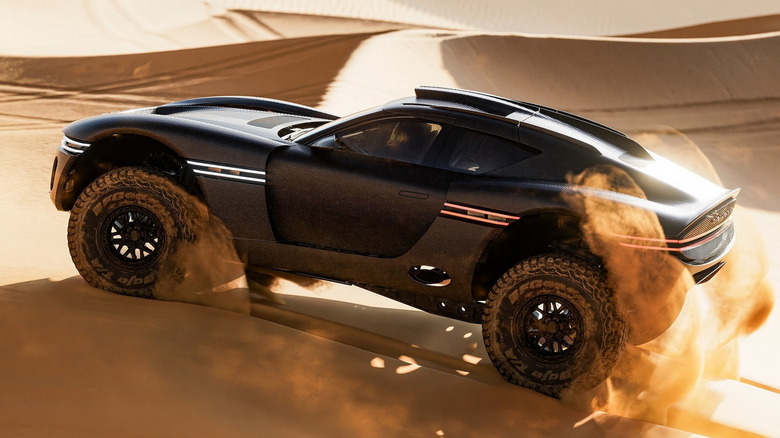
Genesis is well known for bold engineering solutions in both production models and concepts. The brand’s two latest concept cars hint that the company may be preparing a serious off-road SUV.
Earlier this year, Genesis introduced the new flagship GV90 SUV with coach doors and an unusual design without a traditional B-pillar. Even earlier, the brand showed several concepts that drew considerable interest, including the X Skorpio, focused on sand dunes, and the futuristic Gran Equator. Now Ash Corson, head of Genesis product planning, has confirmed that the company is exploring the possibility of entering the off-road SUV segment — one of the most popular in the modern automotive industry.
During a roundtable at the LA Auto Show, to which CarScoops was invited, Corson was directly asked about the brand’s latest off-road concepts. The question was related to how popular off-road-focused vehicles and versions have become in recent years.
“This is indeed the ‘white space’ that our team is currently studying quite carefully,” he said.
His other comments explain why this next stage of Genesis’s development looks especially interesting.
Experience in this segment
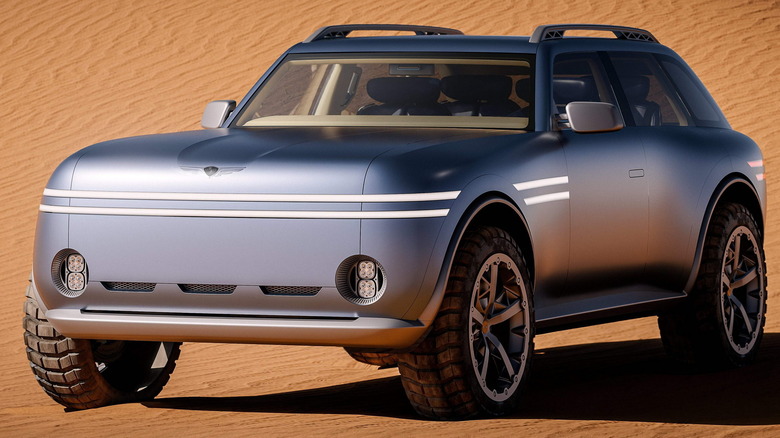
Corson was not merely talking about the brand exploring off-road SUVs. He made it clear that he personally understands the appeal of this format.
“This off-road performance segment, in my view, is a recipe and formula that I personally really like. Especially for an SUV, when you have a vehicle capable of handling the desert, uneven terrain, and serious off-road conditions, but if the dampers are tuned correctly, it turns into a real dream to drive in the city,” he explained.
This point matters because off-road capability and luxury have not always combined harmoniously. In recent years, however, this combination has become more common. SUVs from Land Rover, Mercedes, Ineos, and other brands have proven that combining serious off-road ability with premium comfort is entirely possible. Genesis already targets exactly these competitors in many other segments. Adding a genuine off-road SUV would be another step in this direction. Moreover, Hyundai Motor Group is already actively working on a body-on-frame pickup, so all the components for a competitive Genesis off-roader are effectively in place.
The Magma link
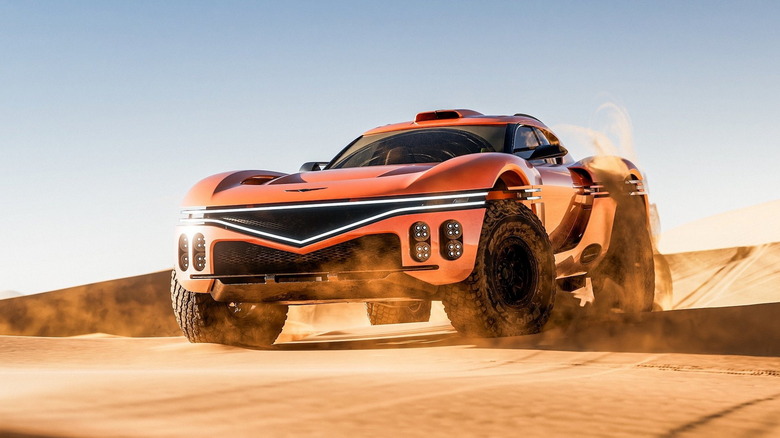
Genesis is already present in the high-performance segment, albeit still quite cautiously. The company already sells the GV60 Magma — an electric vehicle with more than 600 hp and track capabilities. Corson directly mentioned this direction when speaking about a potential off-roader.
“For us, there are still many opportunities in the ‘white space,’ but they must align with our evolving identity, including Magma. Athletic elegance is truly the foundation of what we do. Magma reinforces precisely the athletic component,” he noted.
For context, the X Skorpio and Gran Equator concepts demonstrate similar high-performance tendencies, but on completely different surfaces and with different intentions. The X Skorpio had 1,100 hp, 40-inch tires, and off-road racing suspension. Such a combination is unlikely ever to reach series production, but it contains a share of Magma DNA. The Gran Equator, in turn, was part of Hyundai’s 2025 investor roadmap as a luxury overlanding platform.
This aligns well with vehicles already operating in this space, such as the Land Rover Defender or Mercedes-Benz G-Class. Would you like one of these Genesis concepts to become a real production model? If so, which one and why?
What this could mean for Genesis
In a broader context, the off-road direction for Genesis looks like a logical continuation of the brand’s strategy: from luxury sedans and crossovers to more emotional models with a distinct character. The premium off-road segment today is not only image-building but also commercially attractive. The Land Rover Defender, Mercedes-Benz G-Class, and a number of other models prove that buyers are willing to pay for a combination of status, comfort, and real off-road capability. For Genesis, this is a chance to expand its audience and strengthen its perception as a brand capable of competing not only in traditional premium segments but also in niche segments with high margins.
At the same time, such a step will require a careful balance. A Genesis off-roader should not look like just another SUV with decorative plastic and an off-road badge. It needs genuine engineering foundations: an appropriate platform, reliable drivetrain solutions, well-thought-out suspension, and the ability to withstand loads off the asphalt. Hyundai Motor Group’s experience with body-on-frame vehicles could become an important advantage, but Genesis must preserve its own identity — the athletic elegance Corson speaks about. If the brand manages to combine serious off-road potential with premium comfort and Magma character, such a model could become not just an expansion of the lineup but another strong signal that Genesis is ready to challenge the most famous names in the premium segment.