 by
by Ford CEO Urges EU to Rethink Electrification Approach
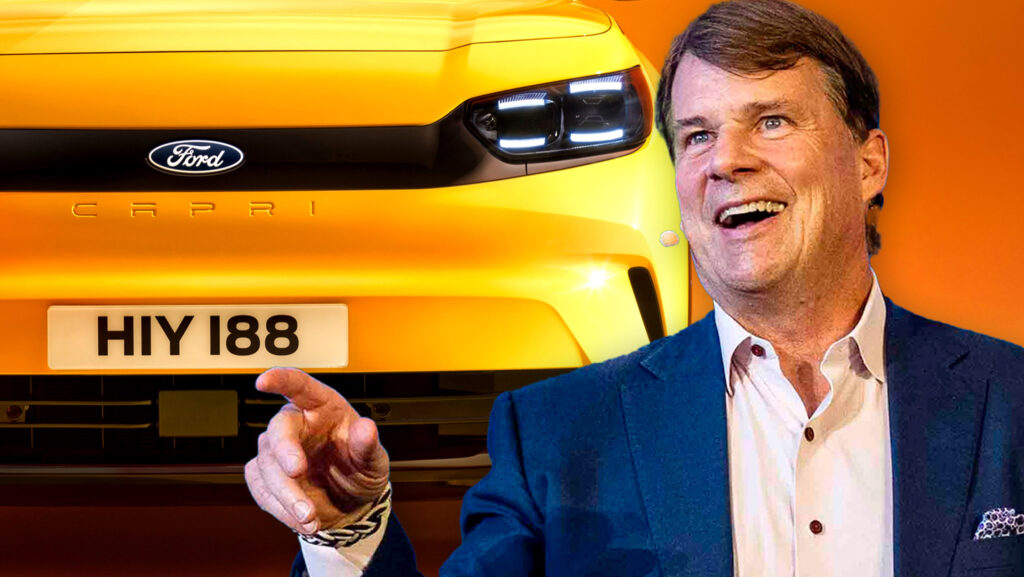
Recently, Ford CEO Jim Farley published an article calling on the European Union to set more realistic targets for electric vehicles. In his opinion, current plans could lead to the market being captured by fast-growing Chinese manufacturers.
In his address, Farley highlighted three key points:
Criticism of European Regulation
In an article for the Financial Times, the Ford chief accused European politicians of creating unrealistic norms that are often changed at the last minute, creating a “recipe for chaos.” Such a policy, in his view, costs automakers billions in investments, disrupting the complex cycle of product development, engineering, and supply chains.
The regulatory approach – “mandate it and they will buy” – has failed. We must align carbon goals with actual market demand and provide automakers with a realistic and reliable 10-year planning horizon.
Farley compared the situation in the EU to the Biden administration’s policy in the US, which he also called unfounded. He emphasized the need to allow consumers to use hybrid vehicles as an intermediate step for longer, rather than forcing them to leap to electric vehicles they are not yet ready for.
Investments and the Threat from China
Farley noted that European automakers have already invested hundreds of billions in electrification. Instead, he believes governments must significantly strengthen support by introducing serious purchase incentives and developing charging infrastructure far beyond affluent urban areas.
However, he sees Chinese competitors as the main threat. With enormous overproduction capacity and strong positions in battery technology, China can now flood the European market. Just last year, the share of Chinese EV brands in the region doubled.
Car production in the EU is now 3 million units below pre-pandemic levels. Factories are closing. In 2024 alone, 90,000 jobs in the automotive industry disappeared. These are the very jobs that support Europe’s social stability.
Farley warned that the combination of subsidized Chinese electric cars and stringent carbon regulations could undermine the local industry faster than regulators expect.

Call to Action and Restructuring
The Ford chief stated that the industry is not asking for a bailout or protectionism to shield inefficiency. He emphasized that Ford continues the hard work of restructuring, closing outdated capacity and reducing costs.
But if Europe wants to avoid turning into a museum of 20th-century manufacturing, we need an urgent reboot and a long-term plan. This is not a transition. It is more like the gradual closure of Europe’s automotive industry.
Without immediate course correction, in Farley’s opinion, Europe’s industrial base could gradually decline. His call is not just criticism, but a warning about systemic risks that require coordinated action from regulators, manufacturers, and consumers to preserve competitiveness in the new era of automotive manufacturing.
Ford’s position reflects a broader industry discussion about the pace of transition. Many experts agree that the EV market faces obstacles such as high cost, range anxiety, and uneven infrastructure. The success of Chinese manufacturers demonstrates that competition is no longer confined to traditional boundaries, requiring European companies not only to innovate but also to adapt business models to the new realities of the global market.