 by
by BYD Introduces New Versions of the Shark 6 Pickup
The Chinese automaker BYD has expanded the lineup of its popular plug-in hybrid pickup, the Shark 6, with two new modifications. One of them, the Shark 6 Performance, received a more powerful engine and significantly improved towing capacity.
Here are the key updates of the new models:
A Response to Competitors’ Criticism
The BYD Shark 6 has been quite successful in establishing itself in the Australian market, becoming a serious alternative to models like the Ford Ranger, Toyota Hilux, and Mazda BT-50. However, its towing capabilities remained a weak point. The new flagship Performance version aims to correct this.
This announcement came very timely, as just a few weeks ago, Ford CEO Jim Farley expressed doubts about the ability of Chinese pickups, such as the Shark 6, to be real workhorses.
They haven’t been doing it like our Ranger or Hilux have for decades. They don’t have all the chassis knowledge, all the towing and payload loads, and all the experience.
It might be a coincidence, but the new model seems designed to answer at least part of that criticism.
Updated Hybrid Powertrain
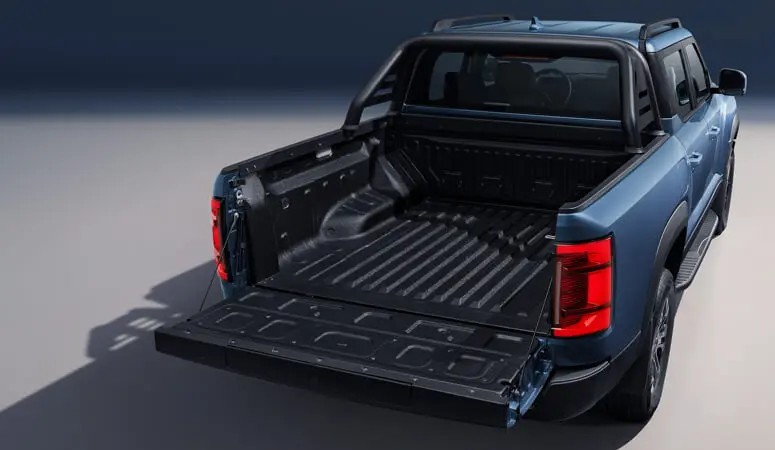
While the base Shark 6 Premium model is equipped with a 1.5-liter turbocharged four-cylinder plug-in hybrid producing 430 hp, the Shark 6 Performance received a 2.0-liter turbocharged engine. This allowed for an increase in power to 469 hp and torque to 700 Nm. Acceleration from 0 to 100 km/h now takes 5.5 seconds.
Even more important is that the maximum trailer mass has increased to 3500 kg. This figure now matches key competitors like the Ford Ranger and significantly exceeds the capabilities of the standard model. However, BYD has not yet disclosed information about the maximum payload, another parameter highlighted by Jim Farley.
New Technologies and Models
In addition to the power increase, the pickup has received new technologies. For the Performance version, engineers added a crawl mode specifically designed for overcoming rocks, steep slopes, and deep ruts. In this mode, speed is limited to 20 km/h, and the system constantly adjusts torque to minimize loss of traction.
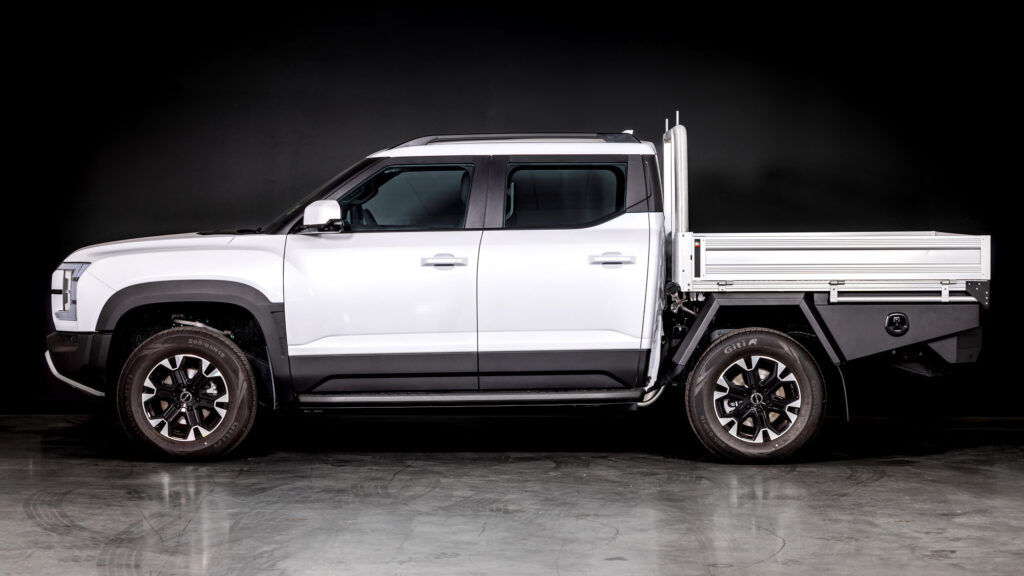
Alongside the Performance, a Dynamic Cab-Chassis model has appeared in the lineup. It is aimed at tradespeople and commercial users who do not need a standard cargo bed, instead offering a sturdy aluminum body with eight mounting points and two built-in storage boxes.
Competitive Pricing Policy
The new top-of-the-line Performance version is naturally more expensive than the standard Premium. Its starting price in Australia is 62,900 Australian dollars. Despite this, it remains significantly more affordable than direct competitor models. The Dynamic Cab-Chassis model with the powertrain from the mid-level Shark 6 Premium starts from 55,900 Australian dollars.
The emergence of these models clearly demonstrates BYD’s strategy: not just to offer electric vehicle technologies, but to integrate them into segments dominated by time-tested names. Increasing towing capacity to class level and adding specialized features like crawl mode shows that the company takes seriously the remarks about insufficient suitability for heavy work. This could be a turning point in the perception of Chinese pickups in global markets, especially in regions where reliability and capability are more important than low price. The success of the Shark 6 in Australia has already proven that demand exists, and now BYD is trying to convince even the most skeptical buyers.