


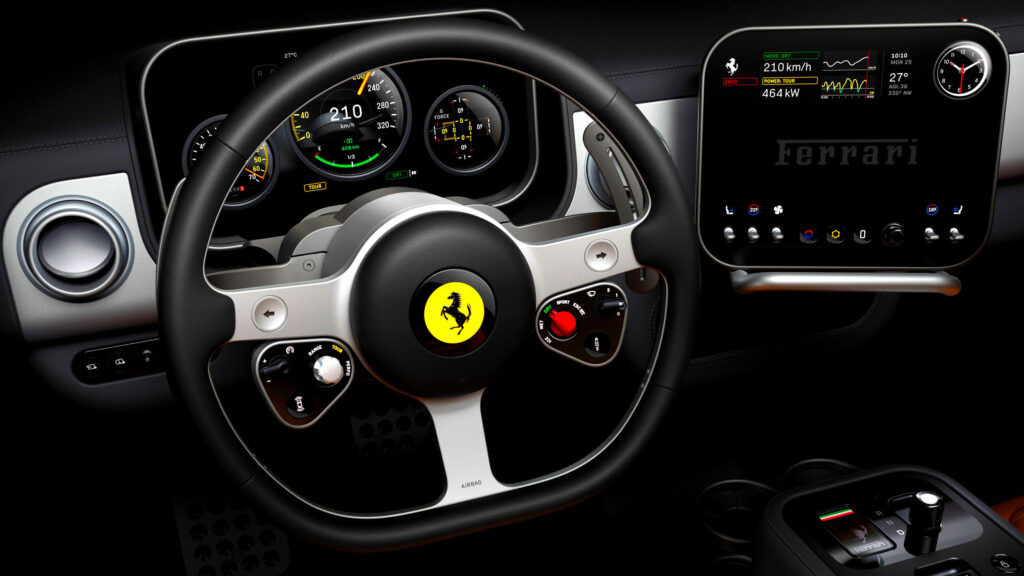
Ferrari’s first electric car is named Luce, meaning “light.” Its interior combines retro styling with futuristic digital technologies. Key features include exposed aluminum and innovative multi-level displays previously unseen in cars. The Nardi-style steering wheel is equipped with manettino switches for controlling power and chassis.
Tactile Sensations Instead of Touchscreens
If you thought Ferrari’s first electric car would resemble an iPad on wheels, you were mistaken. The new cabin, designed by former Apple designer Jony Ive, is a brilliant blend of digital technology, tactile physical controls, and retro details that will make even a trip to the store feel like participating in the Mille Miglia race.
The Italians unveiled the interior of the Luce model ahead of the exterior reveal, scheduled for May, to prove that an electric Ferrari can be a true car with a soul.
The design energy came from the LoveFrom agency, a creative collective founded by Jony Ive and Marc Newson. Ive is known for his work on touch technologies like the iPhone and iPad, but for this project, he insisted that the Luce must have many real switches.
The Return of Mechanical Switches
The Luce bets on physicality. Real buttons, real toggles, real rotary dials that click with satisfying precision. Ferrari reports that test drivers went through over 20 adjustment cycles to achieve the perfect feel and sound for each switch. It’s like ASMR for your fingers, especially the launch control switch located above the driver’s head, akin to an airplane.
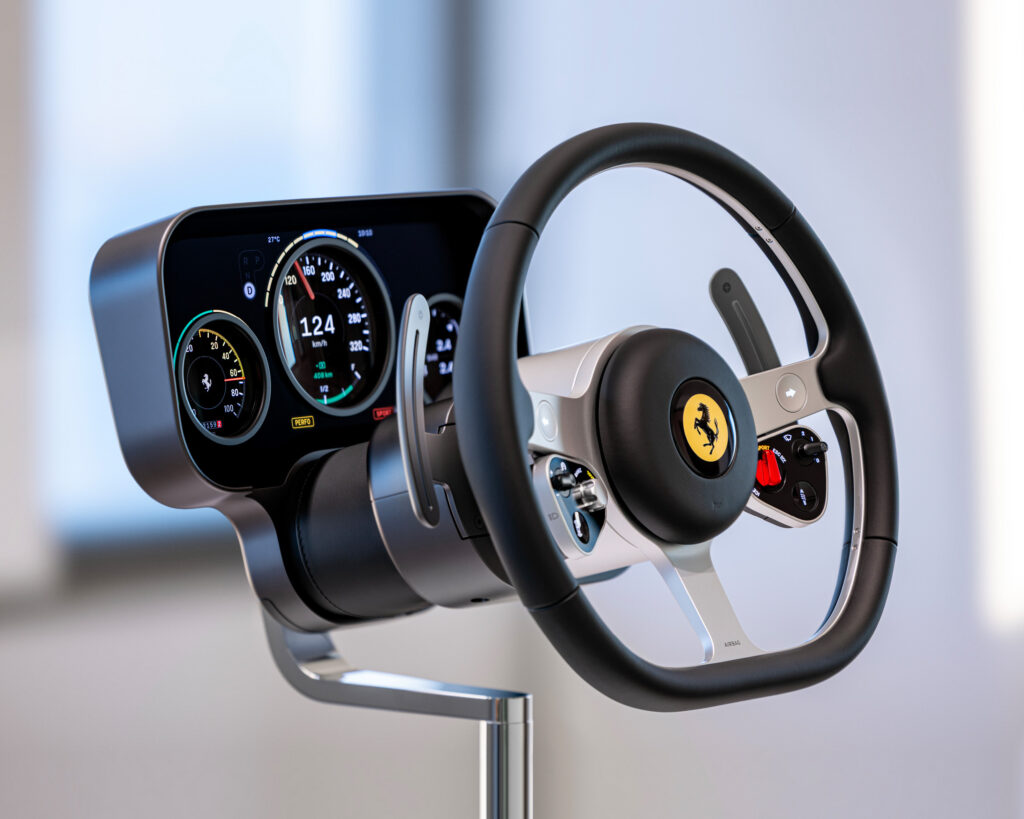

The centerpiece is the steering wheel, which looks as if it traveled through time from the 1960s. Three thin spokes, exposed aluminum, and a layout inspired by classic Formula 1 bolides. Nineteen parts machined on CNC machines make it lighter than a standard Ferrari steering wheel, while being equipped with finger controllers that allow adjusting settings without constantly touching the screen.
Real or Virtual?
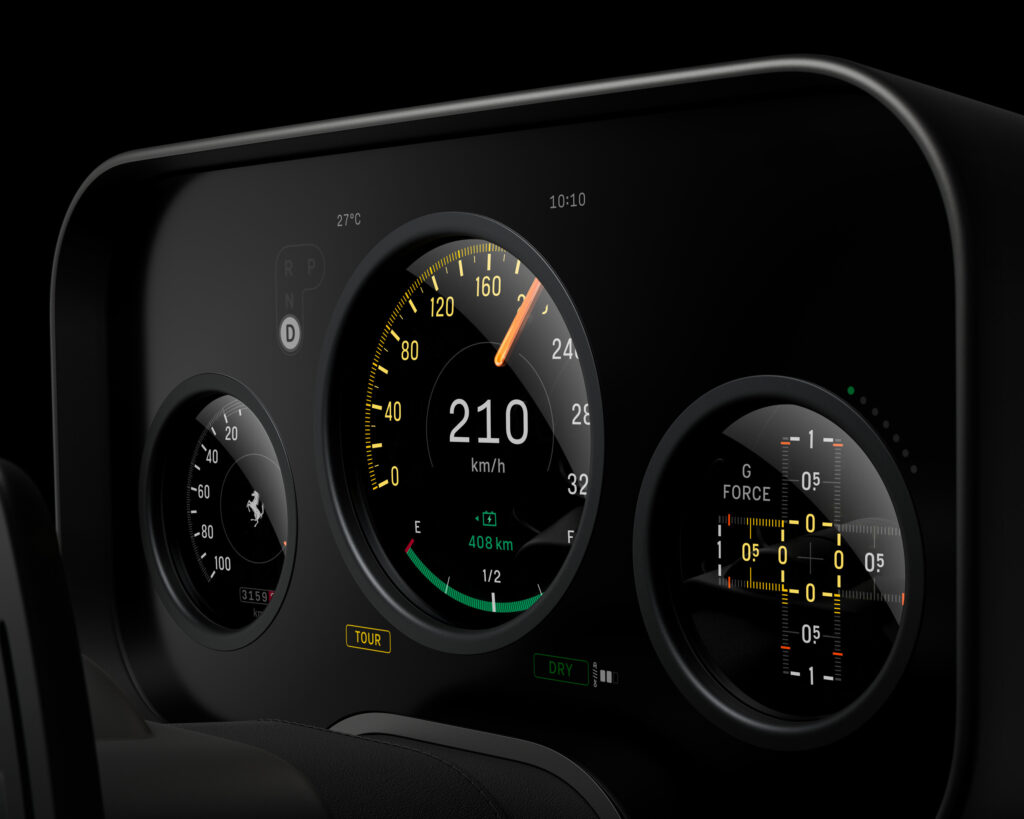
Behind it lies an incredible instrument panel developed with the participation of Samsung Display. Two ultra-thin OLED displays are overlaid, creating deep, multi-level dials that at first glance look almost analog. There’s even a physical needle moving across the digital graphics because, apparently, pixels alone weren’t dramatic enough.
According to Ferrari, the Luce’s digital displays were “inspired by both historical automotive trends and the clear, purposeful graphic solutions found in aviation, particularly in helicopters and aircraft.” The influence is easy to spot. The layout and typography are unmistakably automotive, a modern tribute to Veglia and Jaeger instruments from classic Ferraris.
The Startup Ritual
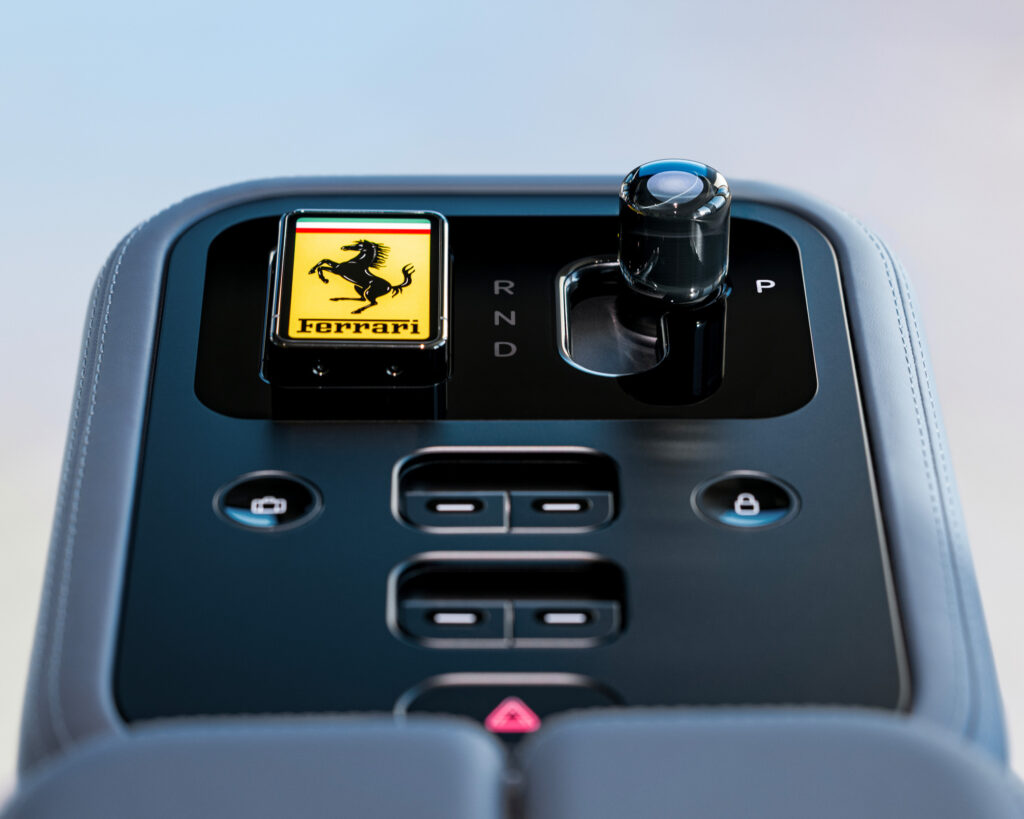
Ferrari made a mistake with the SF90 model by placing an unpleasant touch-sensitive start button on the steering wheel, which robbed much of the thrill of firing up a car from Maranello. But the company has corrected this with the startup ritual in the Luce. First, you insert a massive glass key into a dock on the console. Its color changes, after which the gear selector awakens in a coordinated light show.
We’ll have to wait until May to see the exterior of the Luce, although it’s likely that by then we’ll learn more about the powertrain and chassis package.
Many thought it would be hard to get excited about an electric Ferrari, no matter how fast it laps Fiorano. But if the rest of the car is as thoughtful and original as this cabin, there will be much to love, even if there’s no gasoline in its veins.
The presentation of the Ferrari Luce interior is a significant step for a brand traditionally associated with the roar of internal combustion engines. The emphasis on tactile materials, mechanical switches, and emotional connection with the driver indicates that the company is trying to rethink luxury and driving thrill for the electric era. This is not just a transition to a new type of drivetrain, but an attempt to create a new type of interaction where technology enhances, rather than replaces, physical sensations. The success of this approach could influence all luxury car manufacturers facing the same challenge.