


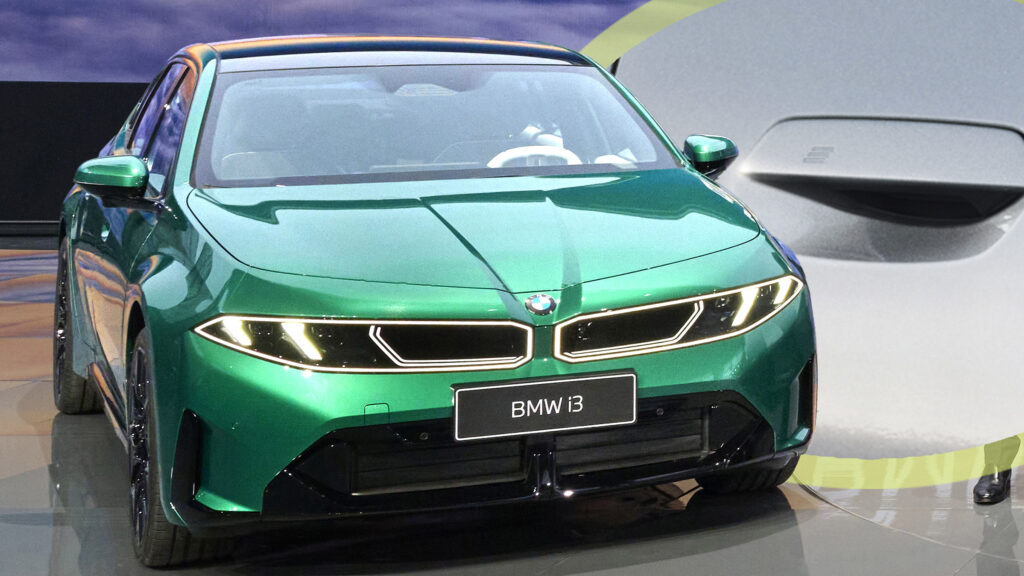
Door Handles as a Symbol of Safety
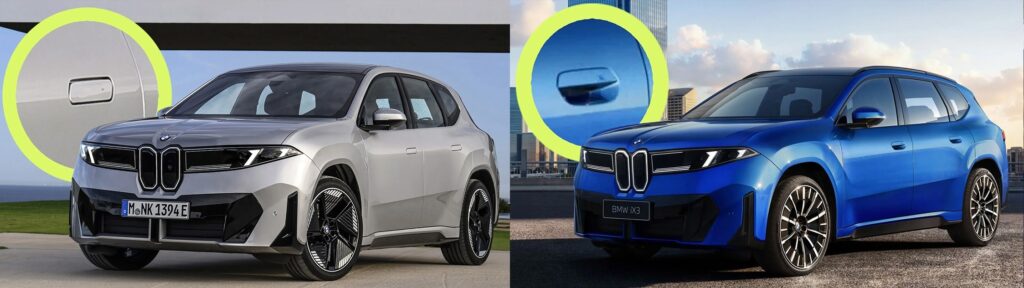
The new electric BMW i3 and iX3 models, specifically designed for the Chinese market, have received not only an extended wheelbase but also a key design change — conventional semi-flush door handles instead of retractable ones. This decision is driven by safety concerns following a series of high-profile accidents in China, where passengers in damaged electric cars with retractable handles had problems evacuating.
Similar issues concern other manufacturers, for example, Tesla, whose models have also been the subject of investigation due to problems with door handles after a power loss. Thus, traditional handles turn out to be not so outdated after all.
BMW states that the redesigned equipment complies with Chinese regulations while simultaneously meeting its own global safety standards.
Technical Features and Adaptation for China
Both novelties are built on the Neue Klasse architecture but have received an extended wheelbase to provide more legroom in the rear row — an important factor for Chinese buyers. For the iX3L, the wheelbase is increased by 108 mm, making it comparable to the X5.

The interior is equipped with the BMW Panoramic iDrive system and a China-specific version of Operating System X. Navigation is developed jointly with Amap, and artificial intelligence is supported by Alibaba and DeepSeek. Compatibility with HarmonyOS NEXT is also provided for integration into the local digital ecosystem.
The driver assistance system was developed jointly with the Chinese company Momenta and adapted to local roads, traffic, and parking conditions. BMW claims it offers Level 2 navigation support in cities, on highways, and in parking lots.
Claimed Range and Reality
The manufacturer claims impressive range figures: over 900 km for the iX3 Long Wheelbase and more than 1000 km for the i3 Long Wheelbase according to the local CLTC cycle. However, these figures are met with healthy skepticism.
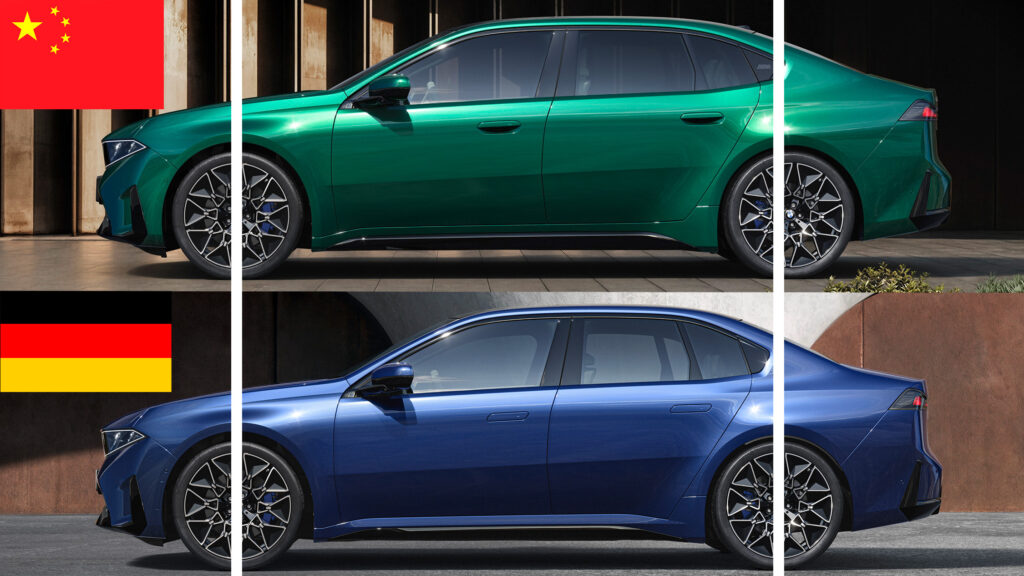

For comparison, in North America, the standard versions of the iX3 and i3 claim about 400 and 440 miles respectively under the EPA standard. The Chinese models received 800-volt electrical systems with charging capability of up to 400 kW, which, however, falls short of the offerings from local manufacturer BYD.
The powertrain of the iX3 50L xDrive delivers 463 hp and 645 Nm of torque. The question of whether BMW should also replace retractable handles with more traditional ones in Western markets remains open for discussion.
Interestingly, BMW’s decision to change door handles highlights a broader trend in the automotive industry: the balance between innovative design and practical safety. The Chinese market, being one of the largest and most dynamic, often becomes a testing ground for such decisions, which can later influence global products. The adaptation of software and driver assistance systems to local realities also shows how deeply automakers must integrate into the local environment to remain competitive. The claimed range figures, although optimistic, remind us of the importance of understanding the difference between laboratory test cycles and real-world operation, which is key to building consumer trust in electric vehicles.