


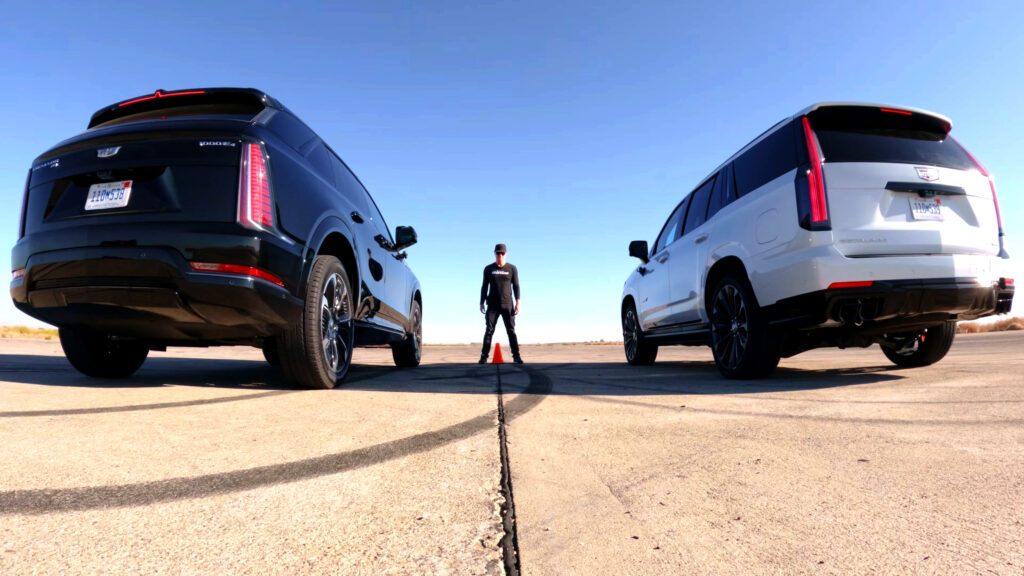
Two Cadillac Flagship SUVs Compete Over a Course
There is something uniquely American about the idea of creating a huge SUV with insane acceleration figures and then expecting it to handle like a sports car. The Escalade-V and its electric “brother,” the Escalade IQ (which is not a direct modification of it), are arguably the two most excessive cars in Cadillac’s lineup today. Both offer supercar-level power, which naturally raises the question: which one is faster?
Curious about this, Edmunds experts organized a so-called U-drag race for them. Watching these two colossal SUVs go through sharp launches, intense braking, and tight turns is a spectacle that is both impressive and brings a smile to your face.
Gasoline V8 Power vs. Instant Electric Motor Torque
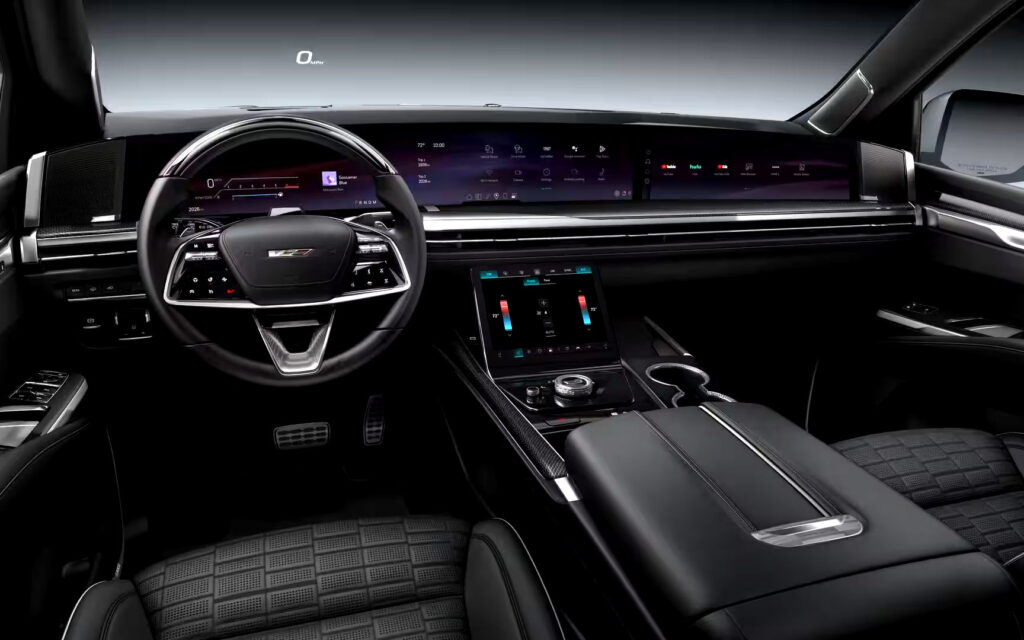

On paper, the Escalade-V and IQ are very close in performance figures, although their powertrains are fundamentally different. The V version is equipped with a 6.2-liter supercharged V8 engine that produces 682 hp and 885 Nm of torque. This power is sent to all four wheels via a 10-speed automatic transmission.
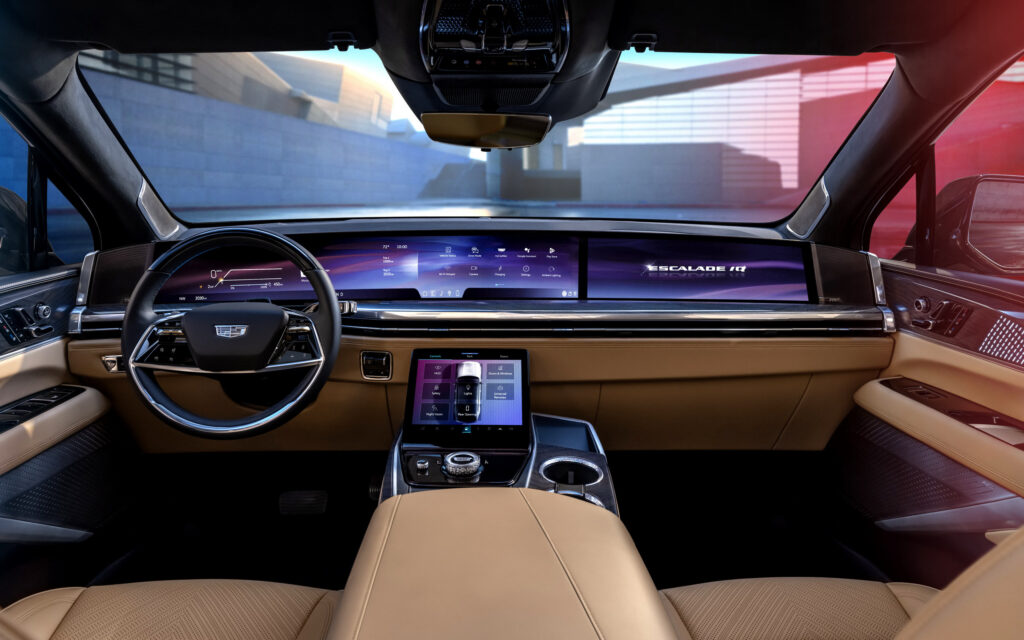
In contrast, the Escalade IQ relies on a pair of electric motors and a massive 212 kWh battery pack. In standard mode, it develops 680 hp and 834 Nm. However, when the Velocity Max mode is activated, the figures increase to 750 hp and 1063 Nm of torque.
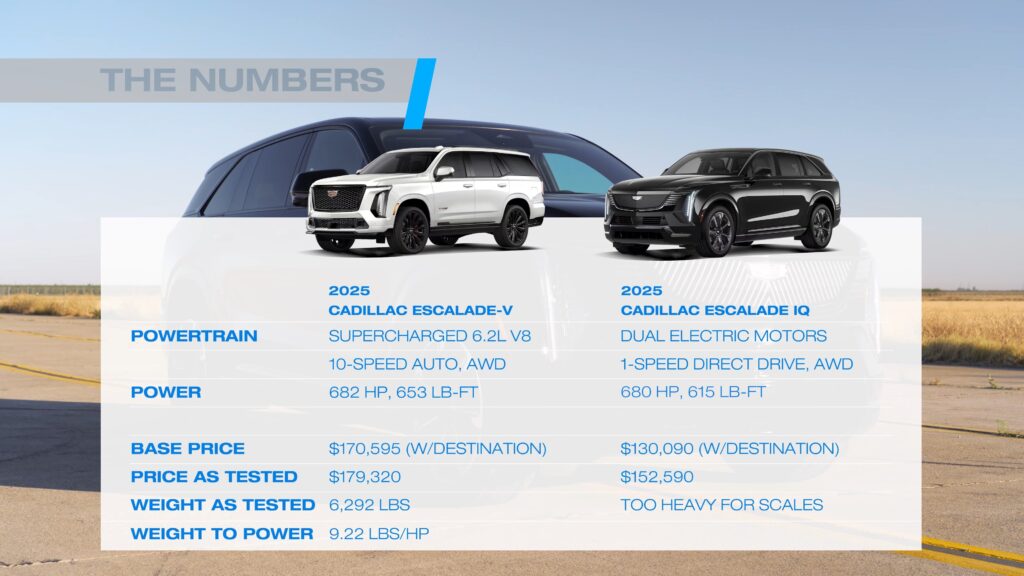

This extra power for the electric version is needed to at least partially compensate for its incredible weight. While the gasoline Escalade-V weighs about 2,857 kg, the electric IQ reaches a mass of approximately 4,127 kg, making it one of the heaviest production passenger cars on the market.
It is this weight difference that determines the outcome of the competition. On a straight section, instant electric torque can momentarily mask the mass, but the laws of physics always prevail. The U-drag race format, with a sharp launch, intense braking, a tight turn, and a sprint to the finish, reveals not only power but also how well each vehicle manages it.
The Course of the Competition and Unexpected Results

During the first run, the gasoline V version got a better launch. However, after the U-turn, the transmission couldn’t quickly find the right gear, and this delay cost the Escalade-V the lead. This allowed the electric IQ to surge ahead and cross the finish line with an advantage of several car lengths.
In the second run, the fight was more even. This time, the electric model had a better launch, although the V version made up some of the deficit during braking. The rivals raced to the finish neck and neck, but at the top end, the IQ slightly ran out of “breath,” allowing the Escalade-V to snatch a narrow victory.
Such competitions clearly demonstrate how technology is changing the perception of performance for heavy vehicles. Electric propulsion offers incredible immediacy, but the weight of the batteries remains a critical factor for dynamics. On the other hand, traditional powerful internal combustion engines, like the one in the Escalade-V, demonstrate their effectiveness in complex challenges where not only power is important, but also balance and transmission reliability. The competition between the two types of powertrains within the same model family only increases interest in cars of this class, offering buyers a radically different, yet high-tech experience.