


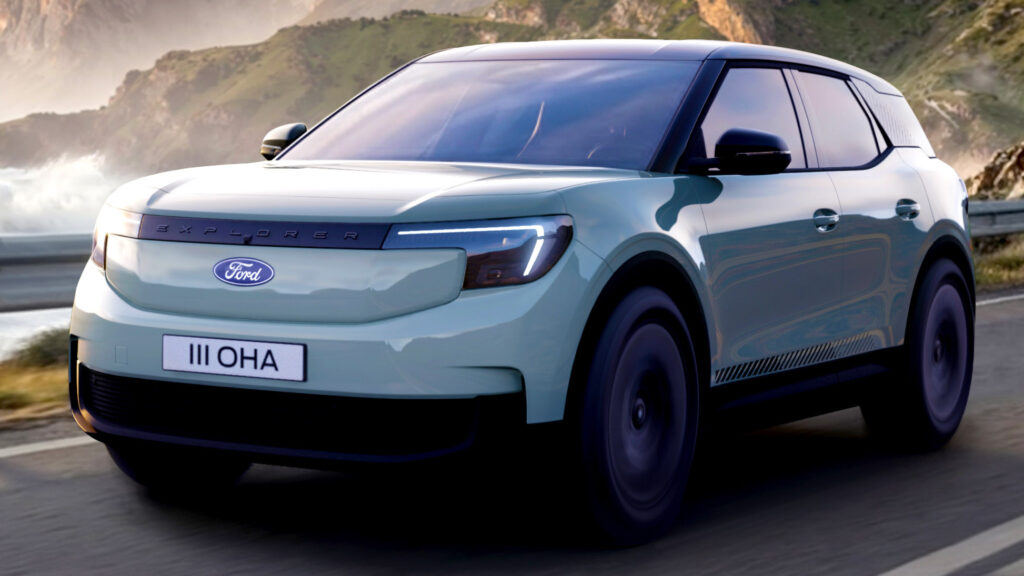
Ford has introduced a series of updates for the electric Explorer SUV, designed for the European market. This model, built on the Volkswagen ID.4 architecture, has received improvements in key areas.
Updated Powertrain
The base Explorer Standard Range version is now equipped with a new lithium-iron-phosphate battery and an improved electric motor. Its power is 188 horsepower, and torque is 258 pound-feet. Thanks to these changes, the SUV’s range according to the WLTP international cycle has increased to 444 kilometers, which is 60 kilometers more than before. The increase in motor power is 20 horsepower, which reduced the acceleration time from 0 to 100 km/h from 8.7 to 8.0 seconds.
New Driver Assistance Systems
In addition to updating the powertrain, the Explorer received an improved adaptive cruise control system with road sign and traffic light recognition. The system can automatically slow down or stop the car if a red or yellow light is detected ahead.
A Reversing Assist function has also appeared, which automatically remembers the last 50 meters of the car’s path and can repeat the trajectory when reversing. This system is designed to help exit tight spots, such as dead-end courtyards. The driver only controls the accelerator and brake pedals.
Working in conjunction with it is the Trained Park Assist system, which allows owners to program a parking maneuver up to 50 meters long. After training, the car can automatically park, independently controlling acceleration, braking, and steering.
The electric vehicle also received a new one-pedal driving mode, as well as a Driver State Assist driver monitoring system. If the driver stops responding, the Explorer can activate hazard lights, safely come to a stop, unlock the doors, and call emergency services.
Improved Multimedia System and Power Function
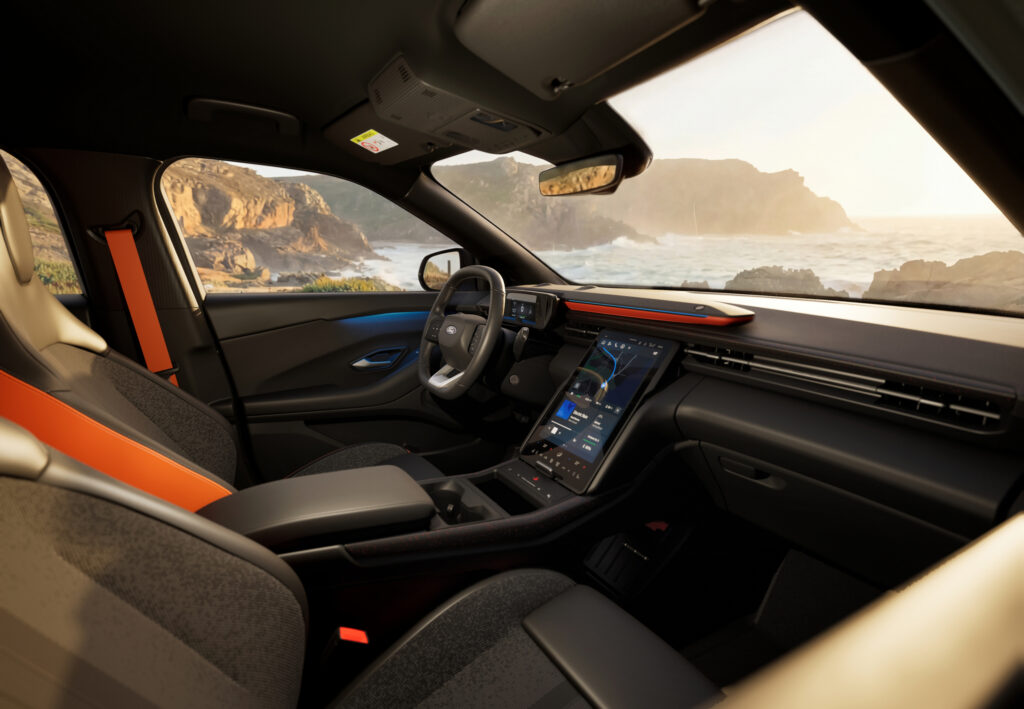

The 14.6-inch multimedia system now runs on Android, promising smoother operation. The system’s interface has also received a new design, developed for greater clarity and ease of use.
Furthermore, the Pro Power Onboard feature turns the Explorer EV into a large mobile battery. An outlet is located in the luggage compartment, and with an additional adapter that connects to the car’s charging port, owners can export up to 2.3 kW of power to run laptops, tools, or lighting.
Special Explorer Collection Edition
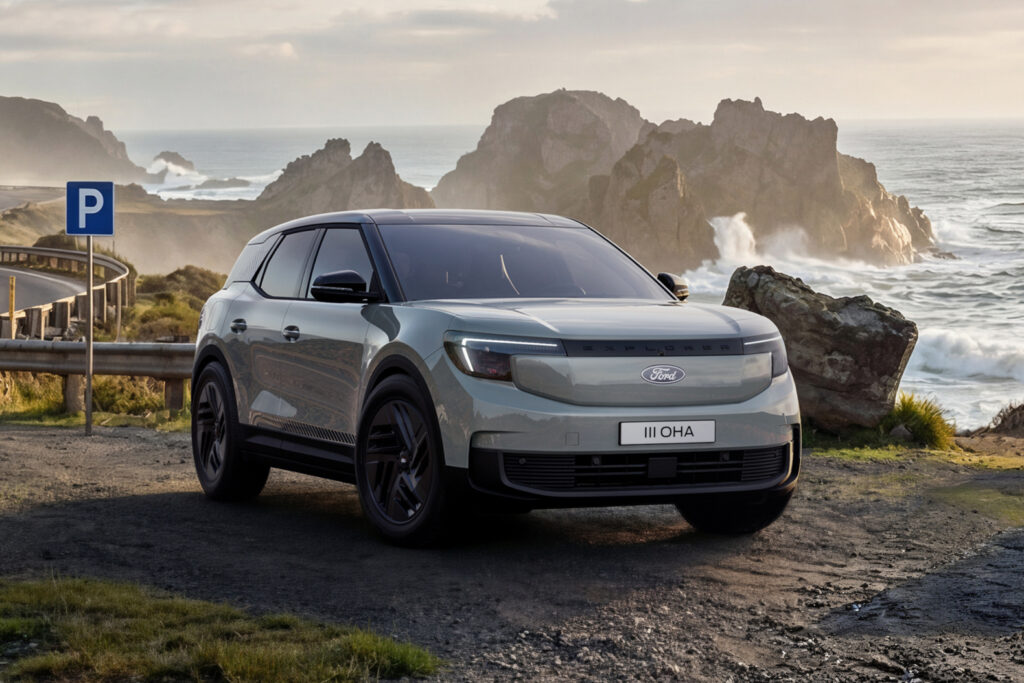

For buyers looking for something more unique, a special Explorer Collection edition has been introduced. This edition features an exterior in Cactus Grey color and 20-inch wheels with a matte black finish. The model also has a black roof, black underbody protection, and black graphics.
The Black Onyx interior features contrasting orange accents on the seats, seatbelts, and instrument panel. There is also trim with a black-and-orange speckled effect and “2D knit” inserts on the seats. The latter, according to the company, are inspired by the texture and appearance of high-quality sportswear.

These updates demonstrate how Ford is responding to the initial feedback on its electric SUV. The increased range and power of the base version directly address some of the main questions often raised by potential electric vehicle buyers. The emphasis on driver assistance technologies and interface improvements make the car more modern and competitive in the intense European segment. The introduction of the special Collection series indicates the brand’s desire to offer not just utilitarian transport, but a product with individual character that can interest new categories of customers.