


Key Specifications of Hyundai Ioniq V
Powertrains and Performance
The Hyundai Ioniq V, presented in Beijing last month, boasts a design so distinct from Western Ioniq models that it has generated significant interest. Thanks to documents submitted to Chinese authorities, new details have emerged. The most notable information concerns the powertrains. Documents from the Ministry of Industry and Information Technology (MIIT) show that the Ioniq V will launch with a choice of two single-motor configurations: 188 hp (190 PS / 140 kW) or 225 hp (228 PS / 168 kW).
The more powerful motor is familiar from the Ioniq 5, but the lower-power version is not found in American or European versions. Even the modest Hyundai Elantra for the US market has 201 hp in the N Line version. According to Hyundai’s plans, hybrid versions with a range extender and dual-motor modifications will appear later. Although a “hot” version is not yet mentioned, N-brand tuning could give this electric car the dynamics matching its aggressive design.
Speed and Charging
Supercar speeds are not currently planned. A top speed of 103 mph (165 km/h) won’t set records, but the 800-volt charging architecture should ensure fast replenishment of the CATL LFP battery packs. Battery sizes are not yet known, but the larger of the two available packs promises over 600 km (373 miles) according to the optimistic CLTC cycle.
Dimensions and Design
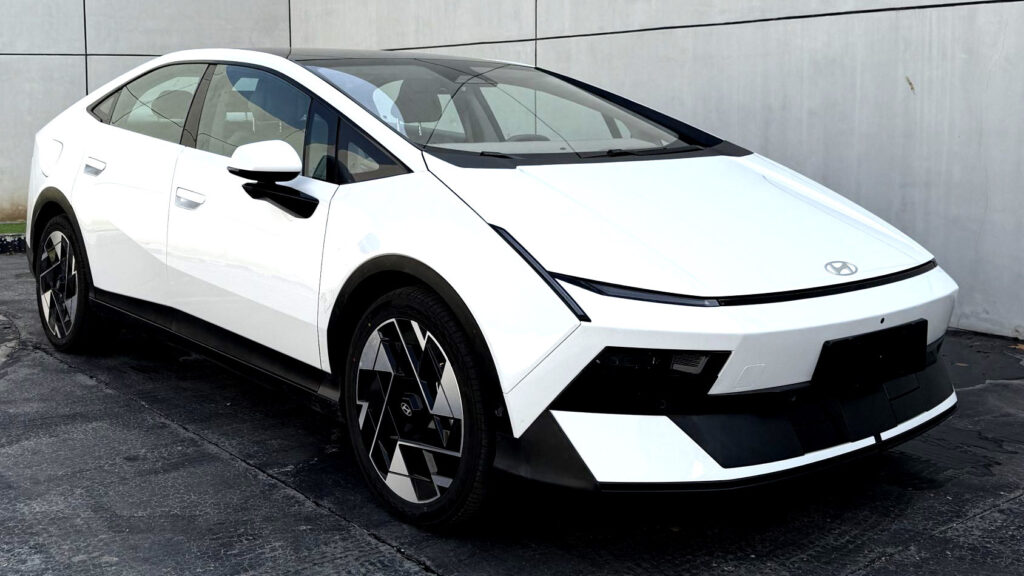
The Ioniq V has a length of 4900 mm (192.9 inches) and a wheelbase of 2900 mm (114.2 inches), making it similar in size to the Ioniq 6 available in the West. However, visually, this car is completely different. The low body combines a coupe-like roofline with massive surfaces, split headlights, frameless doors, and dramatic V-shaped wheels. Hopefully, the poorly aligned rear doors noticed on a white car are not indicative of production models. This is certainly correctable, though it is probably too late to do anything about the strange shelf system that acts as a rear diffuser.
Interior and Technologies
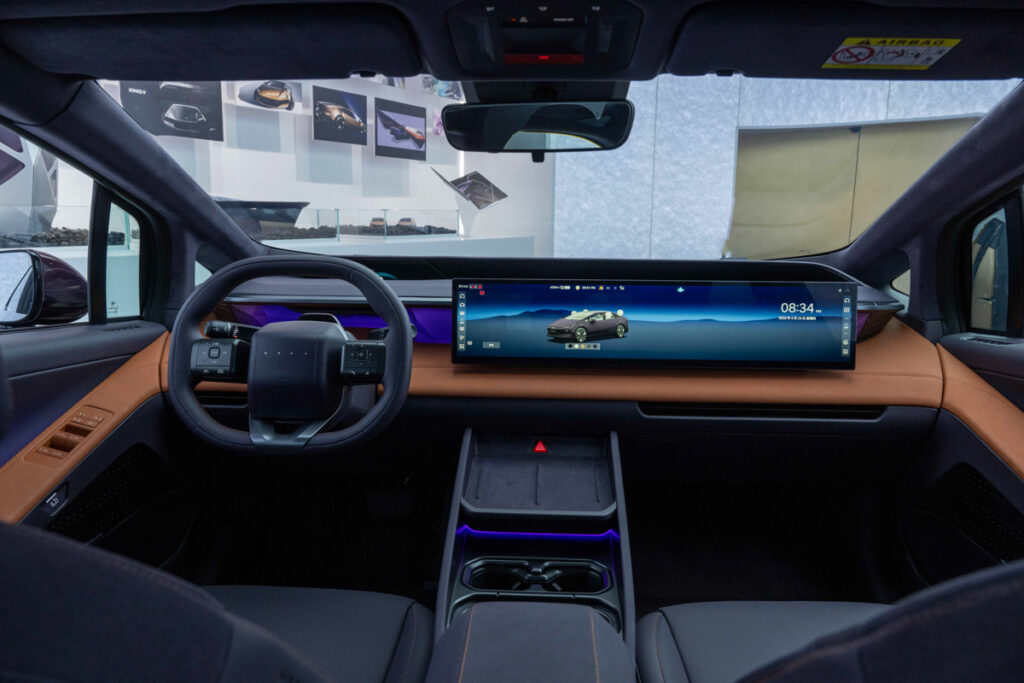

The cabin looks significantly better. Hyundai’s Chinese team designed the car around a massive 27-inch ultra-thin 4K display paired with a Cyber Eye projection display and lighting inspired by nebula images. The system also integrates a Qualcomm Snapdragon 8295 chip along with AI features based on Baidu and Volcano Engine technologies. Another key addition is Level 2+ autonomous driving capability supported by Momenta, which is becoming essential for competing in the tough Chinese EV market.
Availability and Strategy
Unfortunately for American buyers, the Ioniq V will almost certainly remain overseas. Hyundai specifically developed it for China as part of a ‘global quality plus Chinese wisdom’ strategy. This plan involves launching 20 new Hyundais with various powertrain types in China over the next five years, as the brand tries to boost falling sales.
Interestingly, Hyundai is betting on the Chinese market by offering unique design and technologies not available in other markets. The Ioniq V, while resembling a supercar on the outside, has more modest characteristics, which may be a compromise to achieve an affordable price and efficiency. At the same time, the integration of advanced systems such as the large display and AI indicates Hyundai’s desire to compete with local manufacturers, who are actively implementing similar technologies. This shows that even global players are forced to adapt their products to the specifics of the Chinese market to remain relevant.