


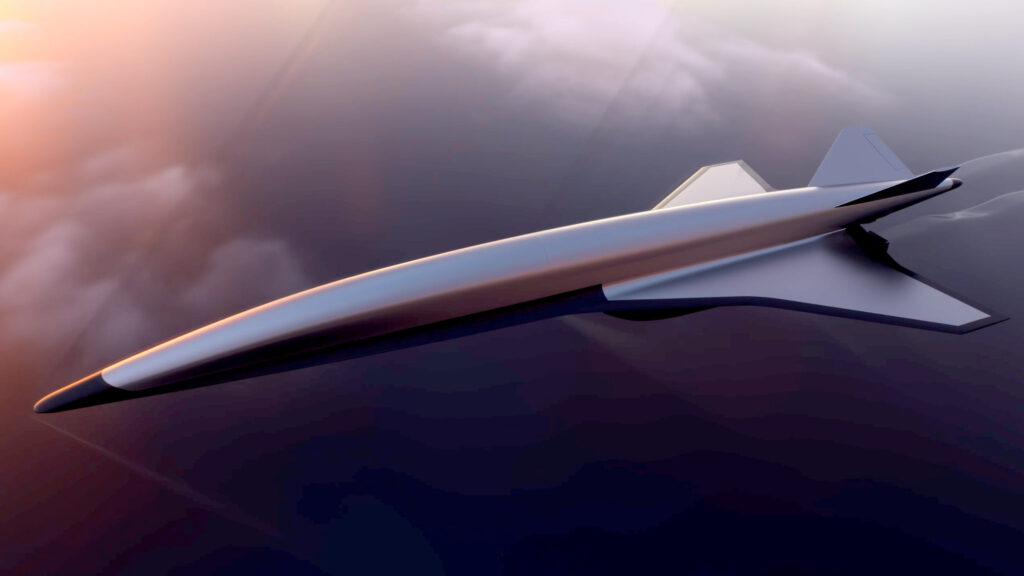
The British company Helix, known for its powerful electric motors for the most extreme electric cars, is now turning its attention to the skies. Its technologies, which provide the incredible dynamics of the McMurtry Spéirling, Lotus Evija, and Aston Martin Valkyrie, could be the key to the return of supersonic passenger flights.
New Mission: Supersonic Aircraft for Everyday Use
Helix, in partnership with the California-based startup Astro Mechanica, is working on a revolutionary powerplant. The goal is to create a supersonic passenger aircraft that will be efficient enough for regular commercial operation. This is the very challenge that the legendary Concorde could not overcome.
Astro Mechanica aims for what the late, great Concorde could never achieve. It needs long-range supersonic aircraft that will be efficient enough for everyday use.
To realize this idea, the company has developed a hybrid electric propulsion system called Duality. It combines a gas turbine and an electric drive, capable of changing their operating mode depending on flight speed.


How the Duality System Works
During takeoff, the system operates as a turbofan engine. At lower supersonic speeds, it switches to turbojet engine mode. And when the aircraft accelerates to very high speeds, the system transforms into something closer to a ramjet engine.
This flexibility is designed to solve the main problem that made commercial supersonic flights unprofitable: the engines were excellent for flying at supersonic speed but inefficient in other modes and excessively fuel-thirsty.
Power from Helix
The heart of the current fourth-generation Duality system prototype is four Helix SPX242-94 electric motors. Each is capable of delivering peak power of up to 536 horsepower. They drive the two-stage compressor of the propulsion unit.


Development is already underway on even more powerful radial motors for the fifth generation of the system. They are expected to develop peak power of over 1270 horsepower, which is necessary for flights at extreme altitudes.
The Path to Realization
Astro Mechanica plans to conduct the first test flight in three years and enter commercial service within a decade. If the project is successfully realized by 2035, it would mean that 32 years will have passed since the Concorde was retired in 2003 before a passenger aircraft breaks the sound barrier again.
The partnership between engineers who accelerate the fastest electric cars and aviation innovators opens a new front in the battle for speed. Technologies honed on race tracks are now being tested on a much more complex battlefield — in the stratosphere. The success of this project could radically change the perception of long-distance travel, making crossing oceans a matter of hours, not half a day. However, besides technical perfection, the path to mass supersonic flights is hindered by questions of economic feasibility, environmental impact, and regulatory restrictions on sonic booms, which its predecessor also failed to overcome.