


National Highway Traffic Safety Administration Intensifies Investigation into Tesla’s Full Self-Driving System
The National Highway Traffic Safety Administration (NHTSA) has intensified its scrutiny of Tesla’s Full Self-Driving (FSD) system, focusing on how it performs under conditions of reduced visibility. This escalation moves the investigation closer to a potential recall, which could affect over 3.2 million vehicles across the United States.
The agency first initiated a preliminary evaluation in October 2024 to assess the FSD system’s ability to detect and adequately respond in conditions of limited road visibility. This investigation has now been upgraded to the engineering analysis phase, which will examine how the camera-only system behaves in adverse conditions and whether it can warn drivers with sufficient lead time to react.
According to regulators, Tesla developed and implemented a degradation detection system after transitioning to its camera-based visual system in mid-2021, abandoning radar and other sensors.
The company began working on updating this system in June 2024 following a report of a fatal crash involving its vehicle on November 28, 2023.
Rain is the Enemy of FSD
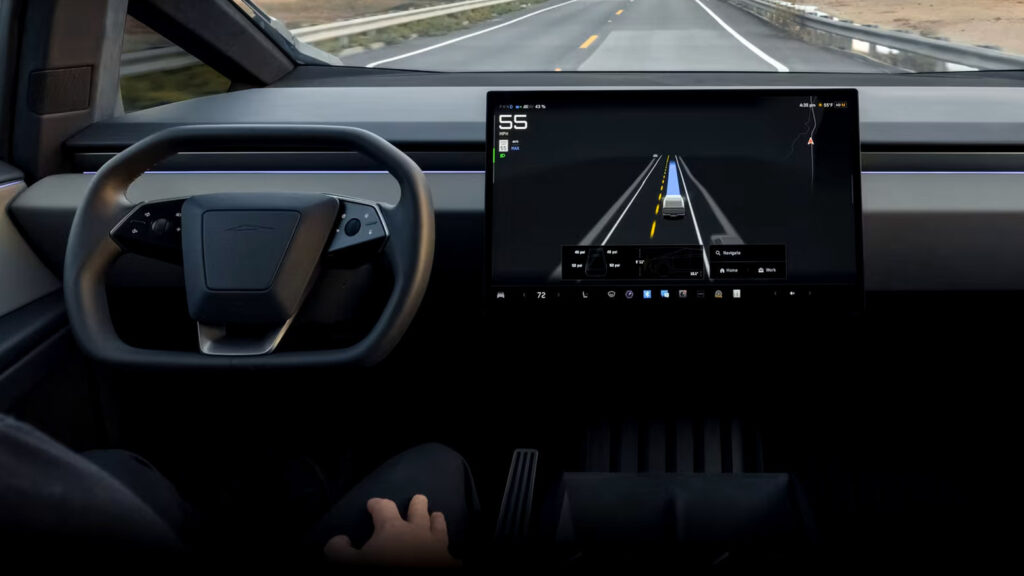

During the preliminary evaluation, NHTSA began piecing together information on how Tesla’s Full Self-Driving system behaves in non-ideal conditions. The agency learned from Tesla that the FSD system’s ability to detect and respond to poor road conditions may have contributed to 3 out of 9 incidents identified by the Office of Defects Investigation (ODI).
In the reviewed crashes, the system failed to recognize typical road conditions affecting camera visibility and did not issue warnings about camera performance degradation until the moment of collision.
A further review of Tesla’s responses revealed other crashes that occurred under similar circumstances. In these cases, the FSD system also lost track or “never detected a vehicle ahead in its path.”
NHTSA also notes that Tesla reports that internal data and labeling limitations hindered a unified definition and analysis of crash events involving the system, indicating the possibility of underreporting of accidents.
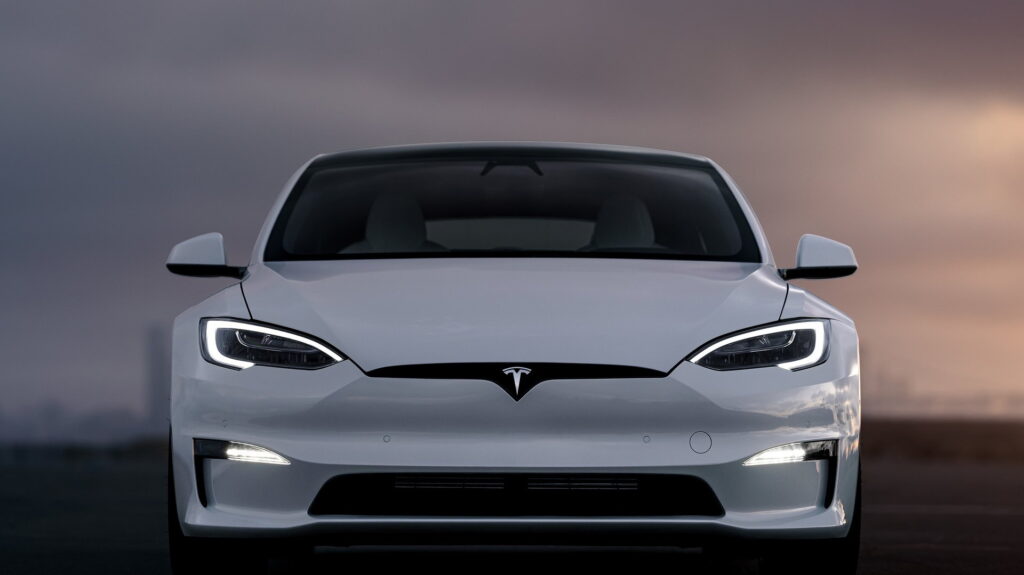

The investigation covers approximately 3,203,754 Tesla vehicles, including Model S and X from 2016-2026, Model 3 from 2017-2026, Model Y from 2020-2026, and Cybertruck models from 2023-2026, equipped with FSD.
The transition of the investigation to the engineering analysis phase is a serious step that often precedes official recall demands. This indicates that regulators have found sufficient grounds for a deeper technical examination of the system’s potential flaws. The safety of autonomous driving remains a focal point for both manufacturers and regulators, especially when it comes to adapting technologies to real, often unpredictable, road conditions. The success of such systems directly depends on their reliability across various weather phenomena, which is a critical test for technologies relying solely on computer vision.