 by
by As car prices become less affordable and many buyers reassess their actual needs, manufacturers may have to reconsider segments they abandoned. For Ford, this could mean a return to a type of vehicle the company largely gave up on several years ago.
Focus on SUVs and a Changing Market
Ford’s North American lineup has been focused on pickups and SUVs since the discontinuation of the Taurus sedan in 2019. However, due to the rapid rise in new car prices and a serious affordability problem, the abandoned segment might get a second chance.
Possible Return of Sedans
Ford CEO Jim Farley openly acknowledged this possibility in an interview with Autonews at the Detroit auto show. When asked about a potential sedan, Farley stated:
Never say never. The sedan market is very viable. It’s not that the market isn’t there. We just couldn’t find a way to compete and be profitable. Well, we might find a way to do it.

While this is far from a new product announcement, it suggests that Ford may be secretly exploring new sedans in its design and engineering centers.
In another interview last month, Farley admitted that Ford had to stop producing mass-market models like the Fiesta and Focus hatchbacks in its global lineup after realizing they couldn’t compete with Toyota and Hyundai/Kia on cost.

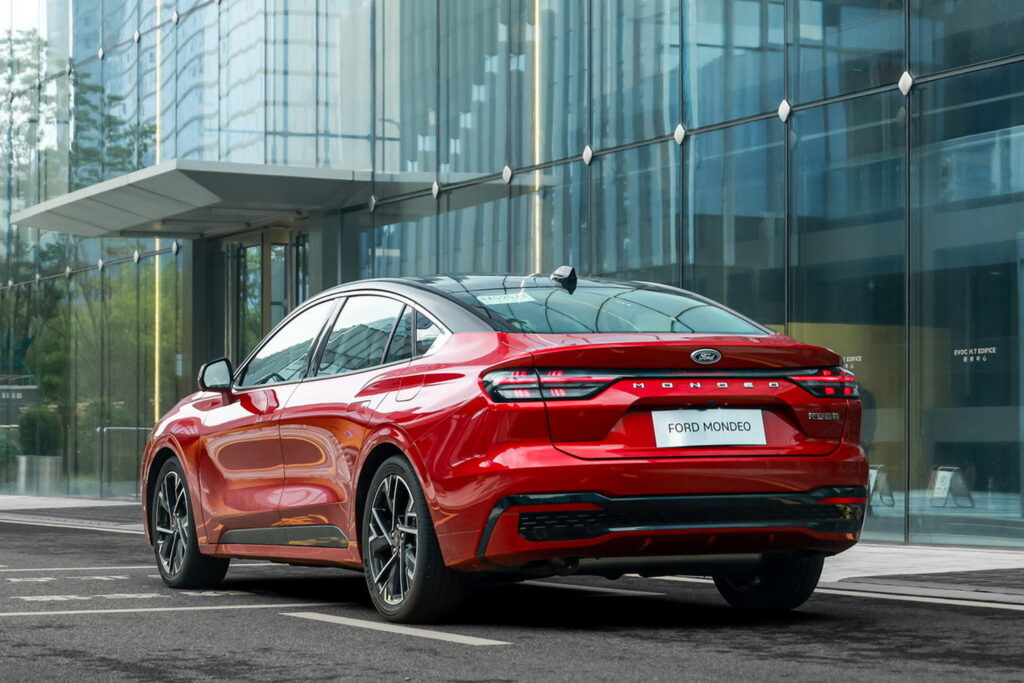
The Taurus may have disappeared from North America, but it continues to exist abroad. A new generation of the sedan is still sold in the Middle East and China, where it’s known as the Mondeo. The version produced in China debuted in 2022 and has already received a mid-cycle update, giving the model a fresh design.
Furthermore, rumors about a four-door derivative of the Mustang, potentially named the Mach 4, continue to circulate.
The Affordability Problem
Analysts predict a decline in new car sales in the US in 2026 after three consecutive years of growth, primarily due to rising prices pushing more consumers out of the new car market. According to a report, the average monthly payment for a new car in the US is approaching $800. At the same time, average transaction prices jumped to a record $50,326 by the end of 2025.
The demand for more affordable cars is evident. Both the compact Ford Maverick pickup and the subcompact Chevrolet Trax crossover are showing record sales, largely thanks to their prices, as they are the most affordable options in Ford’s and GM’s US lineups.
Ford CEO Jim Farley pointed to the success of the Maverick as a sign of what customers want. He noted that affordable versions of their cars are in hot demand, and customers are asking for more such models. This is part of their strategy, and the company is retooling plants to produce affordable vehicles.
Farley was referring to retooling the Louisville Assembly plant to produce a new electric pickup. This yet-to-be-named model will arrive in 2027 with a starting price around $30,000. Ford also announced that a new plant in Tennessee will produce affordable ICE pickups starting in 2029.

And he is not alone in these aspirations. Ford Executive Chairman Bill Ford stated that the company is exploring more fundamental ways to reduce costs, not just stripping features from cars or reshuffling trim levels. The question is whether cars can be designed that are fundamentally cheaper to produce, passing those savings on to the consumer. That’s what they are working on.
This territory is being explored not only by Ford. Stellantis CEO Antonio Filosa, speaking at the same Detroit show, shared similar plans. He said the company is preparing to launch new models priced below $40,000, and possibly even cheaper than $30,000.

Today’s statements from Ford’s leadership point to a deep transformation in the automotive industry caused by economic pressure. Rising prices to record levels are essentially forcing giants, who for years bet on large and expensive SUVs, to look again at compact and affordable segments. The success of models like the Maverick, which became a bestseller precisely because of its price, is a clear market signal. The “never say never” strategy regarding sedans is not just nostalgia but a potential business necessity. Competition with Asian manufacturers in the affordable car segment remains a key challenge, and the answer may lie not only in new factory equipment but also in a fundamentally different approach to design and production. The future will show whether traditional American automakers can effectively return to this market or if it will be definitively lost to other players.