 by
by Ford and SK On Joint Venture Ceases to Exist
In 2021, the American auto giant Ford and the South Korean battery manufacturer SK On announced massive investments totaling $11.4 billion. The goal was to build a series of joint plants for the production of electric vehicle batteries in the United States. This decision was seen as a serious step by Ford into the world of electric vehicles.
However, by the end of 2025, the companies are completely terminating their battery partnership agreement. This sharp turn clearly demonstrates how unstable the situation in the electric vehicle market has become.
Two key factors led to this decision. First, the cancellation of the federal tax incentive for purchasing electric vehicles, which negatively impacted sales. Second, the recent decision by the US administration to revise fuel economy standards, which is expected to favor vehicles with internal combustion engines.
Asset Division and the Future of the Plants
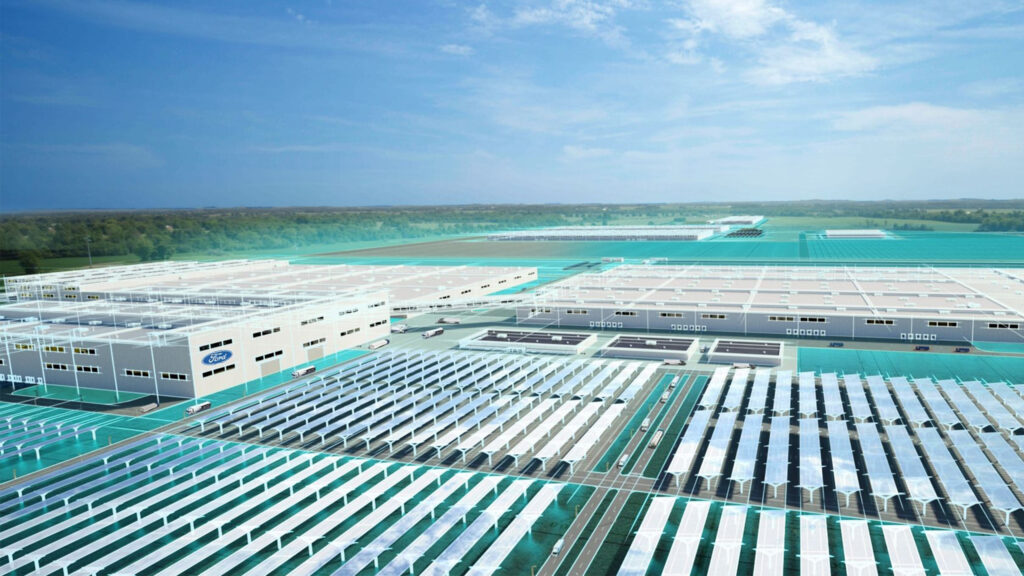
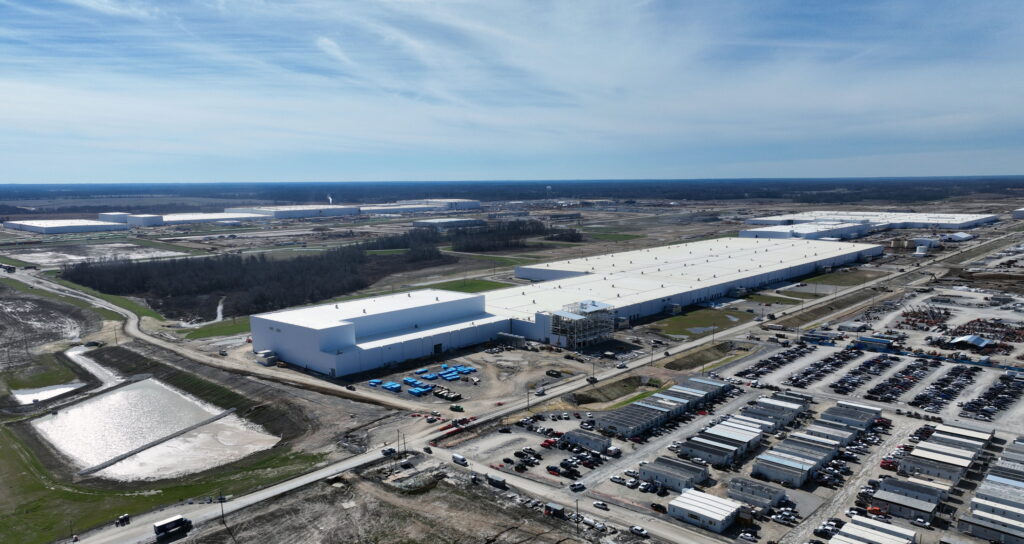
As a result of the partnership’s dissolution, SK On will gain control of the already built joint plant in Tennessee, known as BlueOval. Ford, in turn, will become the full owner of two neighboring plants in Kentucky.
SK On itself initiated the formal dissolution of the joint venture. The company states that it plans to continue cooperation with Ford regarding the Tennessee plant. According to SK On’s management, terminating the partnership will allow for increased productivity and operational flexibility, as well as accelerate the development of the energy storage system business in North America.
The Issue of the Government Loan
One of the most immediate consequences of the breakup is the revision of the terms of the government loan approved during the Biden administration. Initially, a loan of up to $9.6 billion was intended for the joint venture. Now, under the oversight of the Trump administration, its amount will be reduced.
The exact size of the reduction is not yet known. According to Bloomberg, the loan will be restructured to “reduce risks for taxpayers and ensure timely repayment.” It is clear that Ford is already working with the US Department of Energy on a voluntary accelerated repayment of this loan.
The Complex Situation in the Electric Vehicle Market
Against the backdrop of these events, Ford’s electric vehicle sales in the US are falling. The company’s CEO, Jim Farley, expects the situation to worsen further. He recently stated that due to the Trump administration’s policies, US electric vehicle sales could drop by as much as 50 percent.
Financial indicators are also concerning: in 2024, Ford’s electric business incurred losses of $5.1 billion before interest and taxes, and even greater losses are expected this year.
We believe it was obvious that this partnership would not work in the future. Ford has to take several difficult steps, and this was a smart strategic decision — to rip the band-aid off in one go. The electric vehicle market for Ford has now sharply contracted, and they must adapt accordingly.
This opinion was expressed by Dan Ives, Managing Director of WedBush Securities.

The collapse of one of the largest battery alliances in the US automotive industry has become a symbol of the market’s deep transformation. After years of optimism and massive investments, manufacturers are facing a harsh reality: demand for electric vehicles is growing slower than expected, and regulatory changes create additional challenges. The split between Ford and SK On is likely not to be the last such step in the industry, as companies seek new, more flexible models to operate in conditions of uncertainty. The future of the Tennessee plant under SK On’s management and the two plants in Kentucky under Ford’s full control will now depend on their ability to quickly adapt to changing demand and evolving technologies.