


Ford’s New Initiative to Speed Up Repairs
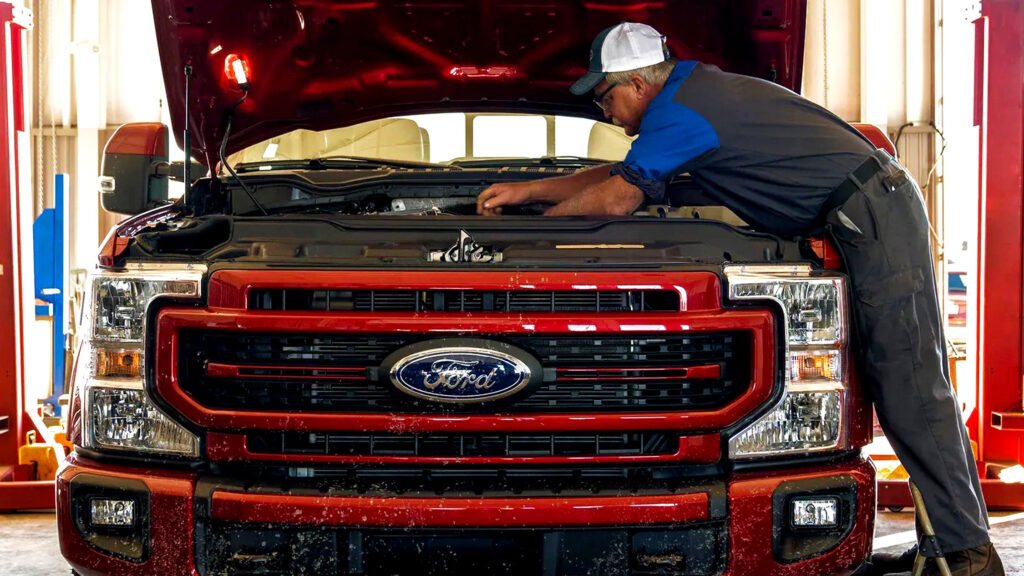
Ford is launching a new program called Uptime Assist, aimed at significantly reducing the repair time for customers’ vehicles. The idea is for most repairs to be completed on the same day the owner leaves their car at the service center. This is intended to eliminate the long waiting periods and uncertainty that so frustrate customers.
The program is free for dealers, and improving vehicle ‘uptime’ has become a priority for the entire Ford service network.
How the Monitoring System Works
A dedicated team from Michigan tracks all repair orders at dealers in real time. If work extends beyond two days, the system flags it, and Ford representatives contact the service center to find out the cause of the delay and offer assistance. This could be sourcing parts, technical consultation, or help with diagnostics. Dealers are also encouraged to seek help early on, without waiting for problems to arise.
We want customers back on the road the same day
According to Daniel Justo, Vice President of Ford Customer Service, it is the uncertainty about timelines that most disappoints owners.
Impact on Commercial Customers and Statistics
Annually, the Ford network handles about 35 million repair orders worldwide. About 70% of them are completed in less than two days, but the network average is still around five days. Since the launch of Uptime Assist in early 2025, repair time has been reduced by 10-15%, or roughly half a day.
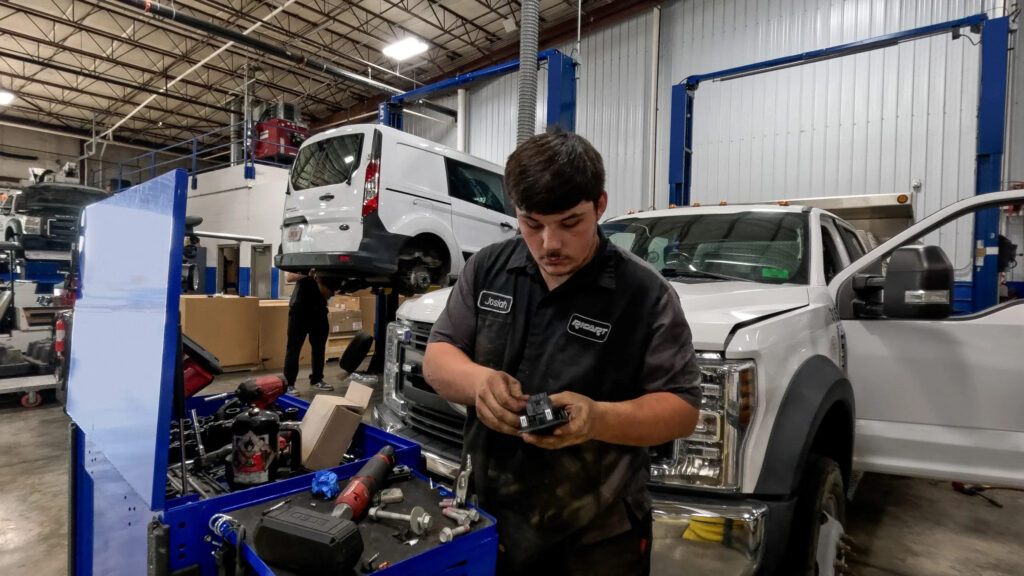

For regular customers, this is a pleasant acceleration, but for commercial clients whose trucks cannot sit idle, it can mean a significant financial difference. Ford estimates that fleet operators lose between $500 and $1000 per day for each idle vehicle.
Optimizing Parts Logistics and Technical Support
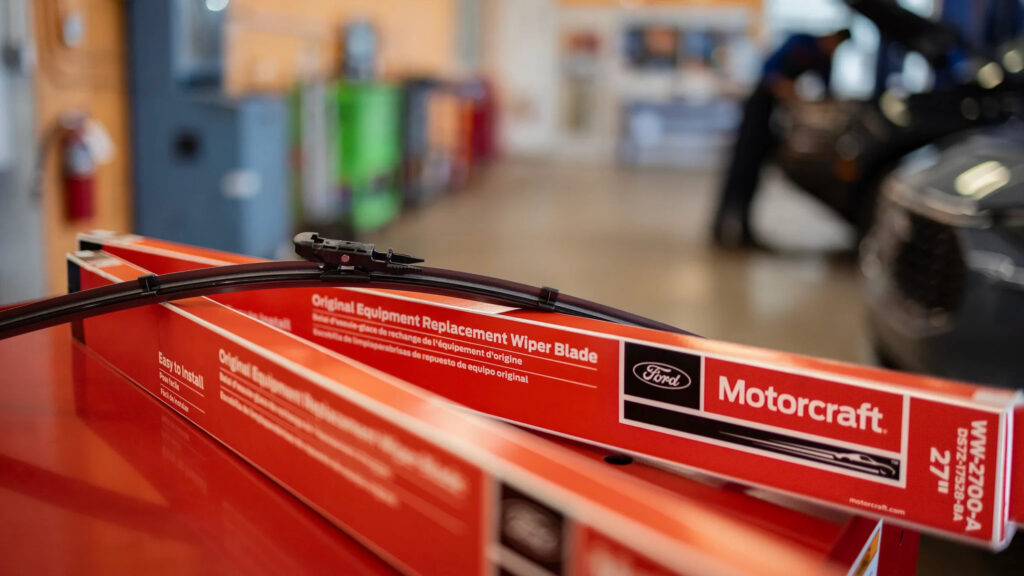
One of the program’s key achievements has been work with parts. If a specific part is needed for a repair or recall, the system helps organize its delivery even before the vehicle enters the service bay. Ford claims parts are available approximately 97% of the time, and in other situations, the team can find the needed part at other dealers or organize direct shipment from the manufacturer.
Furthermore, special hotlines have been created for service technicians to consult on hardware and software issues. Instead of waiting for a field engineer, specialists can get help from niche experts, which often allows solving a problem in minutes instead of hours.


Use of Artificial Intelligence
Ford is also integrating artificial intelligence into internal systems, loading them with service manuals and data on previous repairs. This helps advisors avoid documentation errors that slow down the claims processing. Less bureaucracy means fewer reasons for delays.
This initiative demonstrates how the traditional automotive industry is increasingly focusing on the post-sale customer experience, not just the vehicles themselves. Market competition forces manufacturers to fight for customer loyalty not only with the quality of new models but also with service efficiency. The Uptime Assist program is an attempt to systematically solve one of the industry’s most painful problems. The success of such initiatives could become a new standard for all major automakers, as customers increasingly evaluate a brand based on the speed and quality of service. Reducing downtime, especially for commercial transport, directly impacts the economics of customers’ businesses, making such a program not just a marketing move, but a real competitive advantage.