


Electric Revival
It was previously believed that the Ford Fiesta model had been discontinued forever, giving way to the Puma crossover. However, there are now signs of its electric revival. Ford has turned to its strategic partnership with the Renault Group to develop two affordable electric vehicles for Europe, based on the French AmpR Small platform.
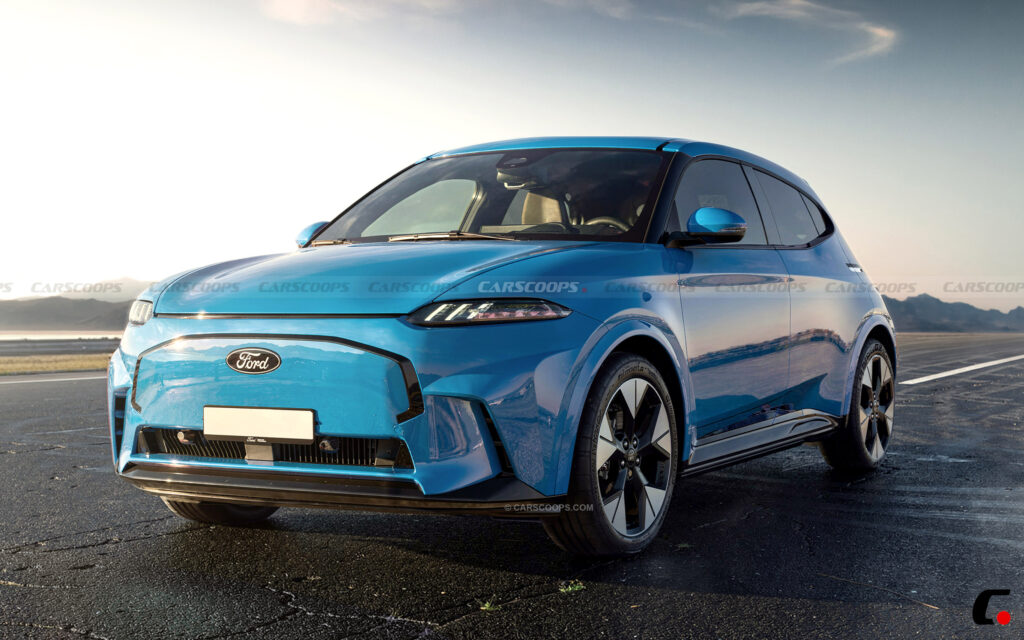
Although the electric Fiesta has not yet been officially confirmed, information suggests that work is in full swing. We have gathered everything known so far, as well as reasonable expectations, including an exclusive illustration showing what Ford’s smallest electric hatchback might look like in production form.
Fresh Look and Familiar Proportions
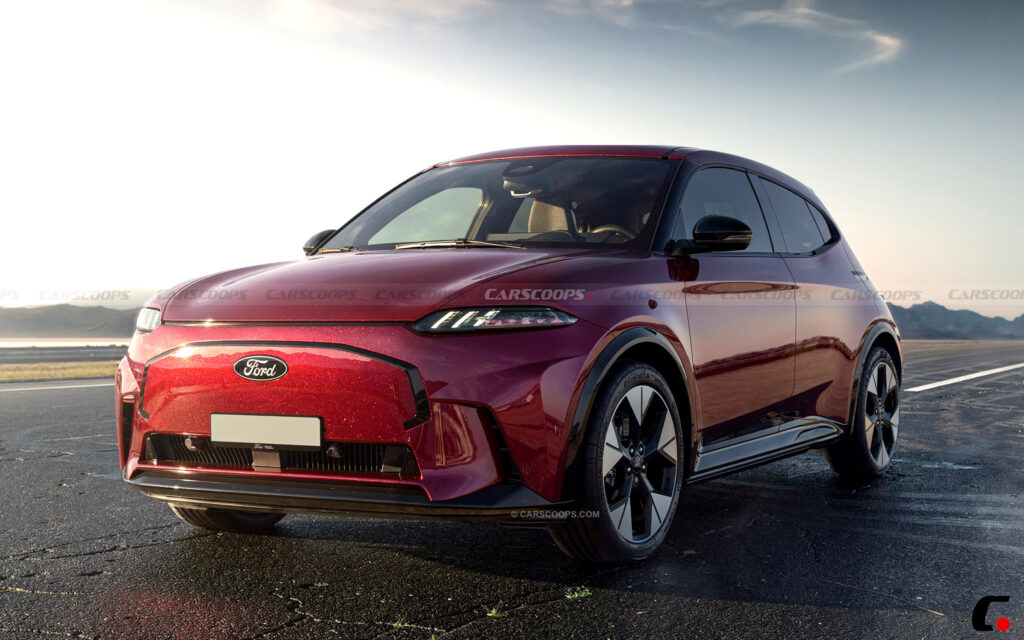

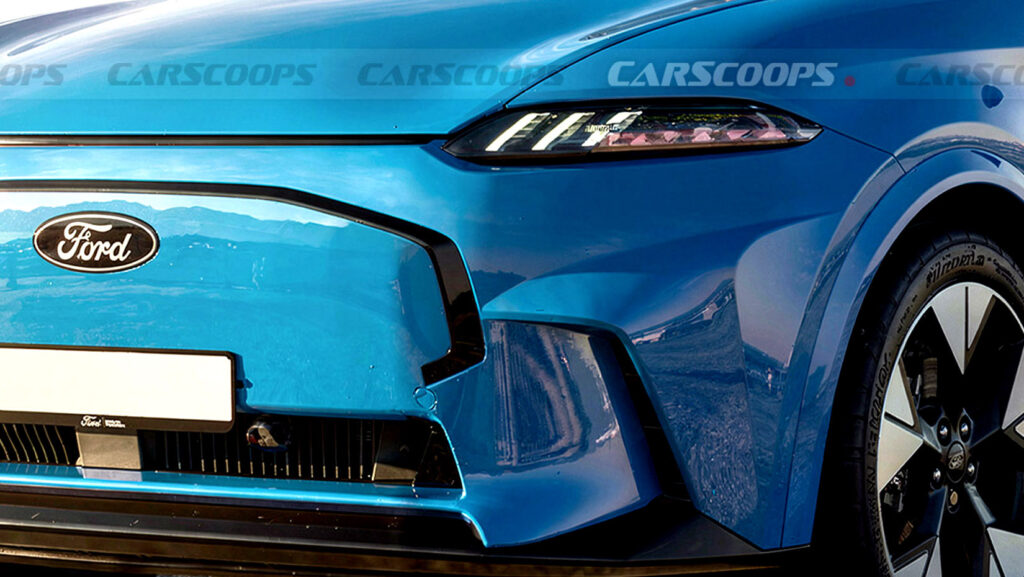
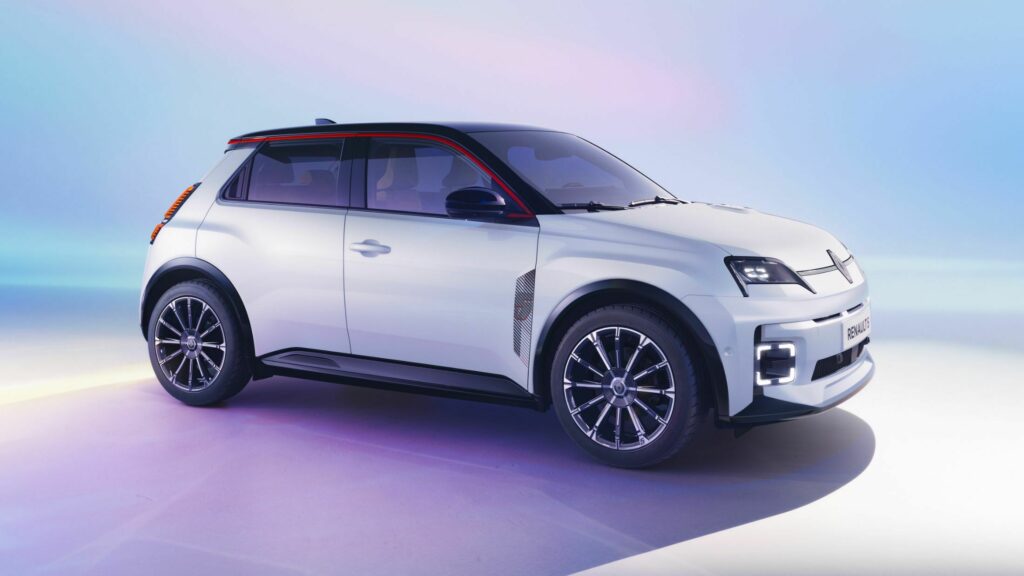
The visualization is based on the Renault R5, noticeable for its compact dimensions, short overhangs, and vertical windshield. At the front, the car features a clean, closed-off grille typical of most EVs, with a smooth panel framed by glossy black trim. Slim headlights with triple daytime running lights are positioned high on the front end, while moderate air intakes for cooling are placed lower down.
In profile, the car is defined by a smooth window line, darkened pillars, and a voluminous design inspired by the radical 2010 Ford ‘Start’ concept. At the rear, it appears wider thanks to a contrasting horizontal line connecting the taillights and a bumper featuring a centrally positioned vertical fog lamp.
Modern Interior
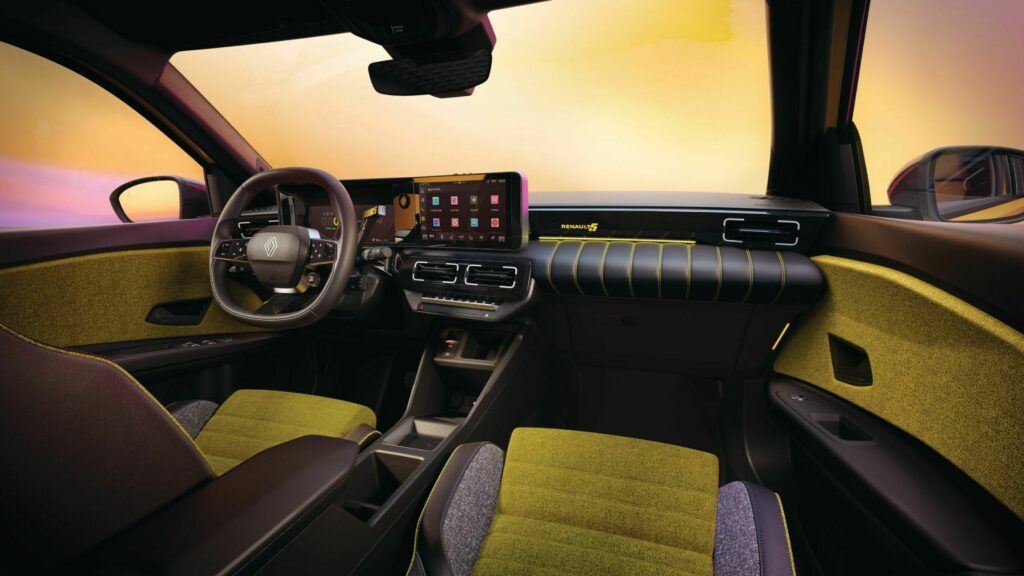

The Fiesta’s interior is expected to be rich in technology, largely thanks to the architecture of the French supplier. Of course, Ford’s signature fonts and graphics will be present, but beneath the two 10-inch digital screens for the instrument cluster and multimedia system will be Renault’s Google-based operating system with over-the-air update capability.
Material quality is expected to improve: soft surfaces and recycled fabrics will replace the budget plastic of past Fiesta generations. The dedicated EV platform should also help free up cabin space, and overall dimensions are expected to be very close to those of the Renault 5.
The French electric hatchback is 3,922 mm long, 1,774 mm wide, and 1,498 mm tall with a wheelbase of 2,540 mm. Sharing the same core components, the electric Fiesta should be in practically the same size class, even if Ford gives it its own visual character.
Renault Platform
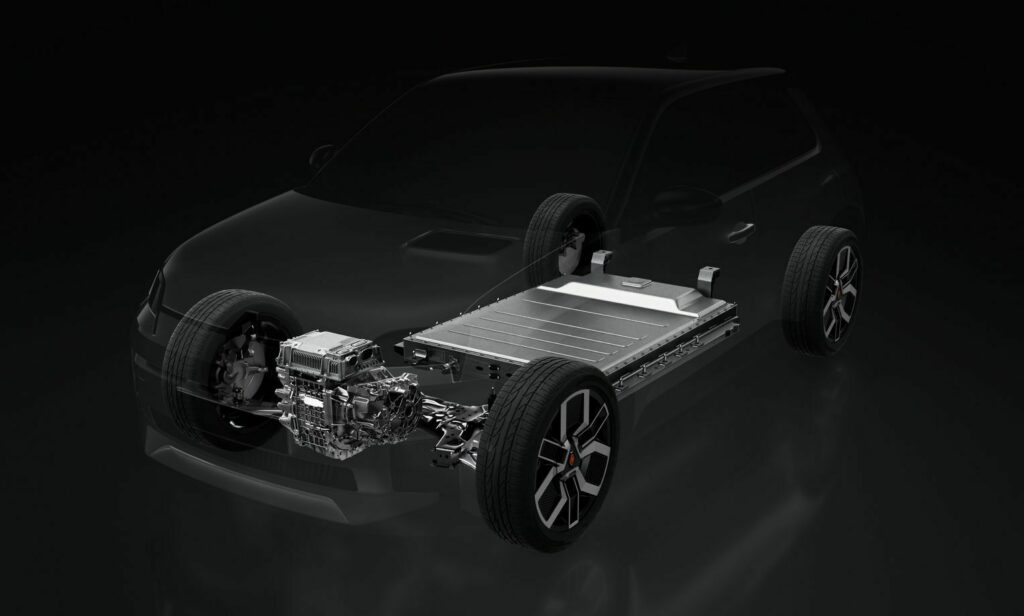

Built on the Renault Group’s AmpR-Small architecture operating at 400 volts, the electric Fiesta will receive chassis tuning from Ford Europe engineers. It is likely to have a multi-link rear suspension and a low-mounted battery for comfort and rigid body control.
Kilowatts Instead of EcoBoost
Before the model was discontinued, the last Fiesta had an excellent 1.0-liter turbocharged three-cylinder engine. Unfortunately, the sound of three cylinders will be replaced by a front-wheel-drive, single-motor electric setup. However, not all is bad: expected power will be in the range of 120-150 hp. We expect a “sharper” ST variant with up to 210 hp to appear later.
NMC battery options of 40 kWh and 52 kWh are expected, with a range of up to 400 km on the WLTP cycle. Based on the R5, DC fast charging will have a maximum power of 101 kW, and vehicle-to-load and vehicle-to-grid functions are also anticipated.
Competitors and Presentation
The competition will be fierce. Likely rivals include the Peugeot e-208, Opel Corsa-E, Cupra Raval, Kia EV2, Renault 5 E-Tech, and Volkswagen ID.Polo. More information about the electric Fiesta is expected within the next 12 months, with a potential unveiling likely at the end of next year or early 2028.
Will it be offered outside Europe? It’s possible. However, considering the current tariff landscape, the Fiesta’s small size, and reduced demand for EVs in America after the expiration of the federal tax credit last year, a U.S. launch seems unlikely.
The return of the Fiesta in electric form could be an important step for Ford in the European market, where demand for compact and affordable electric vehicles is growing. Using a partner’s platform allows for significantly reduced development and production costs, making the project viable in this competitive segment. The success of this model could largely depend on the final price, real-world range, and the driving emotions Ford manages to instill to recreate the famous character of previous Fiesta generations. The market is waiting for affordable electric cars with bright individuality, and Ford has a chance to fill this niche.