


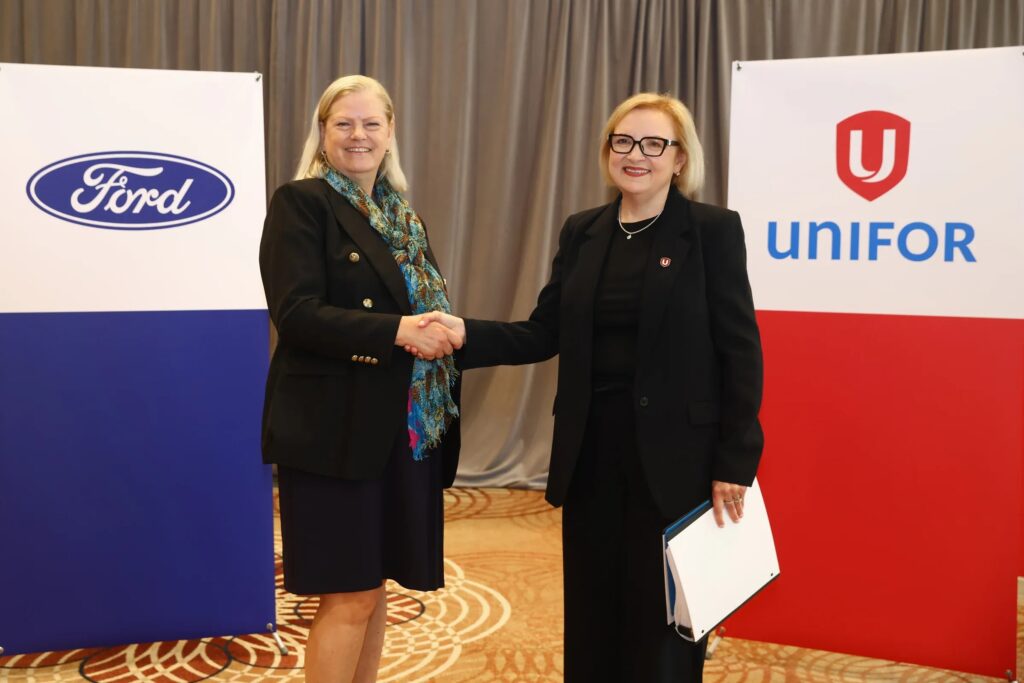
Unifor Union and Ford Reach Tentative Agreement
Canada’s Unifor union began negotiations with Ford on June 22, aiming to reach an agreement by July 10. However, the goal was nearly achieved as the parties only managed to reach a deal over the weekend.
This was preceded by lengthy discussions on Friday that lasted through the night and into the next morning. Unfortunately, neither side is currently providing detailed information about the content of the agreement.
Key Terms and Worker Coverage
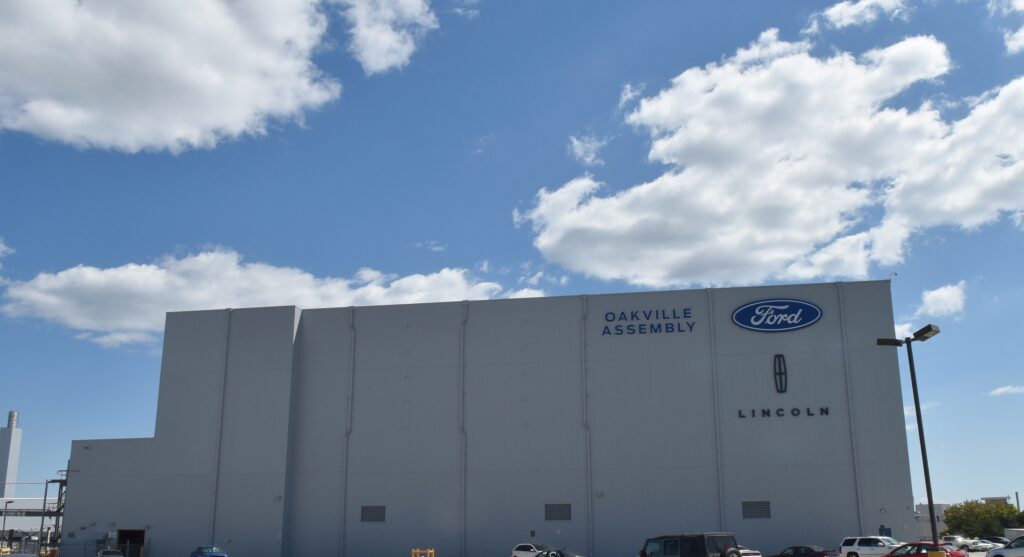
The tentative three-year agreement covers 5,150 union members across the country. They work at the assembly plant in Oakville, the engine plant in Essex, Windsor Annex, as well as various parts warehouses.
The contract requires approval from workers but has already received unanimous support from the Unifor Ford Master Bargaining Committee. Details will be presented to union members at ratification meetings beginning July 17. Unifor’s John D’Agolo stated:
Our members work on the production lines every day, and our entire bargaining team ensured that this work was recognized at the bargaining table.
Negotiation Priorities and Economic Context
Unifor National President Lana Payne added:
Reaching this tentative agreement comes at a critical time for Canadian auto workers and our domestic industry. Every member of our bargaining committee was determined to achieve a fair deal that protects good union jobs during the most challenging economic times.
While details are scarce, the union focused at the start of negotiations on securing job and income guarantees, as well as creating a stable foundation for the Canadian automotive industry. Issues of pension security, retirement safety, and health insurance were also discussed.

Impact of Political Decisions on Negotiations
The negotiations take place at a challenging time, as the Trump administration has decided not to extend the USMCA (United States-Mexico-Canada Agreement) in its current form. American officials seek more favorable terms under a new agreement, but it remains unclear whether Canada and Mexico are interested or will simply wait for the next U.S. administration.
Next Steps: GM and Stellantis
If union members approve the contract with Ford, attention will shift to General Motors and Stellantis. The Ford agreement will serve as a template for these negotiations, and the union plans to complete everything before the current contracts expire on September 20.


This tentative agreement is an important signal of stability for the Canadian auto industry amid uncertainty related to U.S. trade policy. Successful completion of negotiations with Ford will set a precedent for further agreements with GM and Stellantis, helping to avoid large-scale strikes and ensure production continuity. At the same time, the final decision rests with rank-and-file union members, who must assess whether the achieved terms meet their expectations regarding wages and social guarantees.