


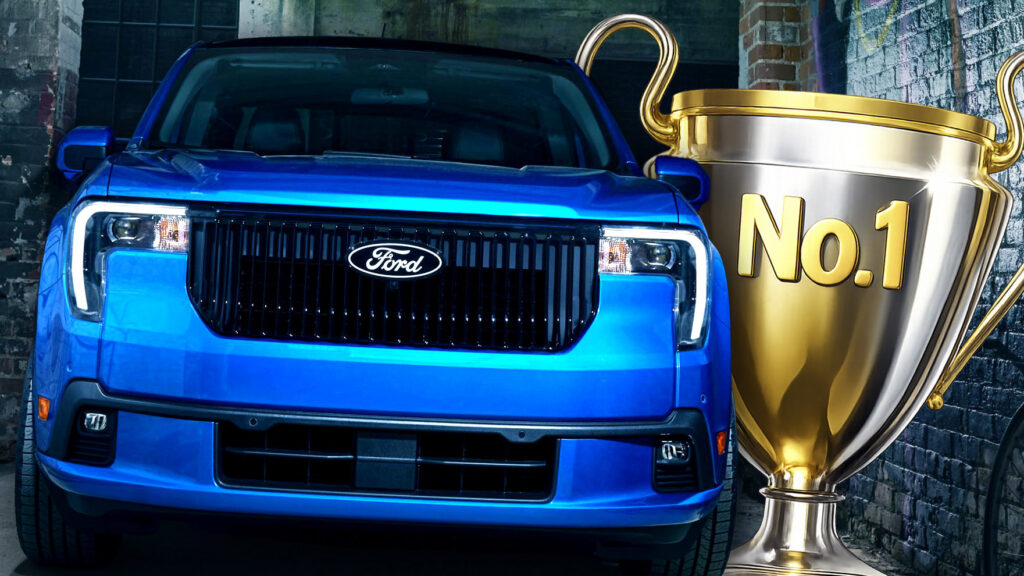
Ford set an absolute anti-record in 2025. Here are the key facts:
Unprecedented Scale of the Problem
The recall issue at Ford has reached a historic scale. While last year the company set a record with 89 recalls for the year, surpassing the previous achievement of General Motors in 2014 (77 recalls), that mark now seems insignificant. In 2025, Ford and its subsidiary brand Lincoln announced a staggering 153 separate recalls together. Combined, they affected 12,926,436 vehicles nationwide.
For context: this is more than the next nine automakers combined, which collectively recalled 12,902,842 vehicles. Impressive, but certainly not for the reasons any brand would hope for.
Daily Recall Statistics
On average, the figures are just as impressive. 153 recalls in 2025 is slightly more than 0.4 per day. In other words, Ford recalled vehicles on average at least once every two and a half days. Each day of the year added an average of 35,414 Ford vehicles to the recall list. That’s about 1,476 per hour or 24.6 vehicles added to a Ford recall for every minute of 2025.


Leaders by Recall Volume
Toyota ranked second in the total number of vehicles involved, conducting a relatively small number – 15 campaigns, but they affected a huge 3,223,256 vehicles. Stellantis (formerly FCA) took third place with 53 recalls, covering 2,776,952 cars. The top five are rounded out by Honda and Acura (21 recalls, 1,560,813 cars) and Hyundai and Genesis (21 recalls, 1,078,212 cars). If Hyundai and Kia are combined, their total rises to 34 recalls and over 2.6 million cars, which would put the alliance in fourth place.
Largest Individual Campaigns
Looking at individual recall campaigns, Ford took the top three spots. Two separate campaigns, each affecting approximately 1.45 million vehicles, were aimed at fixing rearview camera issues. Another Ford recall, covering nearly 1.08 million vehicles, was resolved via an over-the-air software update. Toyota’s largest campaign, affecting 1.02 million vehicles, was also focused on a rearview camera malfunction.
It’s important to remember that data from the National Highway Traffic Safety Administration (NHTSA) has a certain delay. At the time of publication, information for the last 12 days of the year had not yet been published, so the overall figures may increase after these records are added.
What the Numbers Hide
As always, recall numbers tell only part of the story. There is still no clear picture of how many recalls required a dealer visit compared to those that only needed a software update (OTA). This is a key point, as OTA fixes can constitute a large portion of recalls, and therefore the final figure may look much worse than it actually is for service centers. Last year, Ford led both in total number of recalls and in those requiring a dealer visit.
The method of fixing the problem is becoming increasingly important, especially for a brand like Ford, which is actively implementing connectivity platforms and remote updates for everything from the F-150 to the Mustang and Bronco.


Precision Control or a Systemic Problem?
Yet, volume remains volume. Whether fixed via software or hardware, a recall is still a recall, and Ford continues to generate them at a rate unprecedented for any other major automaker.
Part of this is explained simply by better accounting. Modern manufacturing methods allow for detailed control and tracking in ways that were impossible a decade ago. Some of the smaller recalls announced this year likely would not have been detected earlier.
At the same time, some of the large recalls, and undoubtedly the overall volume, will make one wonder what problems exist at Ford right now. It remains to be hoped that this is the last year any brand sets such anti-records with recalls.
Interestingly, Ford’s high numbers contrast with the general industry trend. Many manufacturers are showing stability or even a decrease in the number of recalls, while Ford’s figures have sharply increased. This may indicate an extremely aggressive problem detection policy, possibly triggered by increased regulatory scrutiny following past incidents. On the other hand, the scale of the problems, especially with critical systems like rearview cameras, raises serious questions about control processes at the design and supply stages. The transition to electrification and more complex electronics, which the company is actively pursuing, obviously creates new challenges for quality. Ford’s future success may largely depend on how it handles this crisis of confidence, as constant recalls exhaust not only service centers but also customer patience.