 by
by The idea and reality of plug-in hybrids
Plug-in hybrids (PHEVs) are positioned as a smart compromise between conventional hybrids and fully electric cars, despite their weight. Their concept is simple: short trips on electricity, for example to school, and for everything else – an internal combustion engine. Theoretically, this should make them the most efficient type of hybrid. However, new research shows that reality is far from the expectations of regulators.
Large-scale study of real data
Researchers from the Fraunhofer Institute analyzed real data from 981,035 plug-in hybrids produced between 2021 and 2023, using on-board fuel consumption monitoring (OBFCM) systems. This is considered the most comprehensive study of real-world PHEV operation to date, as data was transmitted wirelessly directly from cars of various manufacturers. They compared official WLTP laboratory figures with how these cars were actually used. The result? These numbers have nothing to do with each other.
The gap between paper and real performance
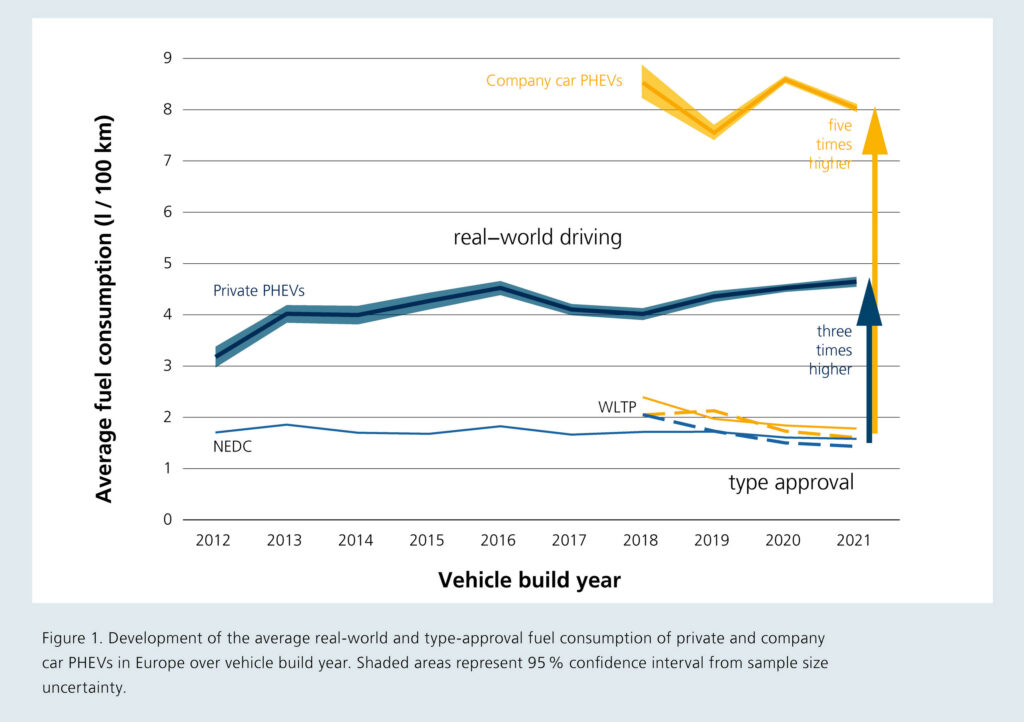
The data indicates that PHEVs consume more than three times more fuel than their official ratings suggest. On paper, the average plug-in hybrid has a consumption of about 1.57 l/100 km according to the WLTP test. In real conditions, this figure rises to 6.12 l/100 km. The situation is even worse in the “battery depletion” mode, when the car has to rely primarily on electricity: the average fuel consumption was 2.98 l/100 km, almost double the official combined figure.
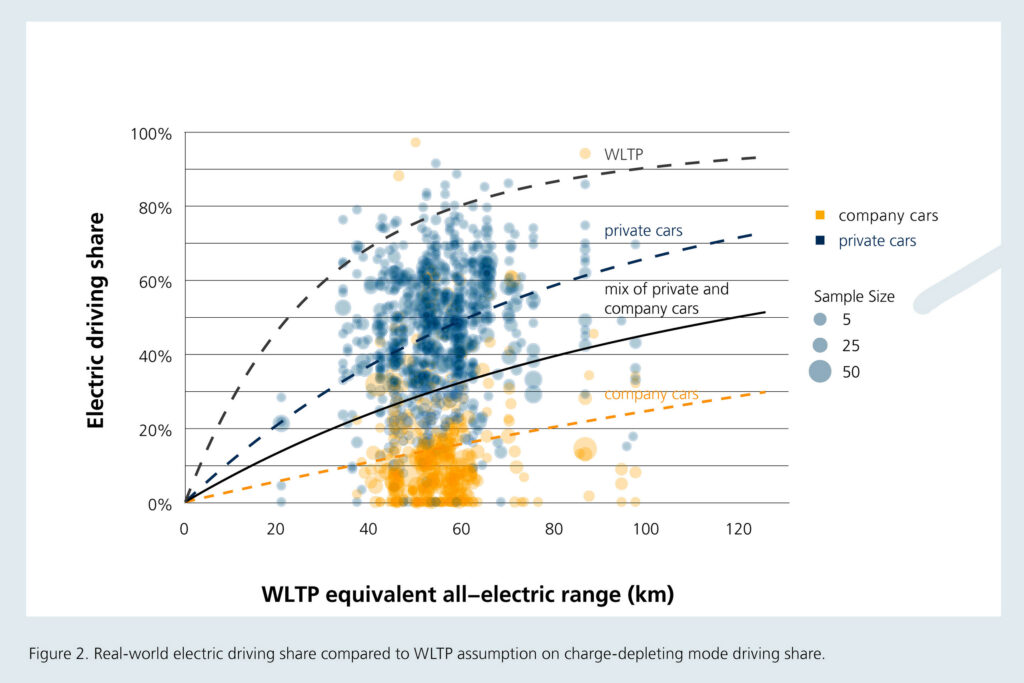
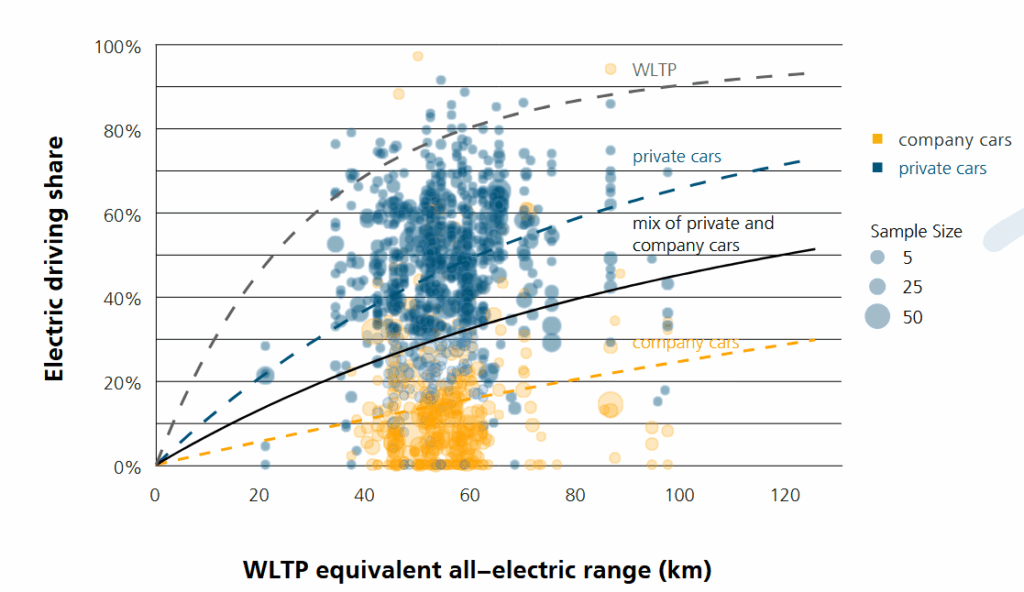
Real data shows that private PHEVs drive on electricity about 45–49 percent of the time, while corporate cars – only 11–15 percent. WLTP calculations assume an electric driving share closer to 70–85 percent.
Differences between brands and manufacturers’ reaction
There were also noticeable differences between brands. Some premium German models showed the highest real consumption, with certain Porsche plug-in hybrids consuming on average about 7 l/100 km. At the other end of the spectrum were more affordable models from Kia, Toyota, Ford, and Renault, which often showed consumption of less than 1 l/100 km under comparable conditions – approximately 85 percent less fuel than Porsche. Commenting on this discrepancy, Porsche representatives stated that their published figures comply with EU testing procedures, and the differences reflect different usage patterns and driving conditions.
The main reason: insufficient charging frequency
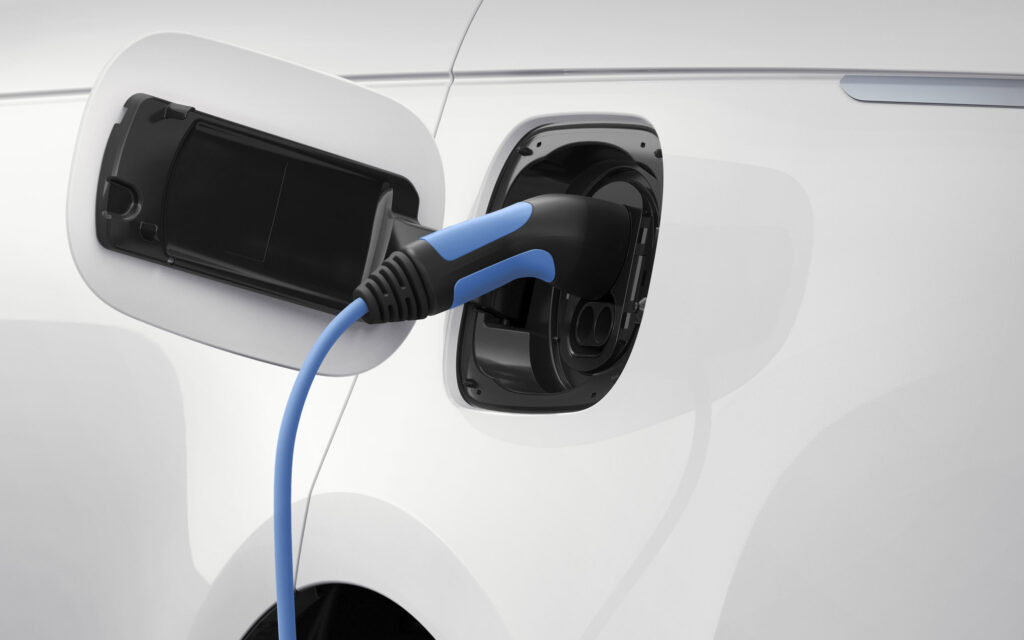
What lies at the heart of this gap? Researchers point to four main reasons. The most important component is that PHEV users plug in their cars for charging significantly less often than regulators assumed. Even Toyota faced this reality and tried to encourage owners to charge more often through its own app. When the battery is not charged, the electric range automatically decreases, and the internal combustion engine has to burn more fuel, pulling a heavy, discharged battery.
Additional factors affecting efficiency
The study also found that internal combustion engines in real conditions burn more fuel than during laboratory tests. Furthermore, there are two more issues, albeit smaller ones. First, the real electric range often turns out to be shorter than claimed. Cold weather, high speed, altitude changes, and other factors reduce the range. Second, some drivers traveled significantly more daily than the available electric range, further skewing the results not in favor of PHEVs.
Patrick Plötz from the Fraunhofer Institute noted that the engine turns on much more often than manufacturers anticipated, even when drivers expect the car to remain in electric mode.
The importance of testing conditions and usage patterns
In summary, PHEVs are still more fuel-efficient than their traditional hybrid counterparts, but only if used properly. Testing conditions are just as important as the way the car is operated. Buying a plug-in hybrid doesn’t bring much benefit if it’s not plugged in for charging. On the other hand, there are known issues with the WLTP protocol. If this testing were conducted in the USA using Environmental Protection Agency (EPA) ratings, the figures would likely be closer to reality, though not perfect. The EPA also assumes that PHEV owners regularly charge their cars. When this doesn’t happen, we get results similar to those in this latest study.
These findings raise important questions about the effectiveness of regulatory tests and the true environmental footprint of a technology that relies on changing consumer behavior. The success of plug-in hybrids in reducing emissions is closely tied to charging infrastructure and drivers’ daily habits, making their efficiency a variable, not a guaranteed characteristic of the car. Achieving the stated goals may require closer interaction between manufacturers, regulators, and end users.