


Pros: Cabin quality, driver assistance systems, impressive fuel economy.
Cons: Dynamics, multimedia system controls, connectivity.
Crossovers as the Universal Choice
Crossovers rarely evoke strong emotions, and that, in fact, is their essence. They are like oatmeal in the automotive world: not bad, not great, just the default universal choice. Other cars may carry more, have better handling, or a brighter character. But that doesn’t seem to matter when buyers fill dealerships in search of something practical, undemanding, and familiar. This is a segment of compromises, and it is thriving.
Kia understands this, and the Sportage is proof. It is Kia’s best-selling model worldwide, and after a week behind the wheel, this statistic feels not like marketing bragging but inevitability.
Quick Facts About the Model
Model: 2026 Kia Sportage Hybrid SX Prestige AWD
Engine: 1.6-liter turbocharged four-cylinder hybrid
Transmission: 6-speed automatic
Power: 232 hp (173 kW) and 367 Nm of torque
Fuel Consumption*: 6.7 L/100 km city, 6.5 L/100 km highway
Dimensions: Length 4685 mm, Width (excluding mirrors) 1865 mm, Height 1660–1698 mm, Wheelbase 2756 mm
Cargo Volume: 1132 liters behind the second row, 2095 liters behind the first row
Recommended Price: $41,985 for the tested version
The Sportage has been around long enough to sometimes blend into the background, overshadowed by brighter newcomers, more driver-focused options, or larger and more expensive SUVs dominating the headlines. But if you take a step back and look at what Kia actually offers, it becomes clear why the Sportage continues to sell in huge numbers.
Exterior
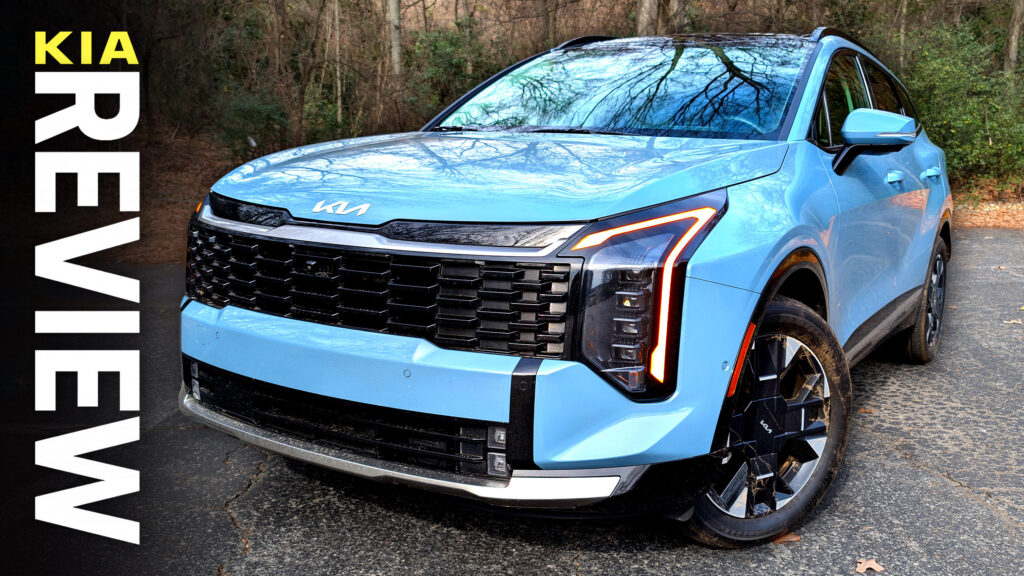
Compact crossovers can be a visual minefield. Overdo the design, and you can repel buyers. Be too restrained, and the result will be bland. In our opinion, the Kia Sportage remarkably finds the golden mean. It’s not a stunningly beautiful car, but you can’t call it boring either.
The front end features Kia’s signature “tiger nose” motif with sharp, angular headlight lines that harmonize with other family models. The body sides have sculptural details, the rear lights look expressive, and the overall shape seems more thoughtful than many competitors that often blend in in parking lots. The top of the rear pillar has sharp, small textured details that help it stand out.
This is not a boring-looking crossover, and that’s more important than it seems. When almost everything in this segment is a compromise, at least the Sportage doesn’t force you to settle for anonymity. It stands out in the crowd of RAV4s, CR-Vs, and Rogues without demanding attention. That’s a trickier feat than it seems, and Kia deserves praise for it.
Interior Design and Equipment
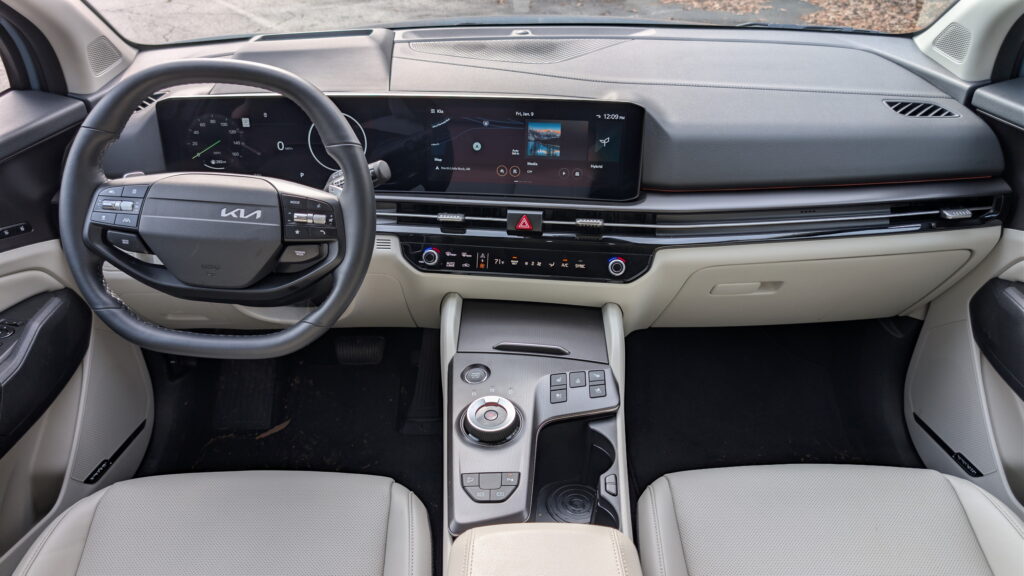

However attractive the exterior may be compared to most competitors, the interior is where the Sportage Hybrid truly punches above its weight. The seats are excellent. They have many adjustments, are truly comfortable on long trips, and are upholstered in an attractive mix of leatherette, faux suede, and microfiber that looks and feels much more expensive than the price might suggest.
This is not the cheap, shiny fake leather still found in some competitors. The execution is thoughtful, and the materials seem to withstand daily use well. Our test car had over 13,000 km on the odometer and looked brand new. This quality extends to the rear seats as well.
The available 360-degree camera system has a clear image, responds quickly, and is genuinely useful in tight parking situations. The blind-spot cameras, which activate on the instrument panel when the turn signal is on, are one of those features you start to miss once you get used to them.
Photo Stephen Rivers/Carscoops
Another strong point is the controls. The buttons and levers feel solid, with a pleasant action and are intuitively understandable. Nothing rattles, nothing feels flimsy, and there is a pleasant consistency in how everything works. Seat heating and ventilation controls are managed via clear buttons on the center console, not hidden in touchscreen menus. That alone deserves applause in 2026. While such details become unnoticeable after a few days, that’s precisely the point.
Front and rear passengers have equal headroom (96 cm) and nearly equal legroom (105 cm). Second-row passengers get pockets for small items built into the backs of the front seats—a truly useful feature if you have children or often carry rear-seat passengers on long trips. Those same seatbacks contain power outlets, eliminating the usual struggle for charging cables.
Photo Stephen Rivers/Carscoops
The cargo area has mechanical levers that allow folding the second-row seats without walking around the car. It’s simple, mechanical, and effective. With the rear seats up, the Sportage offers 1132 liters of space. Folding those seats increases the volume to over 2095 liters. Not bad.
None of these features alone is revolutionary. But together, they create an ownership experience that feels thoroughly considered, not created solely for cost-saving reasons.
Some Interior Shortcomings
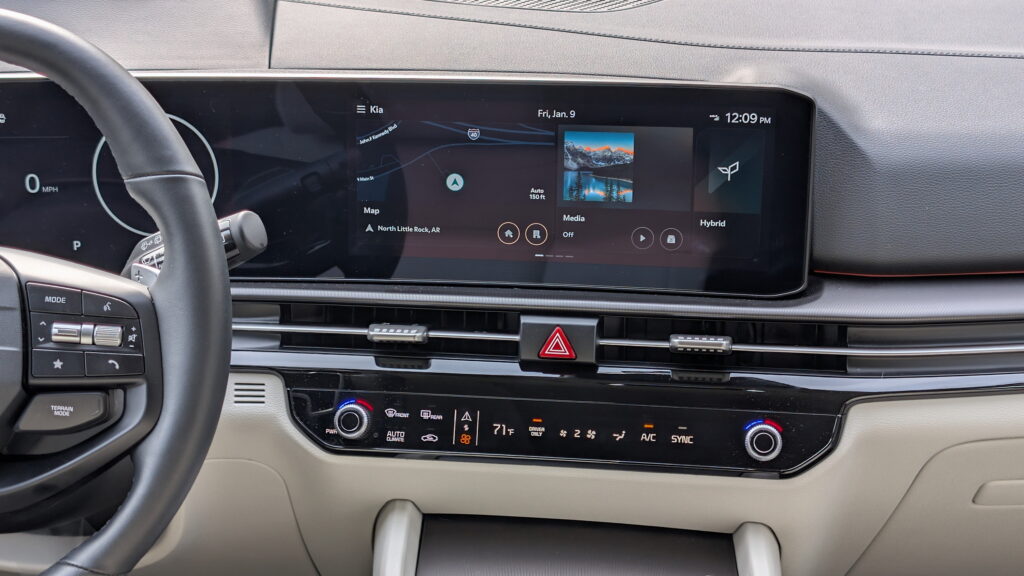
However, the experience is still not perfect. We’ve already complained about Kia’s switchable climate/multimedia control panel, and we’re doing it again. Users can switch between controlling climate or multimedia, but not both simultaneously. They have to toggle between two modes. There seems to be no reason to do it exactly this way, and we’ll be glad when Kia changes it.
Furthermore, and this might just be an issue with our test car, the phone connectivity and mirroring experience was below expectations. The car attempted to connect unreliably and sometimes seemed not to work, but would suddenly start working a few minutes into the drive. In other cases, it would suddenly stop working after a few kilometers. However, this experience is an exception in our testing of various Kia products, and when the system worked, it worked well.
Driving Impressions
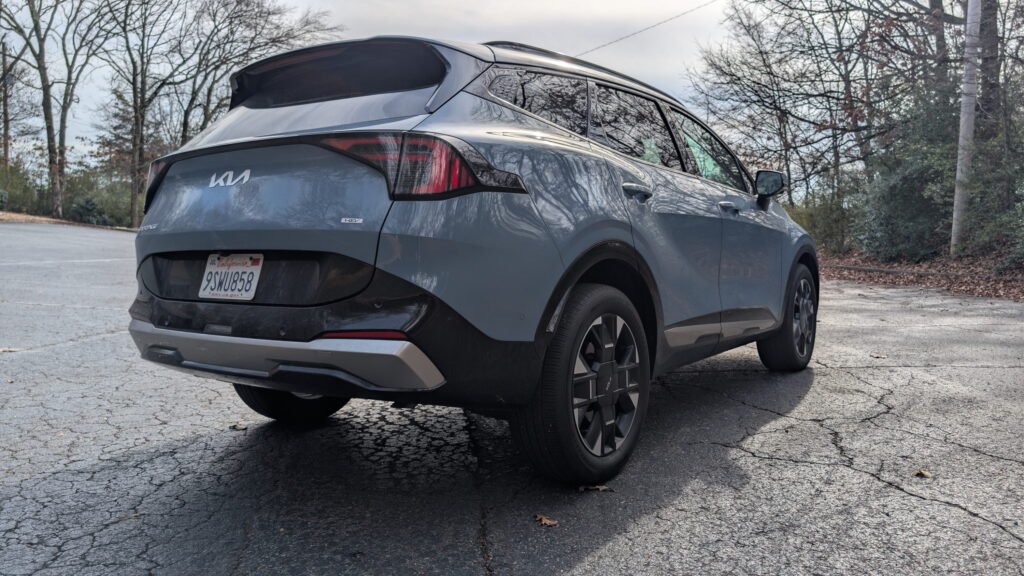
However good the interior and attractive the exterior, the Sportage returns to average when it comes to driving dynamics. It’s not a bad car to drive. Body roll is limited, and visibility is above average.
On the other hand, it’s not exactly thrilling or fun, but in this segment, that was never the goal. That’s also why we’re only now mentioning the modest 232 hp and 367 Nm of torque.
On the positive side, all controls feel precise and responsive. The steering is predictable, and the pedals provide linear feedback that’s easy to control at high or low speeds. If there’s something to complain about, it’s probably more the tires than anything else.
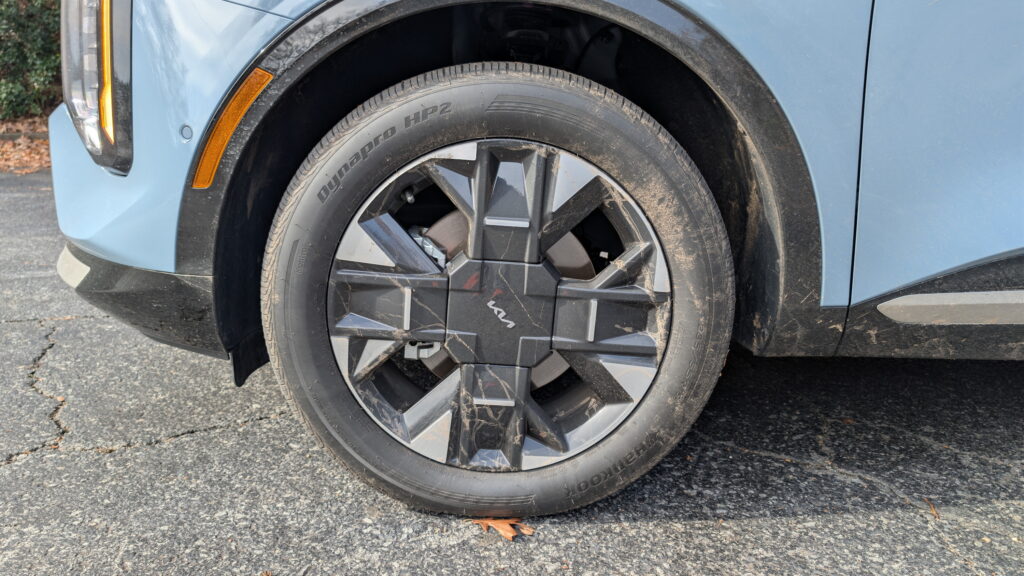
During our testing, the weather was terrible. The photos in this material were taken during about 20 minutes when it wasn’t raining, and the Hankook tires on the car couldn’t handle the load at the limit of their capabilities. They quickly lost grip, and the car began to get confused in corners during aggressive driving. Very few people will drive the Sportage aggressively, and those who do can install stickier rubber, so this is probably not a big issue, but it’s worth knowing.
There are other handling advantages to appreciate. For example, Kia’s Highway Drive Assist system is exceptional. We’ve tested everything from GM’s SuperCruise to good old cruise control. The Sportage doesn’t offer the absolute best on the market right now, but it’s significantly above average, especially considering the price.
We tested an Infiniti QX80 Sport just before the Sportage, and despite a price gap large enough to fit a Tesla Model Y Performance, the Kia was better when it came to driver assistance systems. Where the Infiniti felt clumsy and outdated, the Sportage was agile, smooth, and could even change lanes with just a light finger tap on the steering wheel. Yes, this car won’t excite you from the driver’s seat, but it will provide reliable support wherever you go.
Furthermore, it showed an average consumption of 6.4 L/100 km during our test, beating the EPA rating of 6.7 L/100 km city, and that included some aggressive driving tests. What might not please