


End of the Joint Venture
As early as last fall, General Motors announced plans to discontinue the development of next-generation fuel cells for its Hydrotec brand. The company noted at the time that
“the path to achieving a stable fuel cell business is long and uncertain”
. This is, to say the least, a moderate statement. The automaker pointed to high costs and limited refueling infrastructure as the main obstacles to hydrogen vehicle sales. For comparison, there are over 250,000 electric vehicle charging stations in the US, but only 61 hydrogen refueling stations.


Honda’s Decision and Consequences
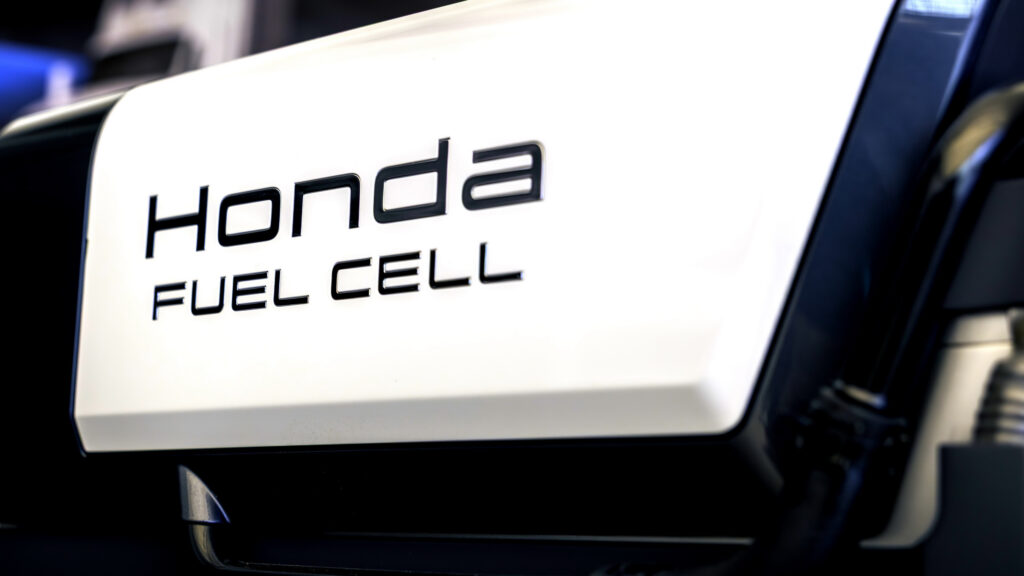
Now Honda has decided to cease production at the joint venture with GM, Fuel Cell System Manufacturing (FCSM). Production lines will be stopped by the end of this year after
“extensive discussions”
regarding the future of this business. These discussions led to an agreement to terminate fuel cell production. This step is being taken approximately two years after commercial production began at the plant in Brownstown, Michigan, in January 2024. The total investment of the two companies in this production amounted to $85 million.
The Future of the Hydrogen Crossover
The decision will likely put an end to the fate of the hydrogen-powered Honda CR-V e:FCEV crossover, introduced in 2024. This car is only available for lease in California. It is equipped with a 17.7 kWh battery, a front electric motor, and a 4.3 kg hydrogen tank. This configuration provides 174 horsepower and an EPA-estimated range of 270 miles (435 km).
Different Paths for the Giants
While GM has virtually surrendered in the field of hydrogen fuel cells, Honda is not planning to abandon this technology. On the contrary, the company announced the development of a next-generation fuel cell of its own design. Honda plans to use it to
“further expand business opportunities to grow its hydrogen business as one of its new key business areas”
.


This split in the strategy of the two auto giants clearly outlines the current realities of alternative fuel. While one of them concentrates resources on mass electrification, the other continues to see a niche for hydrogen, perhaps in heavy transport or stationary power generation. The future will show whether Honda’s decision proves to be a strategic advantage in the long term, or whether GM made a more practical bet by focusing on the charging network, which is developing much faster. The situation with the CR-V e:FCEV is a clear example of how limited infrastructure can constrain the viability of even a technologically advanced product in the market.