 by
by Honda Integra Type R Restoration by British Workshop Tolman
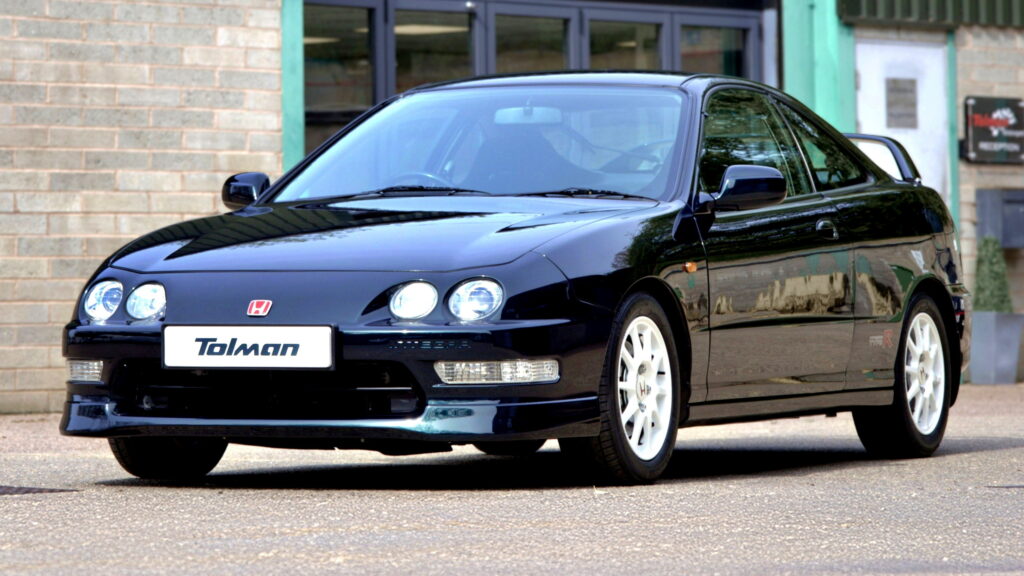
The British company Tolman, known for its projects based on the Peugeot 205 GTi, has presented a restored example of the iconic Japanese hatchback Honda Integra Type R (DC2). Instead of deep modifications, the masters focused on a detailed, “non-invasive” restoration of the car, emphasizing its original character.
The main stages of the work, which took a total of 740 hours, were:
Body Restoration and New Look
The work began in September 2025 on a UK-specification 1998 Honda Integra Type R. Despite its decent appearance, corrosion was found under the body. Since original body panels are already hard to find, the team spent 180 hours handcrafting the rear body sections and wheel arches from steel, as well as repairing the doors.
The car’s appearance changed radically: instead of the original championship white, the body was painted in a rich Sorrento Green to match the owner’s Peugeot 205 GTi. The painting was done using a nitrogen-assisted technology for an even coating, and the lower part of the body was treated with sealant for corrosion protection.
Interior and Technical Updates
The interior retained the authentic look of the late 1990s but received modern sound insulation and a new immobilizer system. The red Recaro seats, which fade to pink over time, were reupholstered using fabric sourced from Australia.
Under the hood, the naturally aspirated 1.8-liter DOHC VTEC engine was completely rebuilt to factory specifications. On the dyno, it demonstrated 190 horsepower. The car also received new brakes, hydraulic lines, and a fully restored suspension with new bushings, springs, and Nitron dampers. The 15-inch Enkei wheels were polished and fitted with modern Michelin Pilot Exalto 2 tires.
The work began in September 2025 and ultimately took 740 hours. The starting point was a UK-market Honda Integra Type R of the DC2 generation, first introduced in 1998.
The final cost of the project has not been disclosed, but the volume of work performed suggests it was significant. This particular Honda is one of four unique custom works that Tolman plans to complete this year.
Such projects demonstrate the growing value of classic Japanese sports cars as cultural heritage objects worth not only modifying but also carefully preserving. The detailed restoration of original manufacturing techniques, the search for authentic materials, and the emphasis on durability transform such cars from mere retro examples into living histories of automotive engineering. The work of workshops like Tolman reminds us that true value often lies not in radical changes, but in the ability to emphasize and preserve the uniqueness that the car’s creators invested in it decades ago.