


Ford CEO Supports Revision of Fuel Economy Standards
Ford CEO Jim Farley has joined a number of his American counterparts in supporting the Trump administration’s decision to revise federal fuel economy standards.
According to Farley, this step gives automakers the opportunity to produce more affordable cars in the USA without abandoning electric innovations or efficiency goals.
Farley’s key argument is that the previous regulations were so strict that they effectively pushed automakers out of the budget car market, which millions of buyers rely on.
Statement at Press Conference with the President
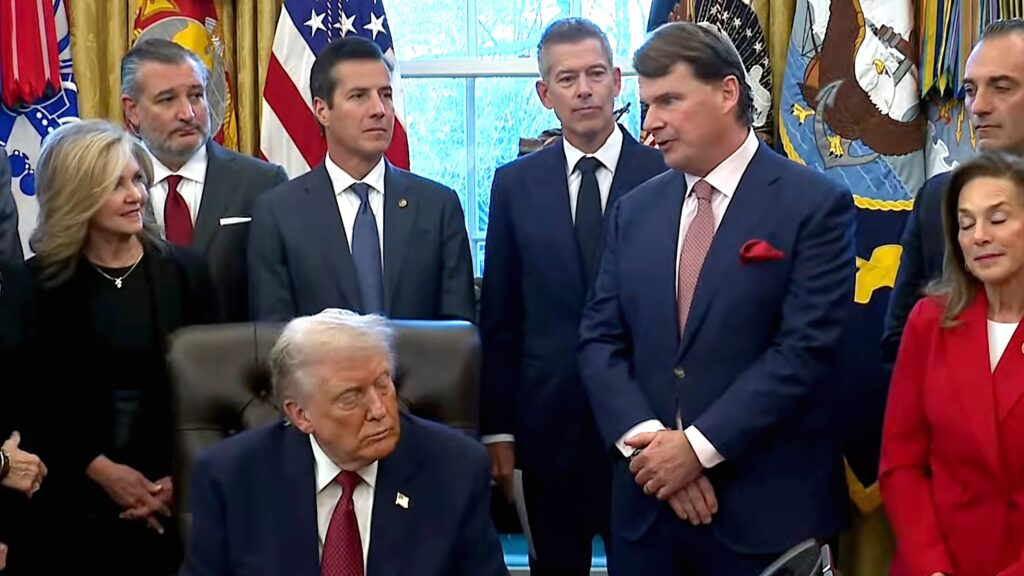
Speaking at a joint press conference with President Donald Trump, Farley called the rule update “a victory for affordability and common sense.” He stated that Ford will now be able to offer cheaper versions of its most popular models and launch new price-oriented products.
We believe people should have a choice, as you said, Mr. President. And we will invest more in affordable cars. This allows us to invest in affordable cars made in the USA, and we will take the lead in this, which will make cars more affordable.
President Trump, sitting nearby, added:
People were being misled. It’s the “Green New Deal.” And people were paying too much for a car that didn’t work as well. And now they will have a great car that will be environmentally clean, but will cost much less and work great. All this nonsense is being taken out of cars.
Economics Over Politics
Farley avoided framing this step as an ideological shift, instead focusing on the economic aspects. He argued that the strengthened CAFE standards of the previous administration imposed costs that made producing entry-level cars almost unjustifiable.
This pressure, in his opinion, forced automakers to focus on more profitable electric vehicles and hybrids simply to meet fleet targets.
You have to understand, this is a victory for affordability and common sense. As the president said, we will be able to offer greater affordability on our popular models, and we will be able to launch new American-made cars that will be more affordable thanks to this rule change.
Farley also added that the previous fuel economy system “was completely detached from market reality.” In his view, automakers were forced to sell electric vehicles and other vehicles to meet requirements, even when there was no customer demand.
We were forced to sell electric vehicles and other vehicles. We are not going back to ‘gas guzzlers.’ Ford has many electrics and hybrids, but now customers get a chance to choose what they want, not what we impose on them.
Balance Between Choice and Requirements
The Ford CEO also clarified that the company is not returning to inefficient gasoline models, noting that it already sells a wide range of electric vehicles and hybrids. Similar comments were recently made by GM CEO Mary Barra.


The rule revision cancels the sharp increases in requirements introduced under the Biden administration, which raised fuel economy requirements by 8% in 2024-2025 and by 10% in 2026. According to federal officials’ estimates, those rules added nearly $1,000 to the average price of a new car.
In contrast, the new standard lowers compliance costs and, according to White House officials, will allow American families to save a total of $109 billion. The market is now waiting to see if automakers will actually fulfill their promises to release more affordable models.
Ford’s position reflects a broader discussion in the automotive industry about the balance between regulation, technological progress, and affordability. While the rule change may contribute to short-term financial stability for manufacturers and lower prices for consumers, questions about the long-term impact on clean energy innovation and environmental goals remain open. The success of this strategy will depend on whether companies like Ford can simultaneously expand their range of affordable models and continue investing in the future of transportation, remaining competitive in a global market where environmental requirements continue to grow.