


Campaign Against Uber and Robotaxis
Americans are distrustful of autonomous vehicles, and a new campaign in California is likely to only heighten these fears. Its organizers claim that Uber is trying to obtain a “license to kill” with its robotaxis.
The consumer watchdog group Consumer Watchdog launched this campaign in protest of a ballot initiative titled “The Protect Victims of Auto Accidents from Greedy Lawyers Act.”
According to the initiative’s text, thousands of California residents are injured in car accidents annually, and sometimes their interests are represented by lawyers who put their own profit above clients’ needs. The document focuses on so-called “billboard lawyers” and other personal injury attorneys who “spend millions of dollars targeting low-income accident victims, promising large payouts that rarely materialize.”
The initiative aims to guarantee that “victims of auto accidents receive at least 75% of the total amount recovered in cases arising from auto accidents,” as well as eliminate “financial incentives for lawyers to inflate victims’ medical costs through inflated bills and unnecessary and excessive medical care.”
Accusations Against Uber
Despite the noble statements, the non-profit organization Consumer Watchdog accuses Uber of promoting this measure in order to “limit innocent accident victims’ rights to medical compensation and representation” while the company “plans to bring back its deadly autonomous robotaxis.”
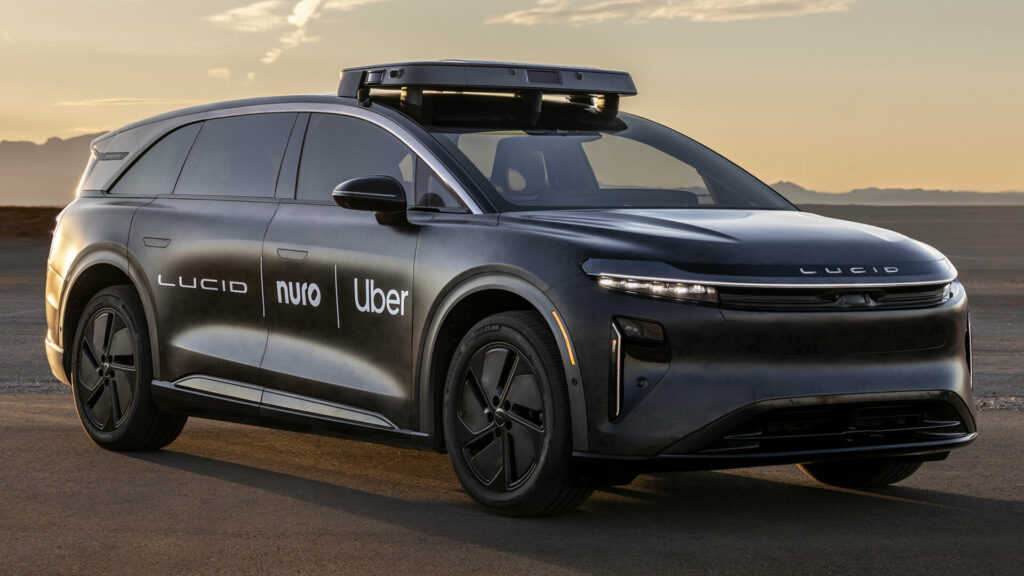
This claim is misleading, as Uber is not bringing back the same robotaxi involved in a fatal accident in 2018. Instead, a tripartite partnership between Lucid, Nuro, and Uber will create a new generation of robotaxis based on a specially modified Gravity SUV.


The new vehicle is equipped with a full suite of cameras and sensors that feed information to the Nuro Driver Level 4 autonomous driving system. Consumer Watchdog ignores this fact, calling Uber a “dangerous company” in its video, which also shows footage of the fatal crash. It fails to mention that the vehicle had a safety driver who was supposed to be monitoring the road.
The Essence of the Proposed Changes
In its video, the group also shows an animation of a car driving autonomously at speeds up to 167 km/h, although robotaxis are not designed to travel at such speeds. Consumer Watchdog President Jamie Court stated:
This initiative is a cynical ploy to strip Californians of their legal rights just as Uber is deploying dangerous new technologies on California roads. Uber is an irresponsible company, and its proposed ballot measure would allow it to avoid liability for injuries its robotaxis may cause.
Three key points in the California Attorney General’s short summary are contentious. According to it, the proposal “would increase the burden of proof for victims and limit the amounts they can recover” for certain medical expenses, as well as “prohibit certain financial arrangements between lawyers and medical providers.”
Furthermore, plaintiff attorney fees would be reduced from the typical 30-33% to 25% of the financial recovery, which is intended to benefit the victims themselves.


Arguments Against the Initiative
Consumer Watchdog argues that capping contingency fees “makes it financially impossible for lawyers to take many cases—especially those with modest damages or complex liability.” The group also objects to changes in medical compensation, as it would be limited not by the need for treatment but by narrow Medicare/Medi-Cal payment formulas or the actual amount paid by the insurance company, even if the victim still owes more.
The future of the initiative remains unclear. To qualify for next year’s ballot, it needs to collect 546,650 valid signatures.
This controversy unfolds against the backdrop of active development of autonomous technologies and the search for a balance between innovation and citizen rights protection. The stance of watchdog groups points to a deeper problem of public trust in new technologies, especially when their implementation is accompanied by legislative changes affecting compensation. The success or failure of the initiative could become an important precedent for regulating not only autonomous transport but also the relationships between victims, lawyers, and big business in the digital age.