


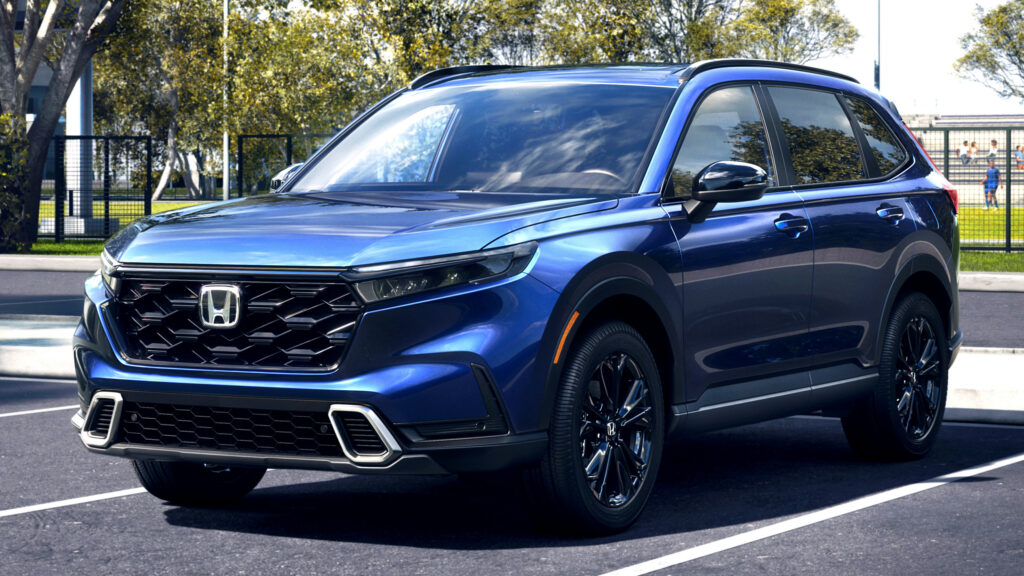
Honda CR-V leadership in the US market
In the first half of 2026, the Honda CR-V became the best-selling car in the US, surpassing giants such as the Ford F-150 and Toyota RAV4. This was made possible by a combination of several factors, including production difficulties for competitors and a successful strategy from Honda itself.
Sales details and competitor positions
The Ford F-150 is indisputably the king of sales. It has led the US in total vehicle sales for 15 of the last 16 years. However, by mid-2026, it found itself in second place, trailing the Honda CR-V by nearly 20,000 units. It is worth noting that the race is not yet over, and Honda is at the top partly due to certain market conditions it may not be able to rely on later this year.
According to data from Automotive News, the CR-V sold 226,114 units in the first six months of the year. This surpasses the estimated 209,311 units of the Ford F-150 and significantly exceeds the 153,955 deliveries of the Toyota RAV4. This may not sound overly dramatic, but the RAV4 was the only vehicle that managed to beat the F-150 in the last 16 years of sales.
Ford’s F-150 Has Had A Steering Problem, A Lighting Problem, And A Sales Problem In Australia
Reasons for Honda’s success and competitors’ problems
Data analysis shows that Honda did not win solely through aggressive sales tactics. The redesigned 2026 Toyota RAV4 faced significant production disruptions during a complicated transition at a new plant. This led to reduced inventory. Consequently, RAV4 sales fell by 36 percent in the first half of the year. Ford also had its own issues. A fire at a major aluminum supplier in late 2025 curtailed F-150 production for months. Although the supplier resumed operations, Ford spent most of the first half of the year dealing with limited inventory.
Honda’s strategy and prospects
Nevertheless, Honda deserves praise for seizing the opportunity. The CR-V has become one of the strongest hybrid crossovers on the market: hybrid models account for 56 percent of sales this year. Honda has also relied heavily on lease customer loyalty, retaining up to three-quarters of returning customers while increasing leasing penetration to 24 percent.
This strategy appears to be working. Data shows that CR-V sales rose by 19 percent in May and 30 percent in June. Dealers report that demand remains high despite inventory shrinking to about 15 days, forcing Honda to run at full capacity to produce the CR-V.
Whether the CR-V can maintain its crown remains uncertain. Toyota is ramping up production of the new RAV4, and Ford expects F-150 production to recover in the second half of the year. In other words, the race is far from over.
Photo: Honda
The current situation in the US automotive market demonstrates how external factors, such as supply problems at competitors, can dramatically shift the balance of power. The success of the Honda CR-V is not only the result of a quality product but also a fortunate alignment of circumstances. However, once Toyota and Ford resolve their production difficulties, competition will return to a new level, and Honda will need to make significant efforts to maintain its leadership. The growing share of hybrid sales points to a clear trend among consumers who increasingly value fuel efficiency, which could become a key factor in the future battle for the top spot.