


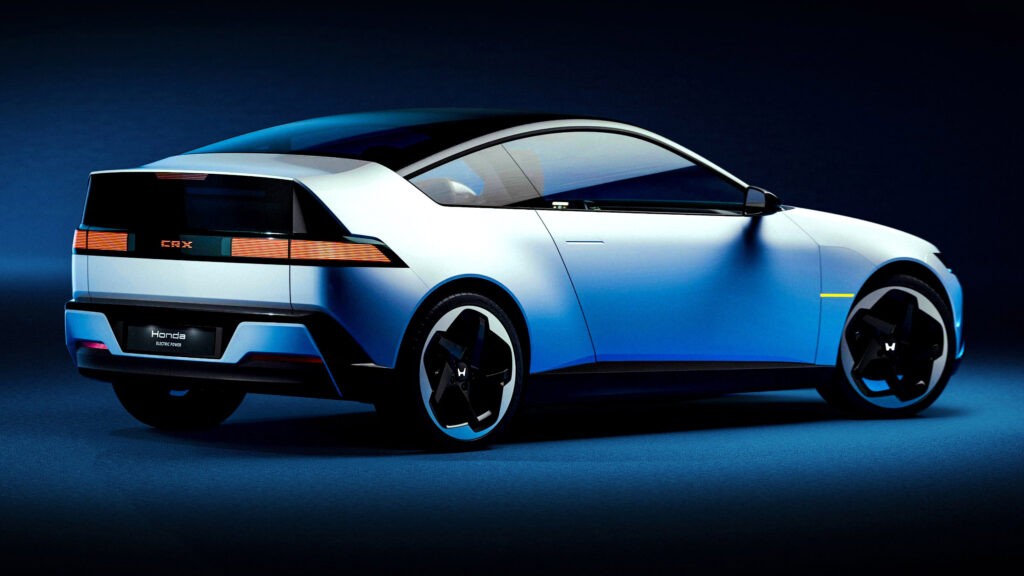
Revival of a Legend: Designers Created a Modern Version of the Honda CRX
Honda product planners are currently hard at work bringing back the Prelude model, but another bright memory from the company’s history has caught the internet’s attention. This digital concept transports the original late-1980s CRX into the present, and the result looks like a car that should be put into production.
Design and Inspiration
The modern CRX prototype was created by designer and modeler Vitaly Batalka together with CG artist Valentin Komkov, who was responsible for the visualization. It is based on the second generation CRX, which was produced from 1987 to 1991 on a shortened Civic platform. This model is remembered as one of the most interesting small Hondas of its era.
Original Silhouette with Modern Updates
The proportions remain recognizable: a short wheelbase, a low roof, and the divided rear glass that formed its distinctive profile. Up front, the blocky headlights have been replaced with slimmer LED elements framing the grille, with the new Honda logo in the center.
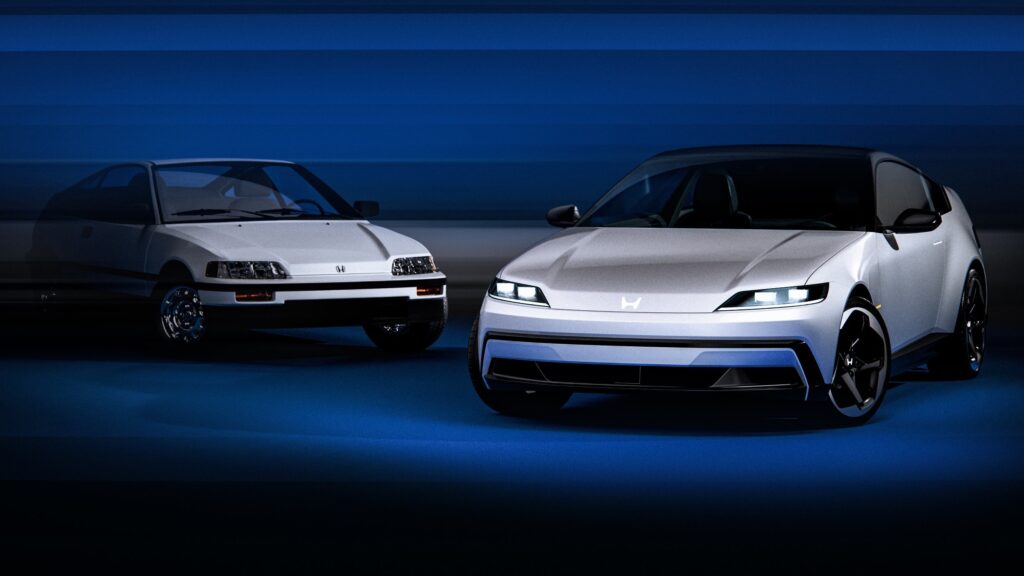

Illustrations: Vitaly Batalka and Valentin Komkov
Details and Specifications
The sculpted hood and black bumper inserts clearly reference the original. The rear is adorned with horizontal taillights and a backlit CRX inscription. The profile features clean lines, flared rear fenders, hidden door handles, black pillars, frameless doors, and futuristic two-tone alloy wheels.
The designers also created a retro “Turbo 2026” card with fictitious specifications. According to it, the revived CRX would be fully electric, rather than hybrid, with 350 hp (261 kW). The claimed top speed of 285 km/h seems optimistic for an electric car of this power, but it would significantly surpass the capabilities of the original 1.6-liter VTEC.
Creation Process and Context
The authors emphasized that the project was done using traditional digital modeling methods, without the use of generative AI. Batalka was responsible for the initial design and 3D modeling in Alias, while Komkov handled the final visualization in Blender.
The closest thing to a true Honda CRX successor was the short-lived CR-Z model. This sporty three-door hatchback was produced from 2010 to 2016 with a hybrid powertrain, but never received a replacement. Projects like this keep the idea alive, but with each passing year it becomes harder to realize. The modern market gives Honda little reason to spend money on research and development for a small sporty three-door car, which is a pity.
Although Honda has focused on the Prelude and other models, this concept reminds us that the demand for compact, lightweight, and fun-to-drive cars has not gone away. Electrification could be a chance to revive icons like the CRX, but for now, it remains just a dream for enthusiasts. In an environment where automakers prioritize crossovers and long-range electric vehicles, a small sporty hatchback looks like a risky project, even though such models often become the soul of a brand.