 by
by The Sedan Crisis in the Chinese Market
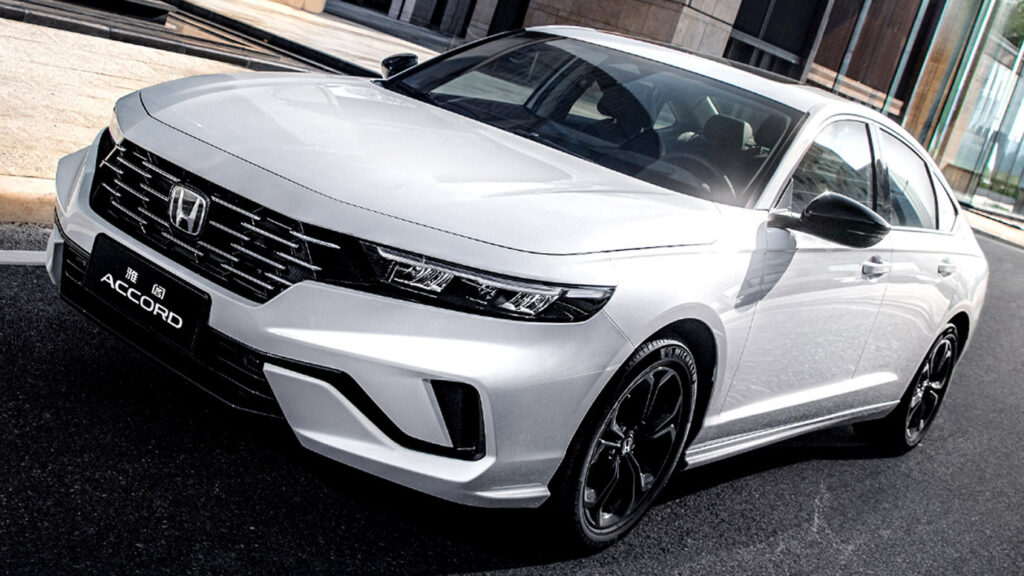
China remains one of the few major markets where four-door sedans are still sold in significant volumes. However, even there, one of the long-standing models in the segment is losing ground. The Honda Accord, locally produced by the Honda and GAC joint venture, has faced sales difficulties, leading to a sharp price cut for the car to attract buyers back to showrooms.
The Accord name appeared in China almost three decades ago when Honda formed the Guangqi Honda (GAC Honda) joint venture in 1999. This sedan was even one of the first modern foreign cars to be produced in China, alongside the Toyota Camry and Volkswagen Passat.
Causes of Problems and Changing Preferences
The problems for this midsize model are not only related to buyers preferring crossovers over sedans. They also reflect the fate faced by many foreign automakers: consumers are increasingly interested in local new energy vehicles, while overall new car sales appear to be somewhat declining.
Massive Discount on Honda Accord
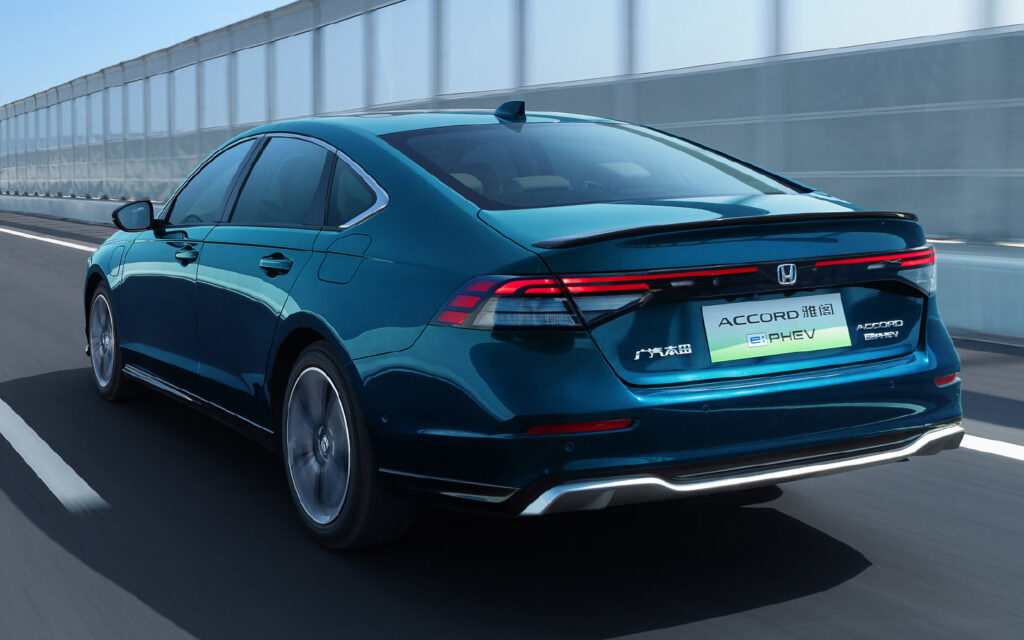
As reported by the local publication 36Kr, GAC Honda is offering existing customers a significant discount of $14,610 (100,000 yuan) on the new Accord e:PHEV. The recommended retail price for the Accord e:PHEV is $34,890 (238,800 yuan), which reduces the cost of the new sedan to just $20,280 (138,800 yuan).
Of course, there is a condition: this offer, besides being valid only for existing GAC Honda customers, is also limited to the first 1000 units. The company’s official explanation is that this is a limited-time promotion to celebrate the 50-year (global) anniversary of the Accord.
While the mention of the Accord’s heritage sounds convincing, it hardly fully reflects the picture of Honda’s problems in China.
Tough Competition and Falling Sales
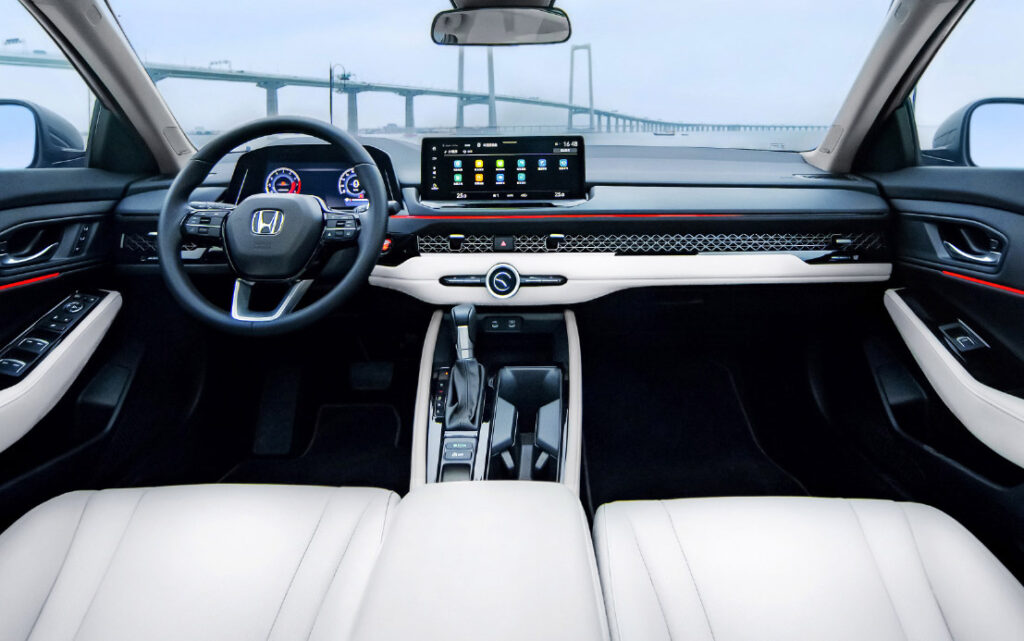
Last year, GAC Honda reported an annual sales decline of 25 percent, selling 351,900 vehicles in 2025. In the first month of 2026, GAC Honda reported sales of only 4,558 cars, a decrease of almost 70 percent compared to the same period last year.
Although January is typically a weak month for China’s auto market, GAC Honda’s results were significantly worse than those of other GAC subsidiaries. In fact, GAC Honda was the least successful brand within the group, contributing to GAC’s failure to meet overall sales targets. In contrast, GAC Aion, which primarily deals with new energy vehicles, reported sales of 21,600 cars, representing a 171 percent increase year-on-year.
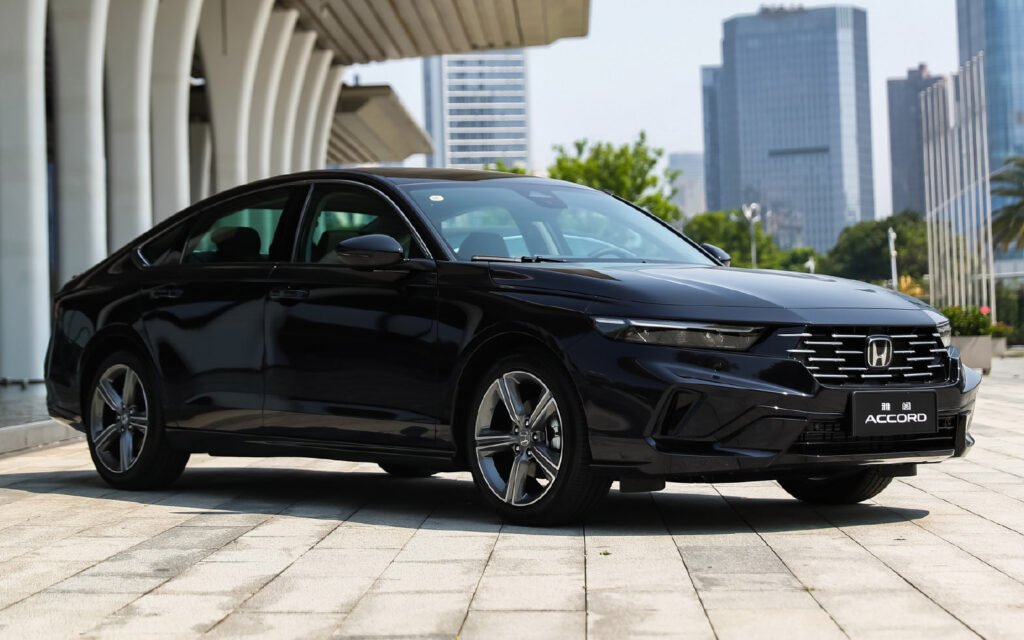
Honda is not the only one feeling the pressure. GAC Toyota and Dongfeng Nissan have also introduced their own limited-time offers. However, while the conventional Toyota Wildlander received a discount of approximately $3,200 (22,000 yuan), and the Nissan Teana had similar offers, none come close to the Accord deal.
Although GAC Honda (and Dongfeng Honda) offer their own NEV models under the Honda Ye sub-brand, they have not yet attracted the level of demand they hoped for. This is largely due to technologies that still lag behind many fast-growing local competitors in an extremely competitive market.
The Accord situation can serve as a vivid example of deeper structural changes in the Chinese automotive industry. The shift of consumers to electric vehicles, especially those developed by local manufacturers, is forcing traditional players to adapt quickly. A $15,000 discount is not just a marketing move, but a signal that even iconic models are losing their appeal without an innovative technological component. The success of GAC Aion against the backdrop of GAC Honda’s decline clearly shows where the market is heading. For foreign brands, remaining competitive in China is no longer enough just to have a solid reputation – they need to offer technologies that meet or exceed the expectations of local buyers.