


Overview of the New Model
Following a radical design change in 2024, Hyundai is already working on an updated version of the Santa Fe SUV. Recently, camouflaged prototypes were spotted during winter testing in Europe, indicating significant changes to the vehicle’s exterior.
Design Changes
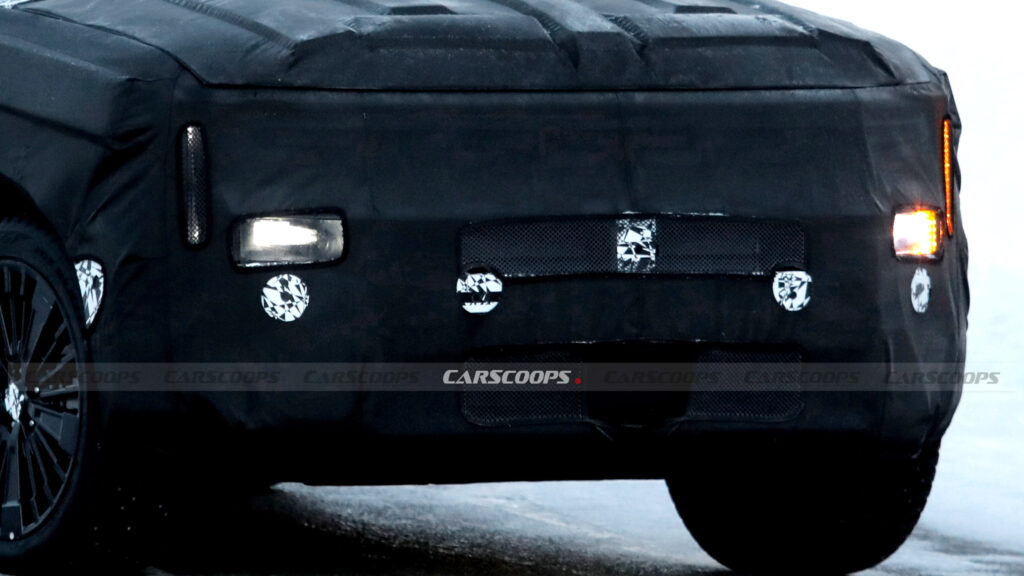
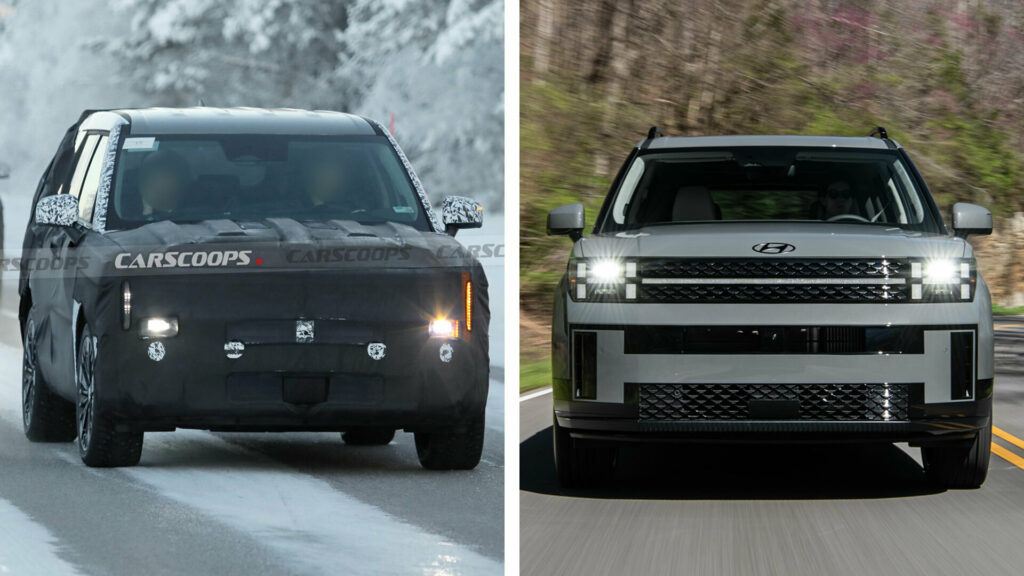
Despite the heavy camouflage wrap, noticeable changes are evident in the front. The square headlights with daytime running lights in the shape of an “H” have been replaced by significantly smaller units positioned lower in the bumper.
This redesign appears to have allowed Hyundai’s designers to install a much wider radiator grille. It is flanked by vertical LED daytime running lights, which also function as turn signals.
Additional details are difficult to discern, but it seems the model will retain its rectangular central air intake. An updated lower intake with a more pronounced sensor in the middle is also visible.

Rear and Interior Updates
The LED light bar and “H”-style taillights seem to have given way to new vertical lighting units that echo those at the front. Furthermore, a new bumper has appeared, looking much more streamlined than the angular one on the current model.
Photographers were unable to capture the interior, but a series of updates can be expected. Their full scale is yet to be seen, but the crossover will likely receive the new Pleos Connect infotainment system. It is based on Android Automotive OS, and its launch is scheduled for this year.
Expected Technical Changes
Little is known at the moment, but previous spy photos suggest the Santa Fe will be offered with a new extended-range powertrain.
It will likely be joined by existing engines. These include a turbocharged 2.5-liter four-cylinder engine producing 277 hp and 311 lb-ft of torque, as well as a hybridized 1.6-liter turbo engine with a combined output of 231 hp and 271 lb-ft of torque.
Working on a facelift so quickly after a redesign may indicate that Hyundai is rapidly responding to market feedback or technological trends. The emphasis on a new grille and lighting aligns with the general trend of brands giving their SUVs a bolder and more technologically advanced appearance. The introduction of the Android Automotive-based system is a key step in improving user interaction, an increasingly important factor in car selection. The question remains whether these updates will be able to maintain the Santa Fe’s competitiveness in one of the toughest market segments.