 by
by Vision Pulse Technology: How Smartphones and Gadgets Become “Virtual Eyes” for Cars
Your car may soon receive safety assistance from the very same gadget you are using to read this news. Hyundai and Kia have developed a system that turns ordinary smartphones and wearable devices into additional virtual eyes, helping cars spot danger even when cameras and sensors are powerless.
The technology is called Vision Pulse and uses Ultra-Wideband (UWB) signals. This technology is already embedded in many modern phones, smartwatches, and car digital keys. Hyundai and Kia engineers figured out how to make these signals “communicate” with each other to determine the location of people and vehicles, even if they are hidden behind a van or a building.
How the System Works
Here’s how this system works. Your car sends out UWB signals. Nearby devices with similar modules, such as phones, trackers, or wearables, reflect the signals back. The system measures the time it takes for these signals to travel and calculates the precise position of objects with an accuracy of about 100 millimeters at distances of up to 100 meters.
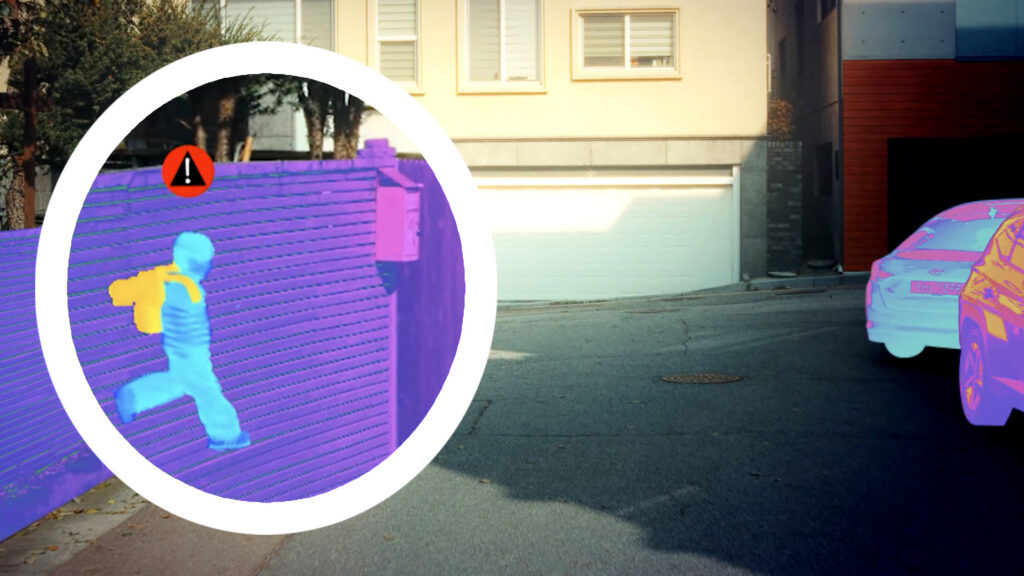
This means that a child stepping out from behind a parked SUV or a cyclist about to appear at a blind intersection does not have to first enter the camera’s field of view. If they have a compatible device, the car already knows they are there and can warn the driver or activate safety systems.
Unlike earlier systems that relied on external infrastructure for motion tracking, Vision Pulse uses direct signal exchange between devices. This reduces reaction time and cuts latency from 0.1 seconds to just 0.02 seconds. It also processes more data simultaneously, having the ability to track over four times more moving objects compared to old systems.
A Cost-Effective Solution with High Efficiency
One of the main advantages is cost. Expensive lidar and radar systems are great, but they are also pricey. Vision Pulse uses UWB hardware that is already present in many cars and devices. Some Hyundai and Kia models with Digital Key technology are practically ready to operate without additional equipment.
The physical characteristics of UWB also make it well-suited for complex conditions. Its strong diffraction and penetration ability allow it to detect objects even through buildings, cargo, or dense obstacles, while its ultra-low latency helps the system respond in real time.
Reliability in Any Weather
The system also works in challenging real-world conditions. Rain, darkness, bright light, and urban obstacles can confuse cameras. UWB signals are less susceptible to such influences, and the system can track multiple fast-moving objects simultaneously thanks to predictive software that anticipates where objects will move next.

Hyundai and Kia are already testing it in warehouses to prevent collisions between forklifts and workers, and even offering it for use in disaster relief operations to find people under rubble. But on the road, ultimately, it could mean that your phone quietly helps your car avoid an accident you didn’t even notice.
Safety That Moves with the Child
In one pilot program, Vision Pulse was tested on school buses, where drivers often face “blind spots” during child pick-up and drop-off. Children were given tag-like devices that worked with the system, allowing the driver to see them even when they briefly moved out of sight.
The tags themselves are designed with children’s needs in mind. They are shaped like key fobs, made of soft silicone, easy to carry, and customizable with stickers. At night, they glow softly like a night light.
As my child grows up, there will be more and more moments when I lose sight of them. I hope more technologies like this will emerge to protect them even when they are out of my sight.
The development of such technologies points to a growing trend towards creating connected safety ecosystems, where personal electronic devices become an integral part of protection both inside and outside vehicles. This shifts the focus from passive observation to active prevention of dangerous situations using a network of surrounding devices. The success of such initiatives will largely depend on the widespread adoption of standards and compatibility between products from different manufacturers, which could become the next major step for the industry.