


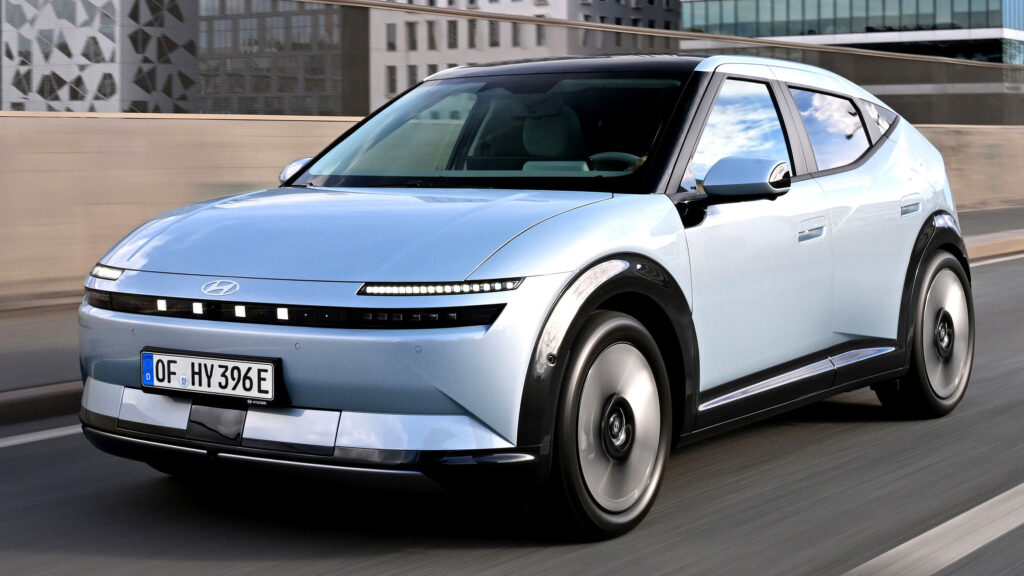
Hyundai presents standard version of Ioniq 3
Hyundai first introduced the Ioniq 3 in April, but the focus then was on the sporty N Line version. Now is the time for the standard model: new photos show a more restrained body design and a lighter, calmer interior compared to what we saw before.
Design and exterior differences
The Ioniq 3 is positioned as an “Aero Hatch” — a model combining features of a hatchback, fastback, and crossover. The regular version has a smoother front bumper surface with an active air intake, without the aggressive cutouts and black elements found on the N-Line.
The split LED headlights with four dots on the thin radiator grille remain unchanged. Side differences include body-colored mirrors and other alloy wheels ranging from 16 to 18 inches, while the N-Line has 19-inch wheels.
At the rear, the standard Ioniq 3 gets a smaller spoiler on the double glass and a more modest diffuser on the rear bumper without side “fins”.
Lighter interior and new technologies
The interior replaces the black-and-red theme of the N-Line with lighter colors. The cabin design follows the “Furnished Space” philosophy, focusing on comfort and quality.
One of the key features is the new Android-based infotainment system called Pleos Connect, which debuts in the European model after the updated Grandeur flagship in South Korea. The touchscreen measures 12.9 or 14.6 inches depending on the trim level, optionally complemented by a thin digital instrument cluster.
The company stated that the Pleos App Market will offer 30 third-party applications at launch, with the number significantly increasing by the end of the year. Additionally, the Ioniq 3 is equipped with the Gleo AI voice assistant, which supports natural dialogues.
Range, power, and future plans
Initially, the Hyundai Ioniq 3 will be available in Standard and Long Range versions with a single electric motor. The base model has 144 hp (108 kW) and a range of 344 km on the WLTP cycle from a 42.2 kWh battery. The Long Range version can travel up to 496 km thanks to a 61 kWh battery and a less powerful 133 hp (100 kW) motor.
The electric car is built on the 400-volt version of the E-GMP architecture, also used by the Kia EV3 and EV4. According to Hyundai, development and testing were conducted considering “European customers, driving styles, and infrastructure”.
In the future, the manufacturer may expand the lineup with a “hot” N hatchback, which is likely to receive a dual-motor layout and special chassis.
Hyundai has not yet announced prices for the Ioniq 3 in Europe. Production of the new electric vehicle takes place at the factory in Izmit, Turkey, with the first units expected on the roads in the third quarter of 2026.
This move by Hyundai demonstrates its ambition to establish itself in the European compact electric vehicle segment, where competition is growing. The standard version of the Ioniq 3, with its more practical design and more accessible technologies, could become a serious player in the market, especially given its adaptation to local conditions. The future arrival of the N version will only increase interest in the model, offering a choice between efficiency and sporty character.