


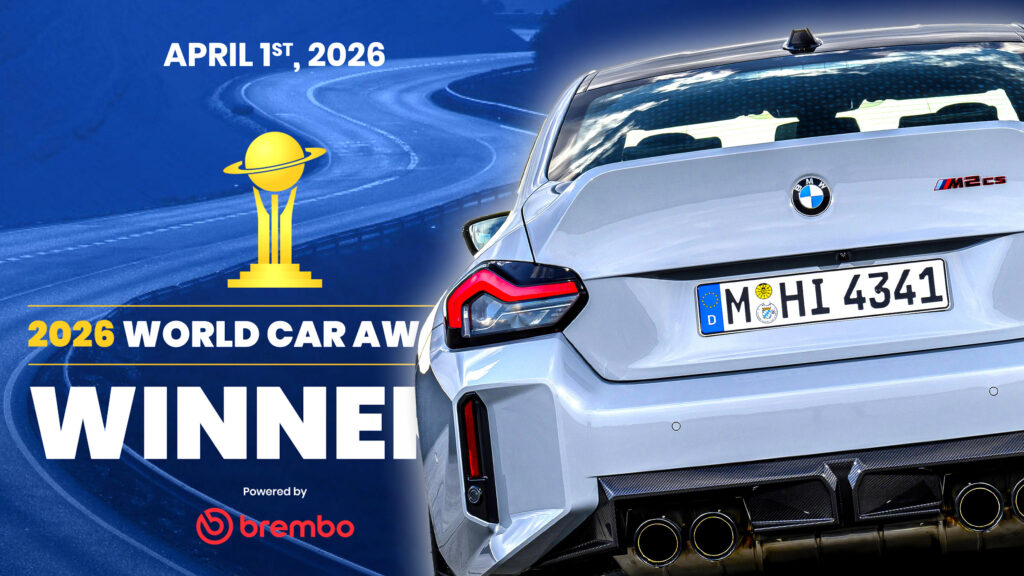
At the 2026 World Car Awards ceremony, electric vehicles dominated unequivocally, winning absolutely every category. This happened for the first time, and although many finalists were electric cars, such a result is unlikely to silence critics of this trend.
Main Winners
The highest honors went to the BMW iX3, which was recognized as the 2026 World Car of the Year, as well as the World Electric Vehicle. In the first category, it surpassed the updated Hyundai Palisade and Nissan Leaf. The latter also contended for the title of best electric vehicle, but together with the Mercedes CLA, conceded to the German crossover.
Luxury and Controversy
The luxury electric crossover Lucid Gravity received the title of World Luxury Car. The model, offering a range of up to 450 miles (724 km), outpaced the Cadillac Vistiq and Volvo ES90.
The most controversial award was the World Performance Car. Its winner was the Hyundai Ioniq 6 N, which outperformed the BMW M2 CS and Chevrolet Corvette E-Ray.
The question remains open: is the 641-horsepower Hyundai a truer sports car than the 523-horsepower coupe that accelerates to 60 mph in 3.7 seconds, or not? The E-Ray, on the other hand, has all-wheel drive, an electric-only driving mode, and a combined output of 655 hp.
Urban and Design Nominations
The title of World Urban Car went to the Nio Firefly model, which defeated the Hyundai Venue and Baojun Yep Plus / Chevrolet Spark EUV.
The World Car Design of the Year award was won by the Mazda 6e / EZ-6, which secured victory over the Kia PV5 and Volvo ES90. The jury noted that the finalists were selected by a panel of design experts.
Final Winners Table
The complete victory of electric models at the 2026 World Car Awards is a clear indicator of the transformation of the automotive industry. This points not only to technological progress but also to a shift in the priorities of experts and, possibly, society. Such results may accelerate manufacturers’ transition to electric propulsion, while leaving room for debate regarding evaluation criteria, especially in categories like “performance,” where traditional notions of power and driving dynamics collide with new technologies.