


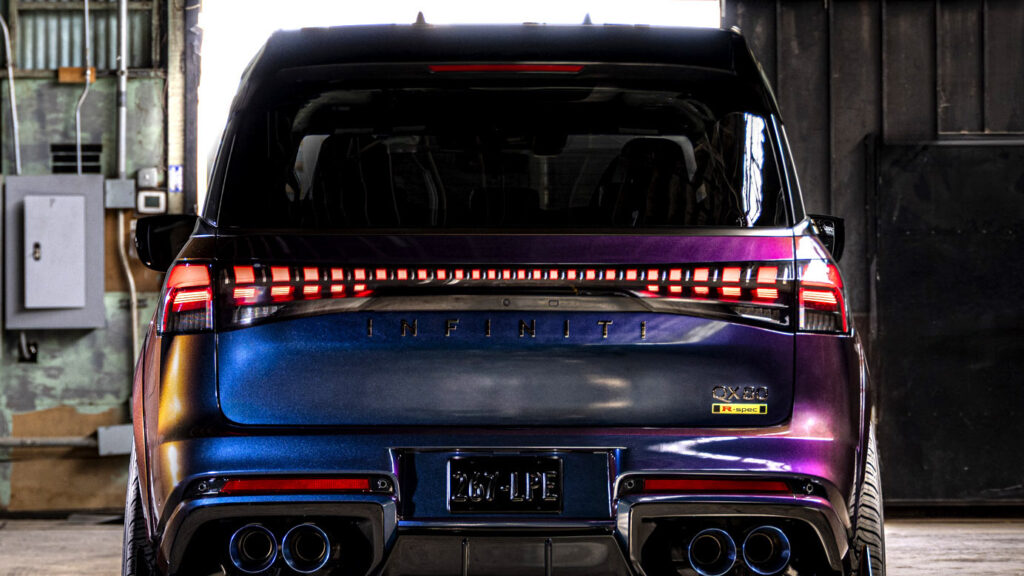
The Japanese automaker Infiniti is preparing to release a powerful version of its flagship QX80 SUV. The new model, which will be designated Red Sport, will have around 600 horsepower. Furthermore, the company is already planning an even more extreme modification with approximately 680 hp, which could appear by 2028. It is also reported that production of the Red Sport version will be limited—about 600 cars per year—with its launch expected in the spring of 2027.
From Concept to Production Car
Infiniti has previously showcased concepts, outlining the path to a high-performance SUV. Last year, the QX80 Track Spec concept with a 650-hp engine was presented, and at the SEMA show, the public saw the QX80 R-Spec with a powertrain from the legendary GT-R. Despite a large SUV and a race track being largely incompatible things, the reaction to the concepts was so positive that the company decided to implement similar models into series production.
The reaction was strong enough that Infiniti is now planning a series version with around 600 horsepower, a source close to the company’s plans reported.
If 600 hp seems like a lot of power for a three-row luxury SUV, it may only be the beginning. By 2028, according to reports, the brand is aiming for even more, targeting a figure of approximately 680 hp for an even more extreme flagship version.
Brand Strategy and Target Competitors
The manufacturer hopes that the focus on performance can attract new customers to the brand. The revival of the Red Sport badge, previously used for powerful Infiniti sedans and coupes, for the new QX80 clearly signals the brand’s intention to compete with players like BMW M and Mercedes-AMG.
Key changes for the Red Sport version will include larger red brake calipers, a red “S” letter on the badges, and possibly 24-inch wheels. The most important update remains the 600-hp engine.
This offers an additional level of performance, but doesn’t go too far, noted Infiniti’s Director of Product Marketing, Brian Maragno. — Things that are noticeable, but not radical. What’s important is under the hood.
Pricing and Future Plans
The Red Sport is expected to cost approximately 10% more than the Sport and Autobiography trims, placing it deep into six-figure price territory. Production will be limited to about 600 cars per year, with allocation to dealers based on sales volumes of the regular QX80.
A larger step from Infiniti is expected a bit later. Closer to 2028, the brand will introduce an even more extreme performance version of the QX80 with 680 hp. The transformation won’t be limited to under the hood. According to sources, the SUV will receive more aggressive bodywork, wider fenders, and an active exhaust system to give the large luxury vehicle a much louder presence.
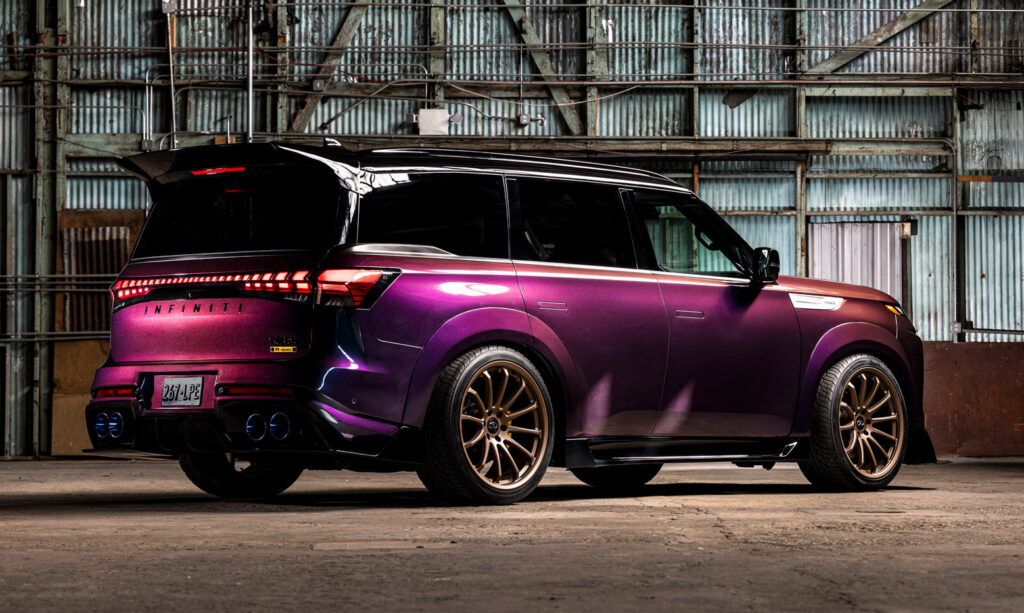

Official confirmation of these plans can likely be expected by the end of this year, just in time for the launch in the spring of 2027. Later that same year, Infiniti will likely present an R-Spec or another version of the QX80 with power approaching figures of cars like the Dodge Durango Hellcat.
Performance Beyond Simple Statistics
Undoubtedly, power figures sell cars, but the main focus here may well be the improved braking systems. Currently, the sport versions of the QX80 and Armada from Infiniti and Nissan do not receive serious suspension or brake upgrades necessary for true dynamic driving.
Again, a giant performance SUV doesn’t make much sense for serious driving enthusiasts, but that hasn’t stopped models like the Cadillac Escalade V or the aforementioned Durango from selling successfully. At this stage, the QX80 Red Sport could become the car that helps Infiniti regain some of its reputation in the world of high performance.
The luxury SUV market continues to surprise, turning into an arena for real power competitions. Infiniti’s desire to return to its sporting roots through large and powerful cars reflects a general trend where comfort and space are combined with supercar-like characteristics. The success of this strategy will depend not only on the numbers on the spec sheet but also on the brand’s ability to offer a balanced, high-quality product that justifies high expectations and price. The limited production run also indicates an attempt to create an effect of exclusivity and scarcity, which often works in the premium segment.