


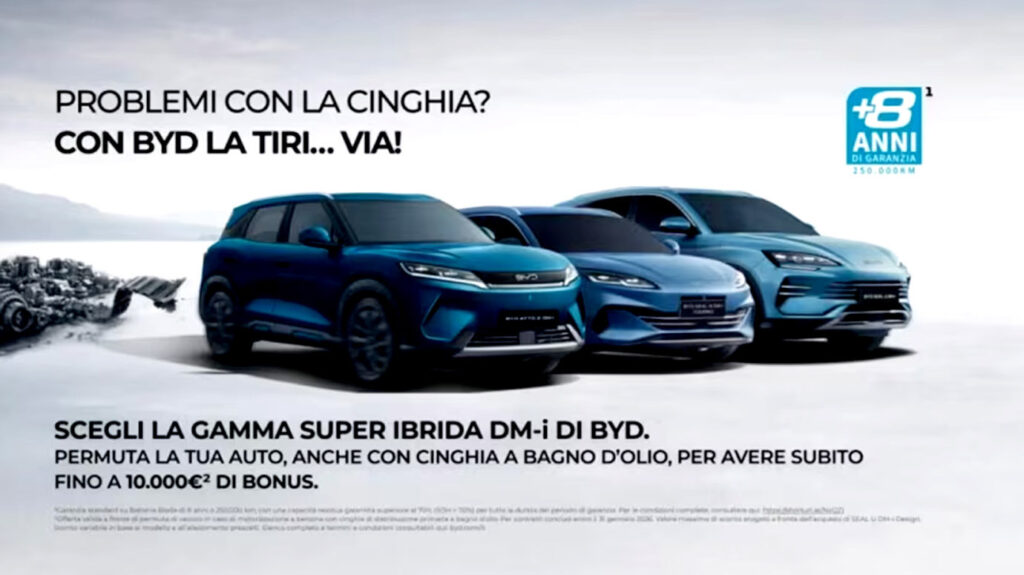
Chinese Automaker BYD Finds Itself in a Difficult Situation in Italy Due to Its Advertising Campaign
The controversial advertisement by Chinese automaker BYD, dubbed “Operation Cleanup,” was blocked in Italy following a complaint from competitor Stellantis. The advertising campaign offered owners of cars with certain engine types up to 10,000 euros to trade in for a BYD electric vehicle.
The Essence of the Conflict and the Regulator’s Response
The Italian Institute of Advertising Discipline (IAP) ruled that BYD’s advertising materials violate local laws. Specifically, it concerned the prohibition on discrediting competitors, misleading advertising, and unfair comparative advertising. In its ads, BYD used slogans such as: “Do you have an oil bath belt? We’re sorry you always have a blue Monday – discover BYD’s special bonuses.”
Stellantis stated that the regulator’s decision is “an important recognition of the need to protect consumers and competitors from unfair advertising.”
Technical Context of the Advertising Attack
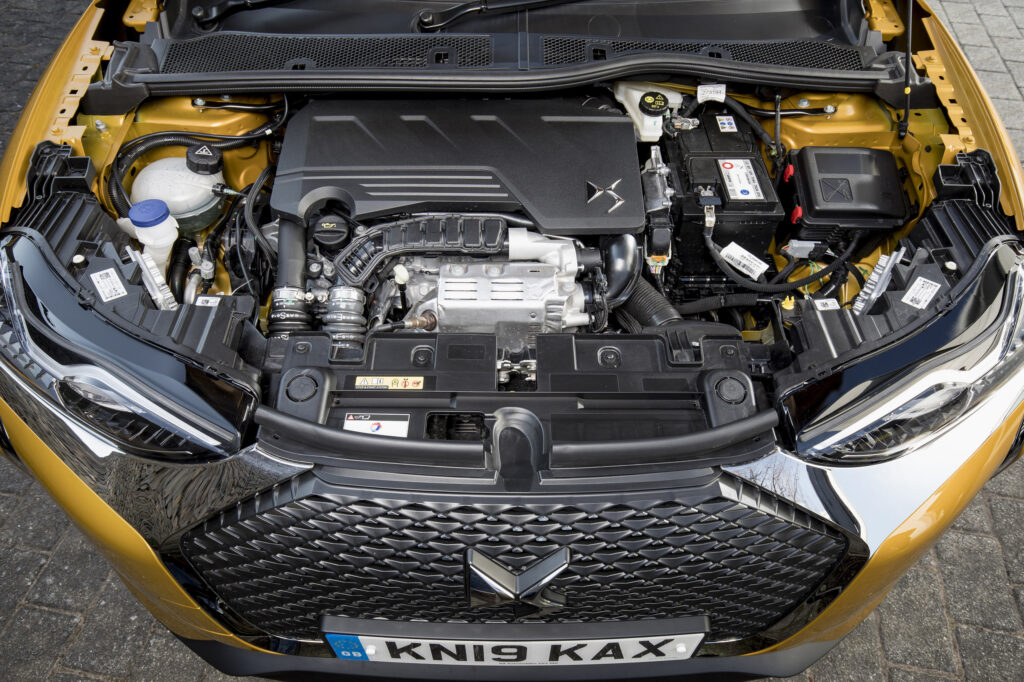
BYD’s offer was clearly targeted at owners of cars with PureTech engines, which use the so-called “wet timing belt.” This technology, where the belt constantly operates in an oil bath, is used by many Stellantis brands, such as Peugeot, Citroën, and Opel. In recent years, such engines have been the subject of numerous service campaigns and warranty extensions due to reliability issues.

Strategic Goals and Market Context
This story unfolds against the backdrop of BYD’s aggressive expansion in the European market, coordinated by former Fiat top manager Alfredo Altavilla. The Chinese brand’s successes in Italy are impressive: if just over 2,000 cars were sold in 2024, in 2025 it was more than 23,000. The advertising campaign appears to have been part of a strategy to accelerate this growth, targeting a specific vulnerability of a local competitor.
Future Confrontation and Potential Consequences
The question is how BYD will respond to this decision. The company may appeal the verdict, modify the advertising campaign, or launch a new, more cautious one. For Stellantis, this victory is symbolically important, especially in its home market of Italy, where brand icons like Fiat are based. The conflict also indicates that European manufacturers are ready to use all available tools – from technical innovations to legal mechanisms – to defend their positions.


This case could set a precedent for future advertising wars between traditional automakers and new Chinese players. It also demonstrates that even aggressive marketing must adhere to local norms and ethical frameworks. Success in the European market remains contingent not only on technological advantage or attractive pricing but also on a deep understanding of local realities, including the legal landscape and consumer expectations. BYD’s rapid sales growth in Italy certainly worries local manufacturers, and this advertising skirmish is just one episode in the battle for the future of the European automotive market.